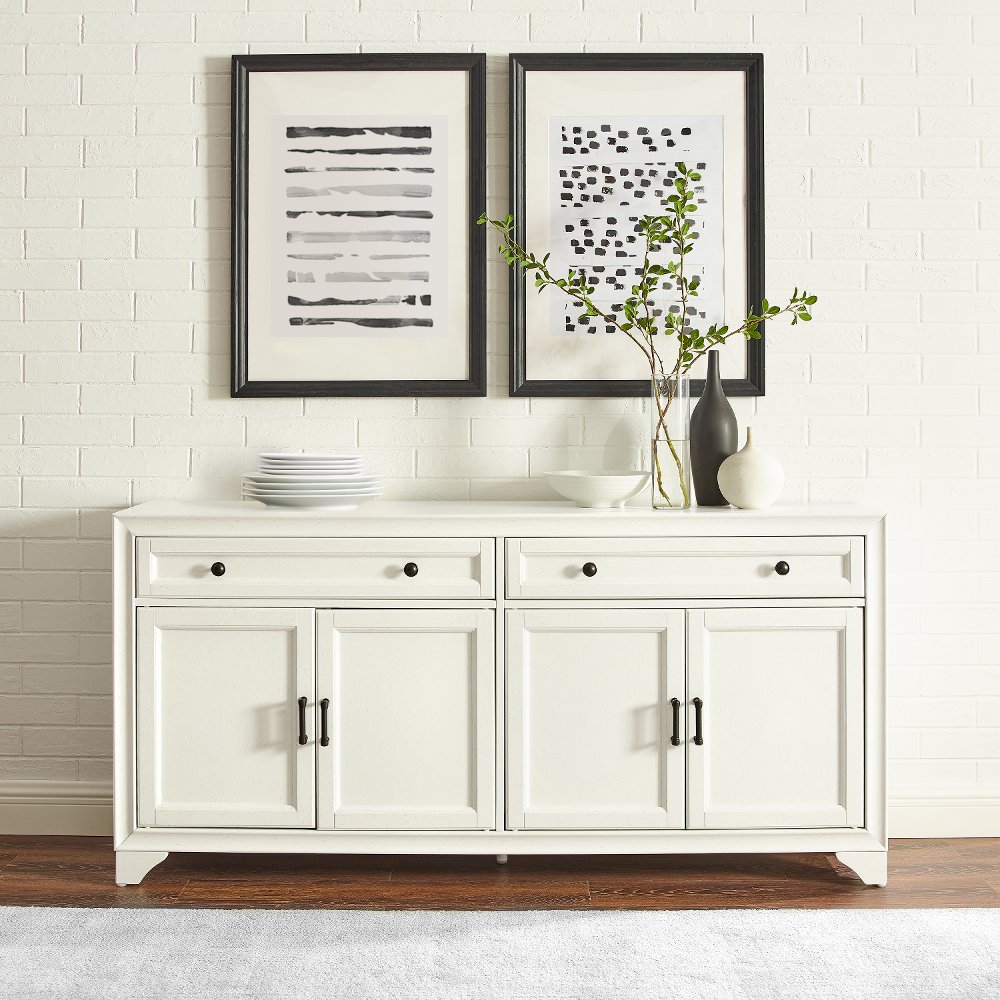
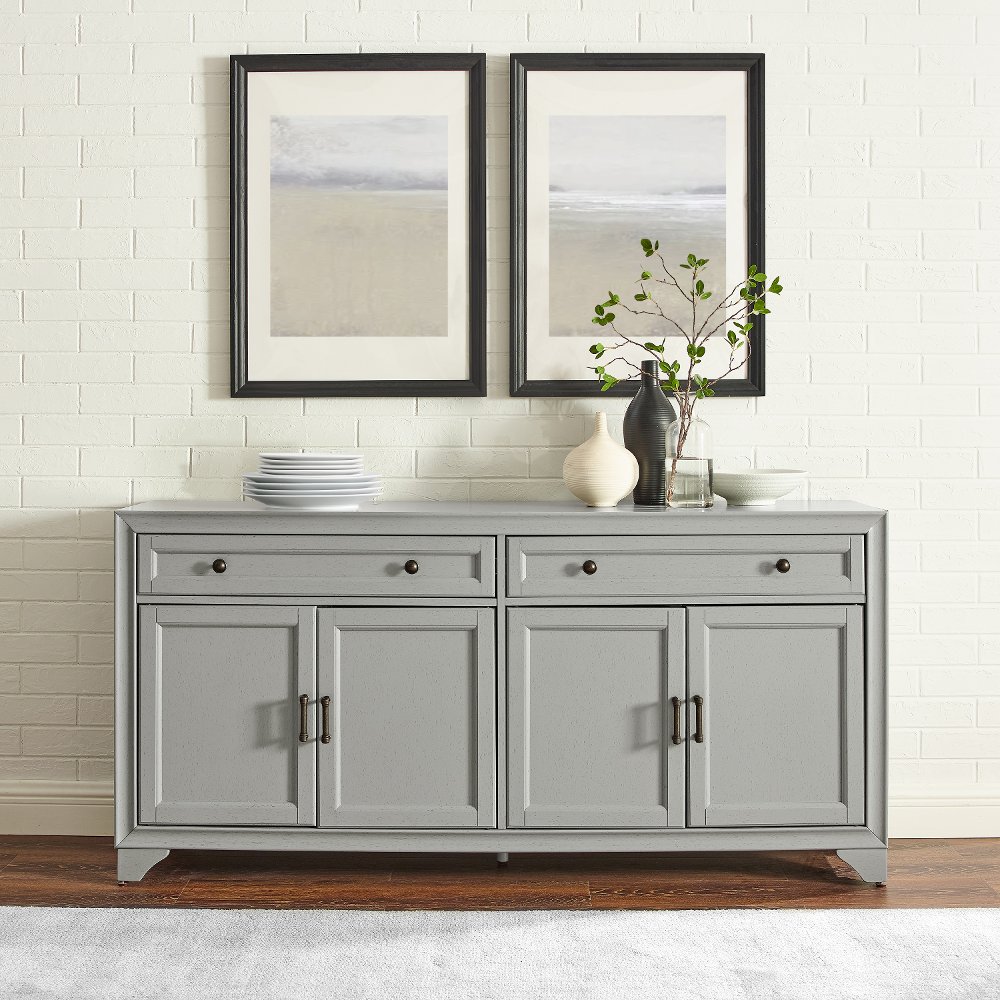
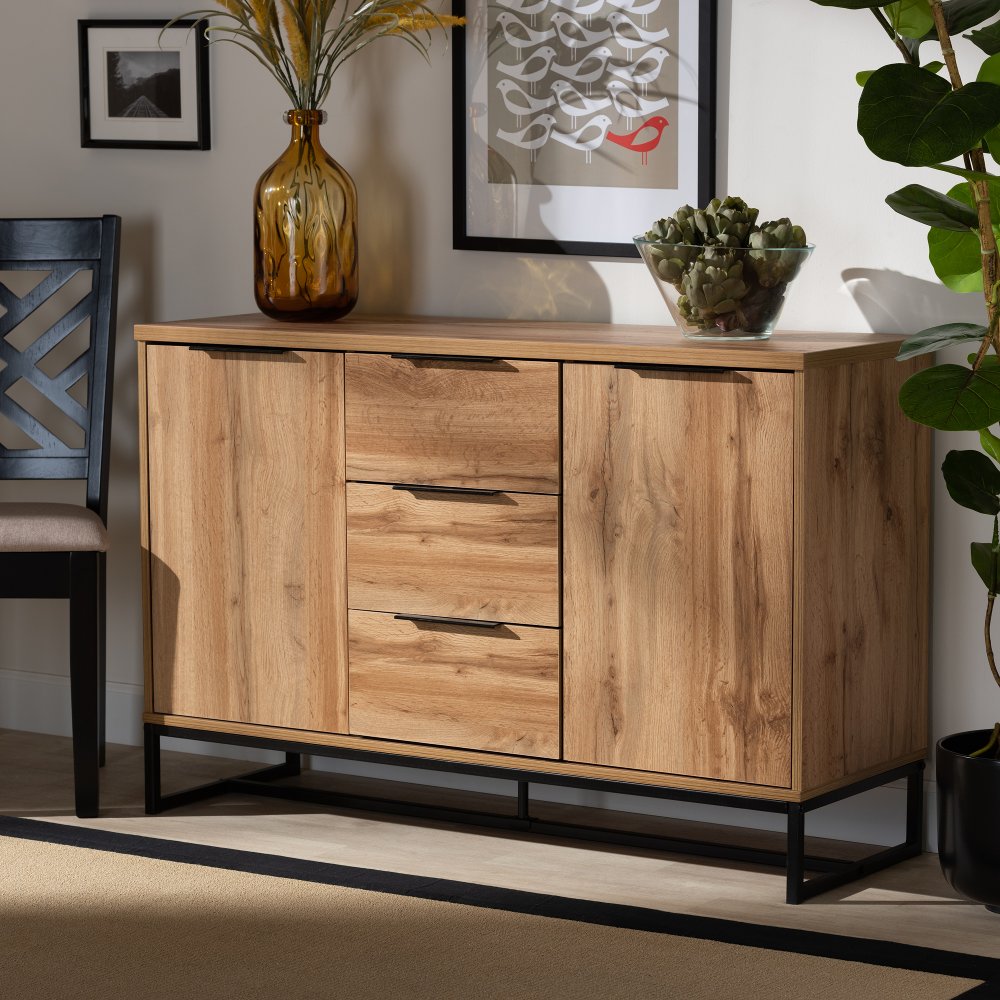
Buffet cabinets with storage combine a serving surface with shelves, cabinets, or drawers that keep dining essentials organized and close at hand. Often called sideboards, these pieces give dinnerware, serving bowls, table linens, and flatware a home outside the kitchen cabinets. In a dining room, a buffet can hold everyday plates behind closed doors while leaving its top ready for a pitcher of water, a bread basket, or dishes passed around during dinner. In an open living and dining area, it can create a clear place for meal-related storage without making the room feel like an extension of the kitchen. The most useful layout depends on what you reach for regularly. Adjustable shelves accommodate tall pitchers and stacks of bowls, while wide compartments make room for serving platters that don’t fit neatly in narrow cupboards. Drawers keep smaller essentials from getting lost behind larger dishes, especially when dividers separate flatware, napkin rings, and serving utensils. Deeper drawers can work well for folded tablecloths and cloth napkins, provided their dimensions and weight limits suit what you plan to store. If those smaller essentials make up most of your storage needs, Buffet Cabinets With Drawers offer a drawer-focused option for keeping them easy to find. Closed cabinet doors give mismatched dishes and extra supplies a tidy backdrop, while glass doors let favorite stoneware or stemware become part of the room’s character. Open shelves make frequently used baskets or cookbooks easy to reach, though exposed surfaces need more frequent dusting. A combination of storage types can be especially helpful when one cabinet needs to hold both everyday basics and pieces reserved for company. Picture a stack of breakfast bowls within easy reach, serving trays stored upright in a suitably sized compartment, and a drawer that keeps clean napkins ready for the next meal. That kind of organization supports the way you actually use the room, rather than asking you to rearrange daily routines around the furniture.
Materials and construction influence how a buffet cabinet looks, feels, and handles everyday use. Solid wood brings natural grain variation and can develop character over time, though it also responds to changes in indoor humidity. Wood veneer offers a real wood surface over a supporting core, creating a grain-rich appearance without requiring every component to be solid lumber. Engineered wood appears in many furniture designs and can provide a smooth, consistent base for painted finishes, laminates, or veneers; its performance depends on the material, construction, and finish rather than the category name alone. Metal frames or accents can add a crisp, streamlined look, while glass doors soften the visual weight of a larger cabinet by revealing the contents inside. For a home with frequent family meals, a finish that’s easy to wipe clean may matter more than decorative detailing. For a dining room used to display treasured dishes, the grain, door design, and hardware may play a larger role. Warm wood tones sit comfortably beside many traditional dining tables, painted finishes can lighten the appearance of a substantial cabinet, and simple doors with understated hardware suit a more contemporary room. Coordinating doesn’t require an exact match: repeating a wood undertone, metal finish, or design detail can connect a buffet with the surrounding furniture. Beyond appearance, useful construction details include well-supported shelves, securely attached hardware, and drawers and doors that operate smoothly. Soft-close hinges or drawer mechanisms, when included, can make daily use quieter. Shelf and drawer weight ratings deserve attention when you’re storing heavy stacks of ceramic plates or substantial serving pieces. Distributing that weight and keeping heavier belongings low helps support a stable, practical arrangement. A beautifully styled cabinet still needs to work when dinner is underway, so consider whether its handles are comfortable to grasp and its interior leaves enough space to lift dishes out without shifting everything around them.
The right fit includes the cabinet’s outside dimensions and the space needed to use it comfortably. Width determines how much wall space the buffet occupies, depth affects the walkway beside it, and height influences how easily you can set down a platter or reach a display. A shallow cabinet can be useful in a compact dining area, while a deeper piece may better accommodate oversized bowls and larger dinnerware. Measure the intended location with dining chairs pulled out, and account for the full swing of cabinet doors and extension of drawers. Around 36 inches of clear walking space is a useful planning target where the layout allows, with additional room where open doors, chairs, or regular traffic overlap. Baseboards, nearby doorways, outlets, and the cabinet’s delivery path also affect fit. Follow the manufacturer’s installation directions and secure the cabinet with the recommended anti-tip restraint, particularly in homes with children or pets. Beyond the dining room, buffet storage can serve a breakfast nook, an entry-adjacent living space, or a home office that needs concealed storage for supplies. A coffee station can be convenient on a suitable top, with mugs and supplies below, as long as the surface, appliance clearances, and access to power support that use. Keep operating appliances out of enclosed compartments unless the cabinet is specifically designed for them. Everyday care is usually straightforward when it follows the finish-specific instructions: dust with a soft cloth, clean spills promptly, and use an approved cleaner rather than assuming every surface tolerates the same treatment. Coasters, trays, and heat-resistant pads help protect the top from moisture and hot serving dishes; a buffet surface isn’t automatically intended for direct food preparation. Clean glass with a suitable product while protecting nearby wood finishes, and check hardware periodically for looseness. With a layout suited to your belongings and dimensions suited to your room, a storage buffet can make setting the table simpler, keep counters clearer, and give the dishes you enjoy using a dependable place to land.
Read More