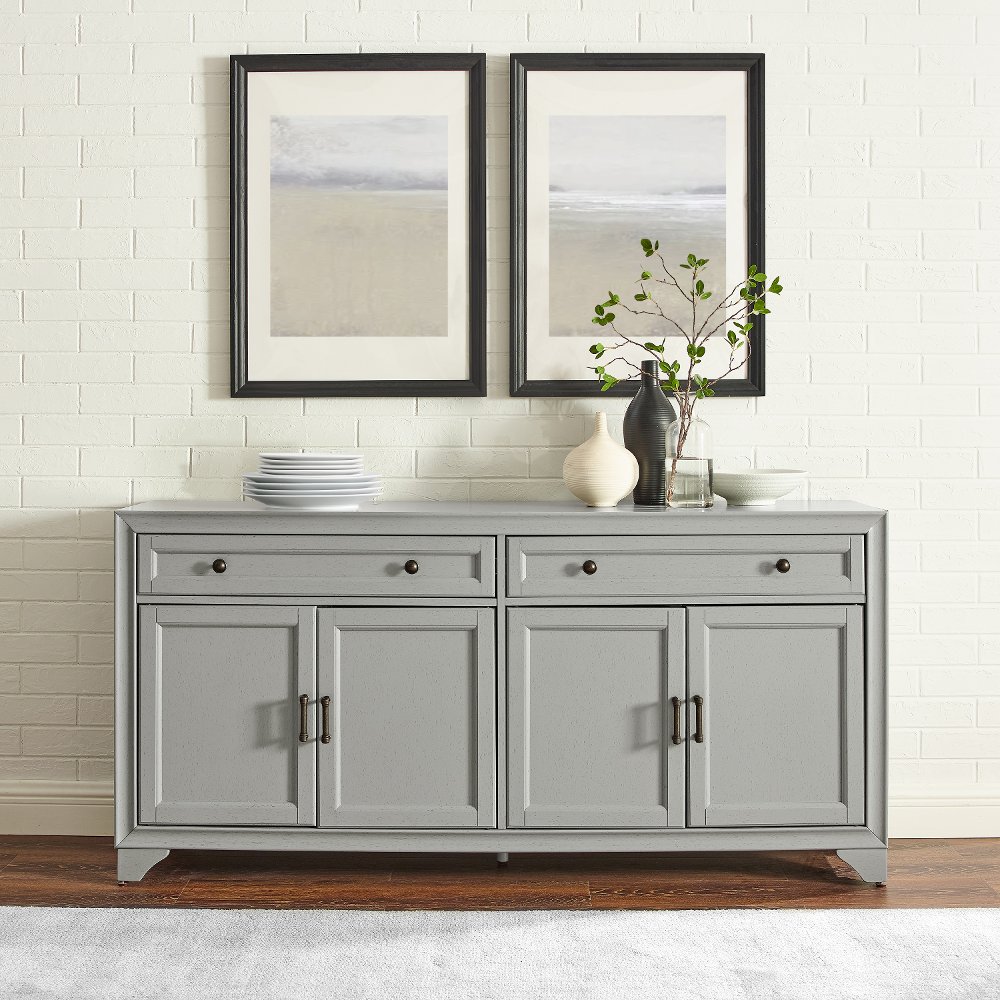
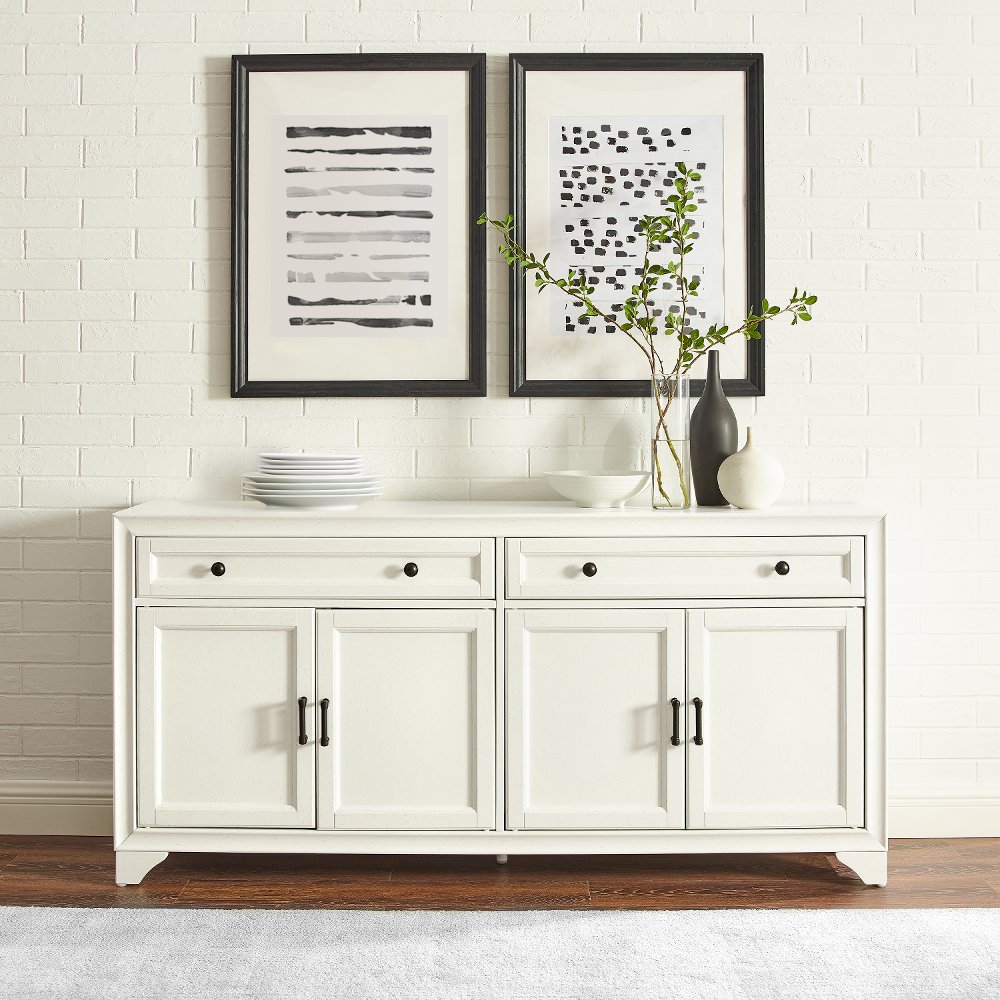
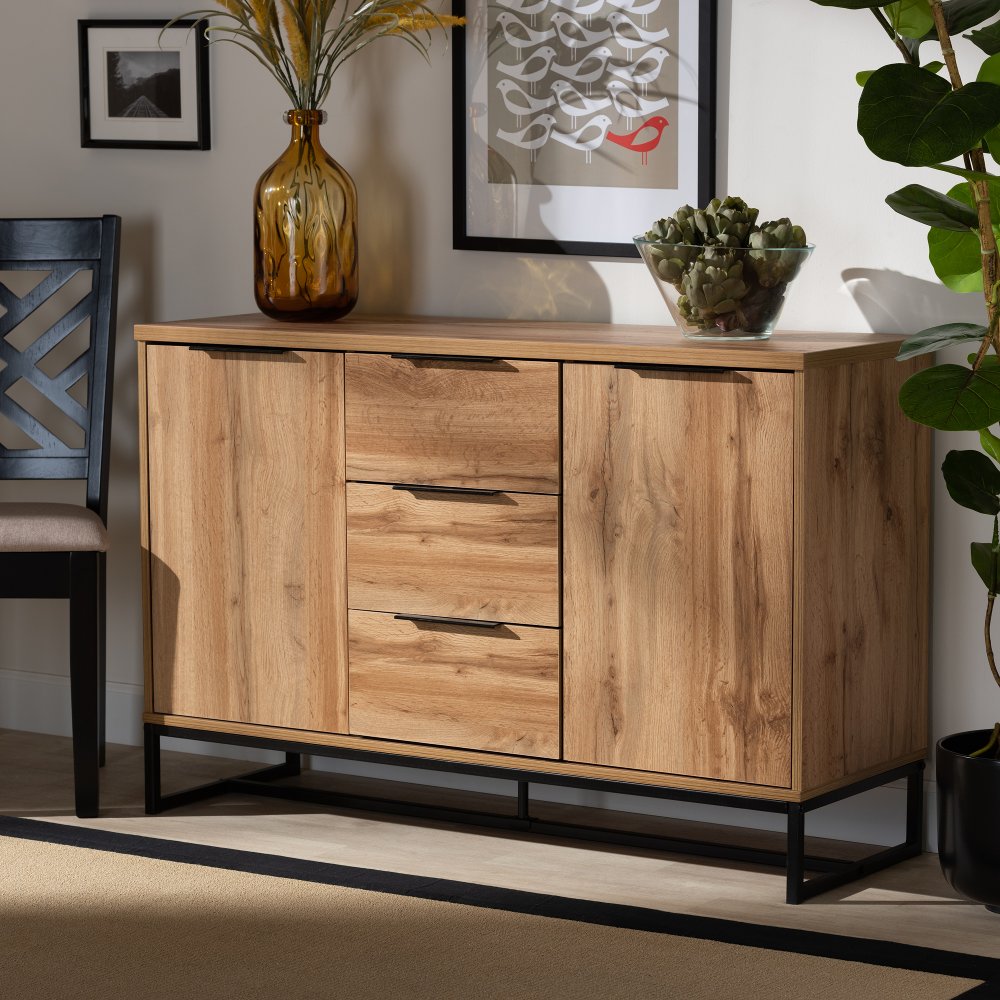
Buffet shelves bring everyday storage and a welcoming display space together, giving serving pieces, dishes, and favorite accents a place that feels connected to the rest of your room. In a dining room, shelving keeps stacks of dinner plates, a wide salad bowl, or a basket of cloth napkins close to the table. Along a kitchen wall, a buffet can hold mugs and breakfast essentials while leaving the top clear for a coffee station. In an open living area, the same furniture can create a natural transition between cooking, dining, and relaxing without introducing a tall piece that interrupts the view. Open shelves have an easy, accessible feel, especially when you reach for the same pieces every day. Shelves behind glass offer a more enclosed display, while a combination of shelving, drawers, and cabinets accommodates both decorative pieces and practical supplies. If you prefer to tuck away mismatched dishes, extra linens, or entertaining accessories, a buffet with doors can give the room a quieter look while keeping essentials nearby. The most useful arrangement depends on what happens in your home: casual family meals, dinners with friends, weekend baking, or a little of everything. A household that entertains often might value room for large platters and extra glassware, while someone furnishing a smaller apartment may need one piece to hold tableware, books, and a few decorative objects. Buffet shelves also make sense in a breakfast nook or multipurpose room where every storage surface needs to earn its place. During the cooler months, a shelf of mugs and a tray ready for warm drinks can make a dining corner feel inviting without requiring a full seasonal makeover. With a layout that suits your routines, a buffet becomes more than a place to store things; it helps keep the room ready for the people who use it.
Materials, finishes, and construction shape both the character of buffet shelving and how it holds up to daily use. Solid wood brings natural variation in grain and color, with a substantial feel that works well in traditional, farmhouse, and contemporary rooms alike. Wood veneer offers a real wood surface over a supporting core, often creating consistent grain patterns across broad doors and panels. Engineered wood is another common component, and its performance depends on the quality of the construction, finish, and hardware rather than the material name alone. Metal frames can give open shelves a lighter, more industrial profile, while glass shelves let light move through a display and help glassware stand out. Each material has its own care needs, so the manufacturer's instructions matter more than a one-size-fits-all cleaning routine. A soft cloth is a good starting point for regular dusting; spills should be wiped up promptly, and wood surfaces generally benefit from protection against standing moisture, direct heat, and prolonged sunlight. Trays and coasters help contain drips around a beverage station, and protective pads beneath pottery can reduce scratches when pieces move. A buffet top used for serving also needs trivets or other suitable protection beneath hot dishes. Durability involves the shelves themselves, too. Dinnerware gets heavy quickly, so shelf weight limits deserve attention, particularly when you plan to store full stacks of stoneware or substantial serving bowls. Adjustable shelves make it easier to accommodate tall pitchers and changing storage needs, while fixed shelves offer a consistent layout. Secure shelf supports, stable legs or bases, and well-fitted components contribute to a piece that feels dependable in use. Visually, a warm wood finish can soften a room with metal dining chairs, while painted finishes can connect a buffet to cabinetry or trim. Matching every finish isn't necessary; repeating a color, texture, or hardware tone can make different pieces feel thoughtfully connected without making the room look overly coordinated.
Fit is about more than finding a buffet that slides into an empty stretch of wall. Its width, depth, and height should leave the surrounding room comfortable to use, especially near dining chairs, doorways, and busy paths between the kitchen and table. A shallow profile can be helpful in a narrow dining area, but the interior shelf depth still needs to accommodate your largest plates or serving pieces. Measuring a favorite platter or tall carafe gives you a more useful reference than judging storage space from the outside alone. Allow room for any cabinet doors and drawers to open, and remember that a dining chair pulled out for someone to sit takes up more space than a chair tucked neatly under the table. A buffet's height also affects its role: a comfortable serving surface is useful for setting out food, while a lower piece may sit more naturally beneath a window or artwork. Follow assembly and anchoring instructions, including any supplied anti-tip guidance, and keep heavier belongings on lower shelves when appropriate for the design. Once the piece is in place, a simple arrangement makes the storage easier to live with. Plates stacked by size, linens gathered in a basket, and glasses grouped together let you find what you need without rearranging the entire shelf. Leaving a little space between groups makes open shelving easier to dust and gives each object room to stand out. Closed storage is useful for less decorative necessities, while an open section can hold a ceramic bowl, a few cookbooks, or a serving piece with personal meaning. For a first apartment, a shared household, or a home where gatherings have grown larger, buffet shelves can adapt as routines change. They can also make a thoughtful furniture gift for a new home when the recipient's measurements, storage needs, and style preferences are known. The right balance of accessible shelving, sturdy construction, and usable surface space helps a dining room feel settled, practical, and ready for everything from a quick breakfast to a lingering evening meal.
Read More