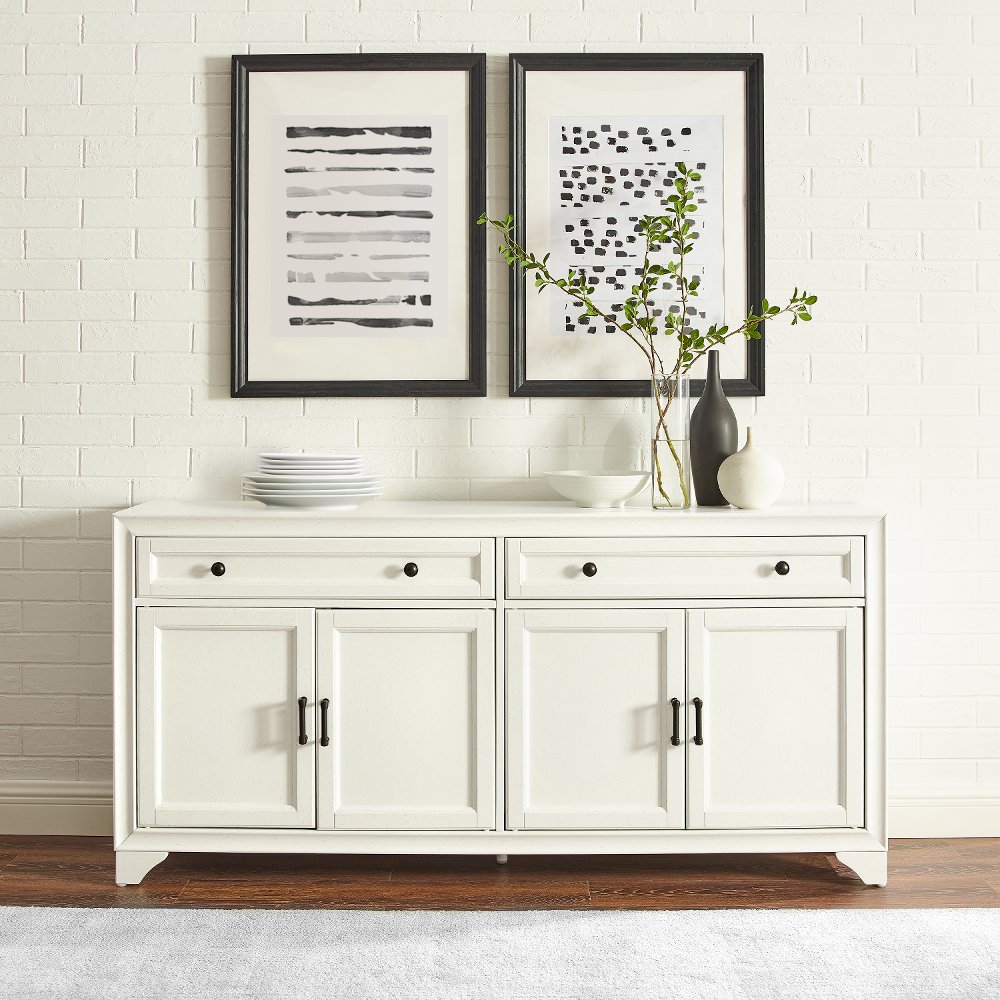
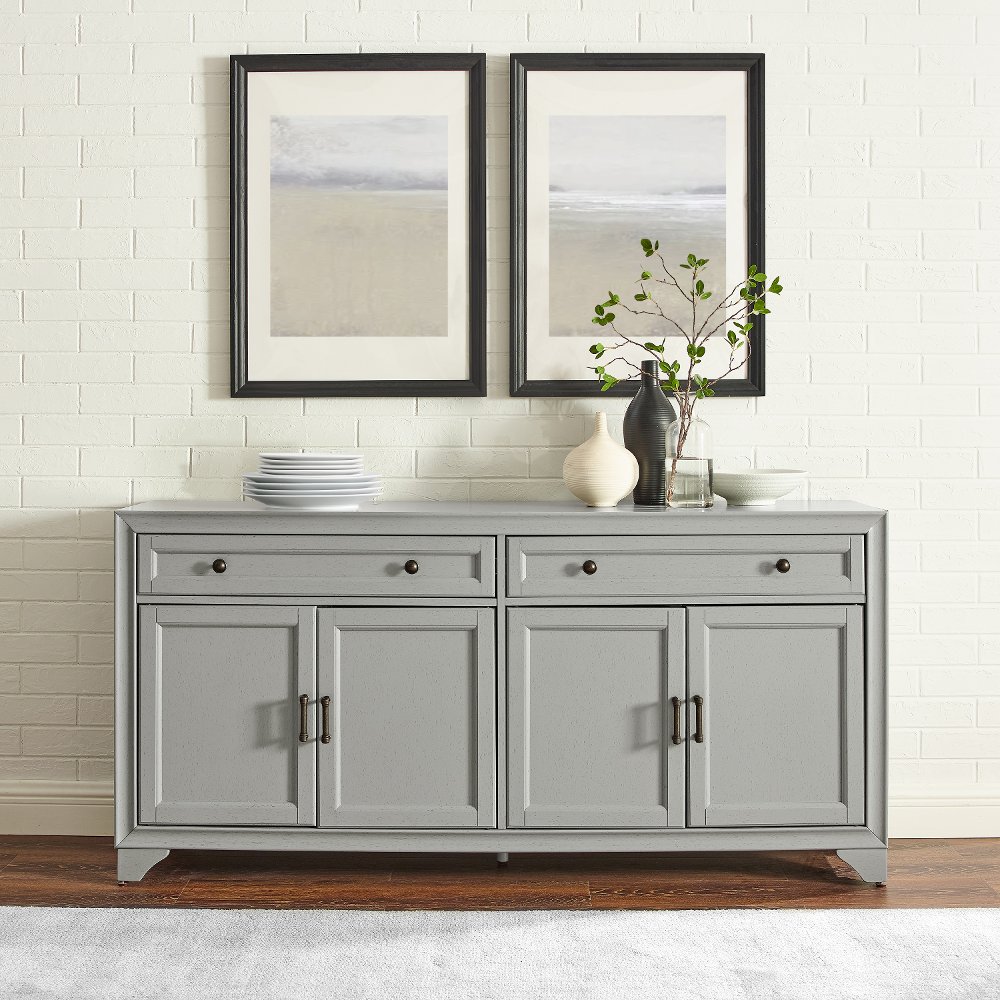
Buffets for small dining rooms bring storage and serving space together in a footprint that suits everyday living. Often called sideboards, these cabinets give dishes, table linens, and serving pieces a home close to the table, so setting out dinner doesn’t mean several trips across the house. A compact buffet under 50 inches wide can work well along a short dining room wall, while a narrow sideboard around 16 to 18 inches deep may help preserve space around the table. Those dimensions are useful starting points, not a guarantee of fit: the best size depends on your table, chairs, doorways, and how people move through the room. Measure the cabinet’s full width and depth, including projecting handles, and account for baseboards that may keep it from sitting flush against the wall. Allow room for cabinet doors and drawers to open, too. A buffet that fits neatly behind a tucked-in chair still needs enough clearance for someone to pull that chair out and sit comfortably. About 36 inches between the table edge and nearby furniture is a common planning baseline; a walkway behind occupied chairs generally needs more. In especially snug layouts, sliding cabinet doors can reduce the space needed to reach stored dishes, although they typically expose only one section at a time. Height matters just as much as width. A top that’s comfortable for setting down a platter makes the buffet useful during meals, while a cabinet beneath a window should clear the sill and leave window treatments free to move. Check interior dimensions against your largest dinner plates and serving bowls rather than judging storage by the outside alone. For an apartment dining nook, breakfast area, or smaller dedicated dining room, a well-proportioned buffet can replace an overcrowded kitchen shelf without making the eating area feel like a storage room. Its value comes from making the space easier to use, not simply filling an empty wall.
The construction and finish of a small dining room buffet influence both its appearance and how it handles daily use. Solid wood brings natural grain and character, and some solid-wood surfaces can be refinished when their finish becomes worn. Wood veneer offers the look of real wood over a supporting core, though its thin surface requires care when addressing scratches or considering refinishing. Engineered wood with a laminate finish can provide a consistent appearance and a surface that’s easy to wipe down when maintained according to the manufacturer’s directions. Whatever the material, sturdy joints, a well-supported back, smoothly operating drawers, and securely attached hardware are useful signs to examine. Adjustable shelves help accommodate pieces of different heights, but shelf weight limits still matter, particularly when storing stacks of stoneware or heavy serving dishes. Place heavier pieces low in the cabinet for easier handling, and follow any anchoring instructions supplied with the furniture. Style can make a compact cabinet feel more settled in the room. Raised legs reveal more flooring and can give a sideboard a lighter visual presence; they may also make sweeping underneath easier if there’s enough clearance. A closed base creates a more grounded look and keeps dropped crumbs from traveling as far beneath the cabinet. White, cream, and pale wood finishes can blend gently with light walls, while a dark wood buffet can add definition without overwhelming the space when its proportions stay modest. Glass-front doors let favorite bowls or glassware become part of the room’s character, although the contents remain visible and benefit from a little order. Solid doors keep mismatched dishes, folded linens, and everyday supplies out of sight. Simple door fronts and modest hardware tend to sit quietly alongside a dining set, while fluting, paneled doors, or an expressive wood grain can add interest without requiring extra decorative pieces. Matching every finish isn’t necessary; repeating a wood tone, metal detail, or color elsewhere in the room can create a comfortable connection.
Inside a compact buffet cabinet, the most useful storage reflects what actually happens around your table. A household that eats there every day may benefit from drawers for flatware, napkins, and placemats, with shelves below for dinner plates and cereal bowls. Someone who enjoys having friends over may prefer taller compartments for pitchers, serving trays, and stacks of extra glasses. For a dining table that also handles homework or occasional laptop use, one drawer can hold chargers, pens, and paper so the surface clears quickly for a meal. Shallow drawers make small essentials easier to find, while deep cabinets are better suited to bulky pieces that don’t stack neatly. Removable dividers and simple shelf organizers can help separate contents, provided they fit without blocking hinges or putting extra strain on shelves. The top offers a convenient landing place for a bread basket, a tray of drinks, or dishes waiting to reach the table. Leaving a generous portion of that surface open keeps it ready for use; a small lamp and one favorite bowl may be all the decoration a narrow buffet needs. If your floor space is limited but the wall above the cabinet is open, Buffet Cabinets With Hutch offer another way to think about dining storage, extending it upward rather than farther into the room. Check overall height, upper-shelf reach, and wall-anchoring requirements before choosing a taller arrangement. Everyday care helps any buffet stay welcoming and useful. Dust with a soft cloth, wipe up spills promptly, and use cleaning products approved for the finish. Coasters beneath drinks and protective pads beneath serving pieces help prevent rings and scratches; hot dishes need suitable trivets rather than direct contact with the cabinet top. Avoid dragging pottery across the surface, and keep moisture from collecting along seams or around hardware. With a practical interior, comfortable clearance, and a finish that suits your routine, a small buffet can handle the ordinary details of dining beautifully—from keeping clean napkins within reach to giving a full table a little breathing room.
Read More