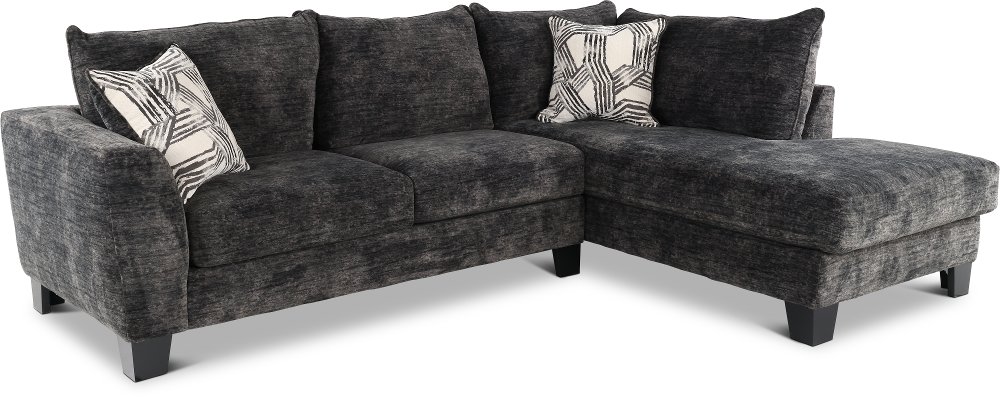
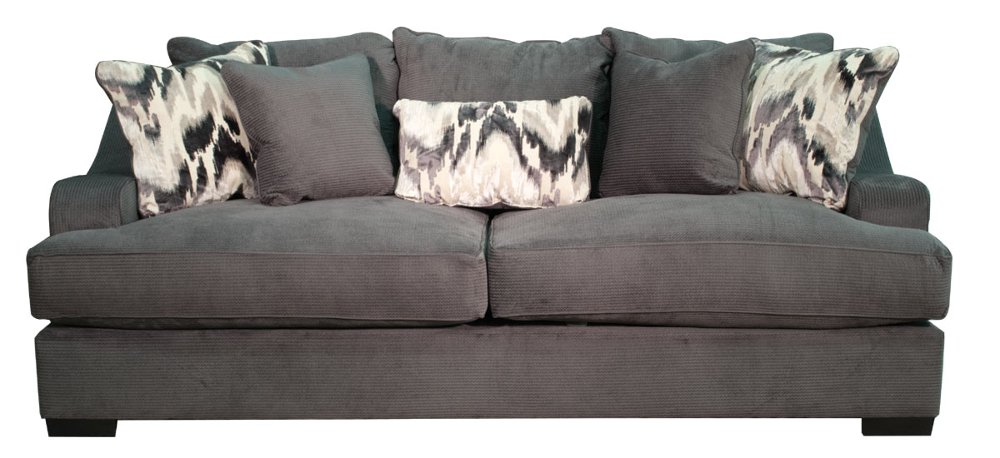
Charcoal sofas bring the depth of a dark neutral to a living room without the sharp contrast of solid black. Their deep gray upholstery creates a backdrop for everything from pale oak tables and cream rugs to colorful artwork and patterned pillows. Charcoal isn’t one exact shade: some fabrics lean toward cool blue-gray, while others have warmer brown undertones or a mix of light and dark threads. That variation gives a charcoal couch character, especially when you can see the weave up close. Natural light and nearby furnishings can change how the color reads, so an upholstery sample viewed beside your flooring and wall color can help you picture the finished room. In a space with white walls, a dark gray sofa creates a clear focal point; against deeper wall colors, it can feel more settled and understated. Shape matters just as much as shade. Slim track arms, a low back, and exposed legs suit a clean, contemporary layout, while rounded arms and fuller cushions create a softer, more traditional look. Tufting adds detail, and a simple upholstered silhouette leaves more room for other pieces to stand out. Charcoal also works well when your furniture has come together over time rather than as a matching set. A wood coffee table, a favorite leather chair, and a textured rug can all sit comfortably alongside it. Cream pillows brighten the seating area, olive green adds an earthy note, and terracotta brings warmth without making the room feel overly coordinated. If you prefer a quieter palette, combine different textures instead of adding more colors: a nubby throw, smooth ceramic lamp, and woven rug give dark gray upholstery plenty of company. The result can feel polished enough for guests and relaxed enough for an ordinary evening with your feet up.
Upholstery and cushion construction shape how a charcoal sofa feels in everyday use. Tightly woven fabrics tend to have a smoother surface, while chenille and other textured upholstery can feel softer and show more variation across the cushions. Velvet offers a richer appearance, though its pile may change direction when someone sits down, leaving visible shading that’s part of the fabric’s character. Polyester and blended upholstery are common choices for frequently used seating because many are designed for practical care, but fiber content alone doesn’t tell the whole story. The weave, backing, finish, and manufacturer’s care instructions all matter. Performance fabrics may offer added resistance to spills or staining; they still need prompt cleanup and aren’t automatically scratch-resistant or suitable for every cleaning method. Charcoal leather sofas offer another look and feel, with surfaces that may develop creases and character through regular use. Full leather upholstery and leather-match construction differ, so material descriptions deserve a close look when comparing seating. Underneath the upholstery, a sturdy frame, secure joints, and a supportive suspension system help a sofa hold up to repeated sitting. Cushion fill influences comfort, too. Foam can provide a more defined seat, while fiber or feather blends may feel softer and need more frequent fluffing. A deep, plush seat often suits someone who likes to curl up sideways with a book; a shallower seat with a supportive back may feel better for conversation or sitting upright. Seat height and arm height also affect how easily someone can settle in and stand back up. For a household with children, pets, or a living room that doubles as the main gathering space, practical details can matter as much as appearance. Secure cushions, accessible cleaning areas, and upholstery suited to frequent use help make daily life simpler. Dark gray can disguise some minor marks, but pale pet hair, crumbs, and lint may still stand out, especially on smooth, solid-colored fabric. A textured weave may soften that contrast without eliminating the need for regular care.
The right size charcoal sofa gives everyone a comfortable place to sit while leaving the room easy to move through. Overall width is only part of the fit: broad arms can take up space without adding seating, and an extra-deep frame can extend farther into a walkway than expected. A compact sofa can suit an apartment, home office, or secondary sitting area, while a larger sofa or sectional can support shared movie nights and longer visits. Chaise designs give someone a place to stretch out, but their orientation matters when a doorway or frequently used path sits nearby. Reclining seats need clearance to open, and sleeper designs need enough floor space for the bed as well as a practical route around it. For a separate seat that coordinates with dark gray upholstery, Charcoal Recliners can carry the color into another part of the seating arrangement without requiring every piece to share the same silhouette. Measuring doorways, hallways, stair turns, and elevator openings helps account for the trip into your home, not just the sofa’s final position. Once the sofa is in place, consistent care helps preserve its appearance and comfort. Vacuum upholstery with an appropriate attachment, including the gaps between cushions, and blot spills promptly rather than rubbing them farther into the material. Follow the care label before applying any cleaner; some fabrics permit water-based cleaning, others require solvent-based treatment, and some call for vacuuming or professional care only. Removable cushion covers aren’t necessarily machine washable. Rotate or flip cushions only when their construction allows it, and fluff softer fills to redistribute the contents. Protect upholstery from prolonged direct sunlight to help limit uneven fading, and follow the specified care routine for leather. With a size that suits your room, a seat that supports your preferred way to relax, and materials that fit your household, a charcoal sofa can become the comfortable anchor for daily life.
Read More