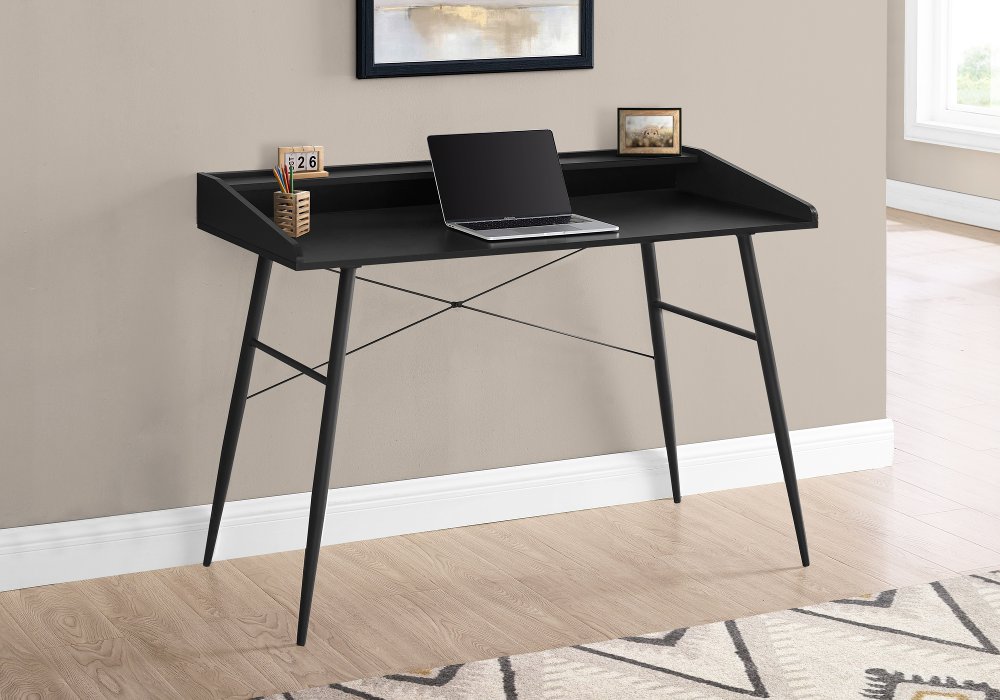
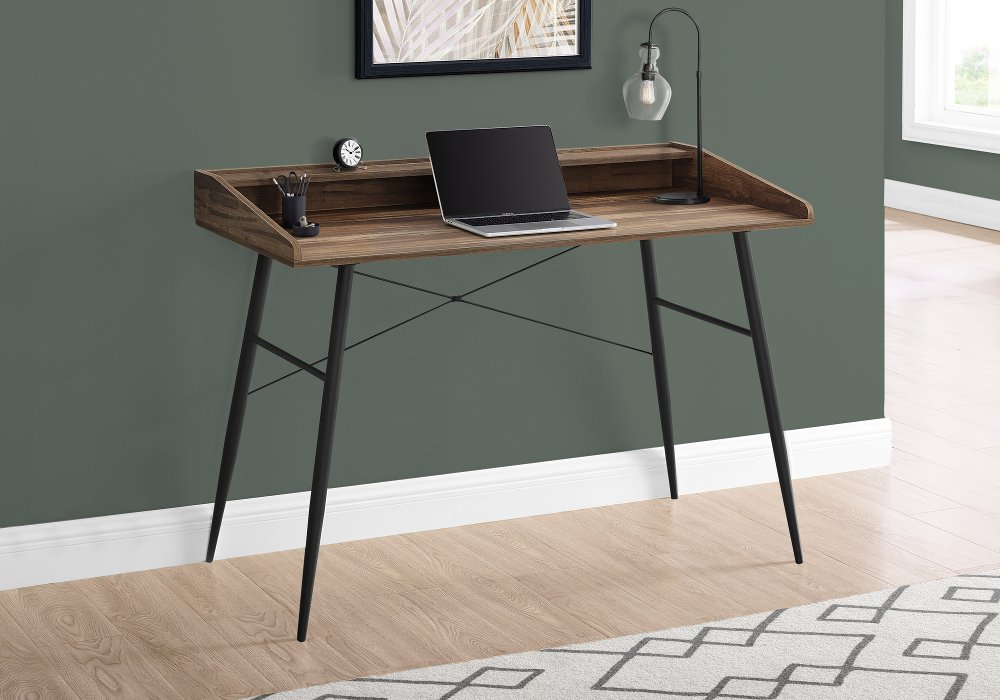
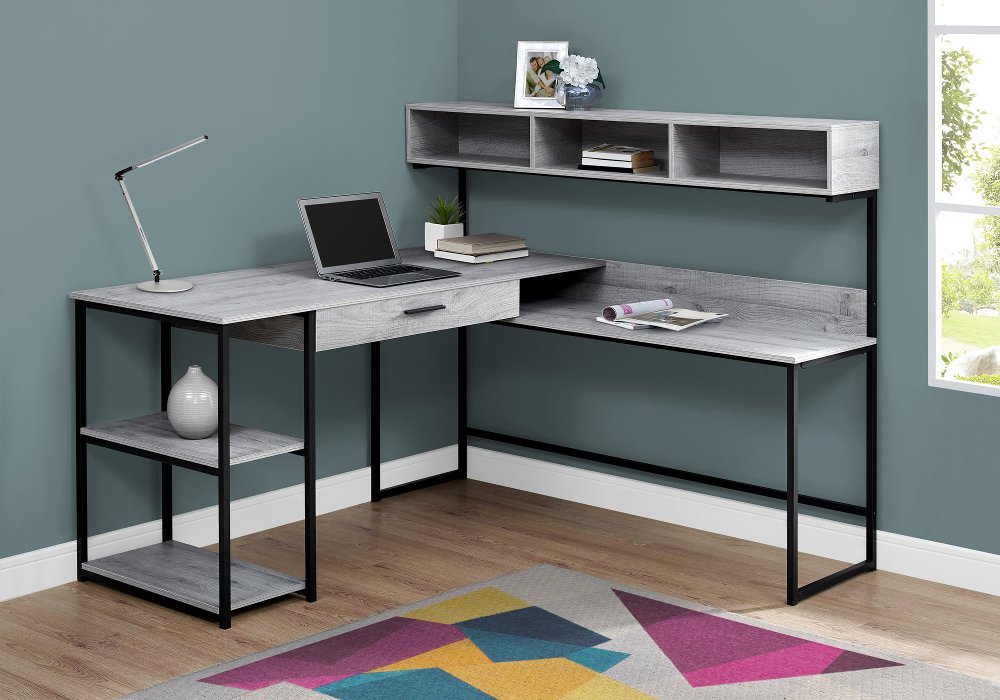
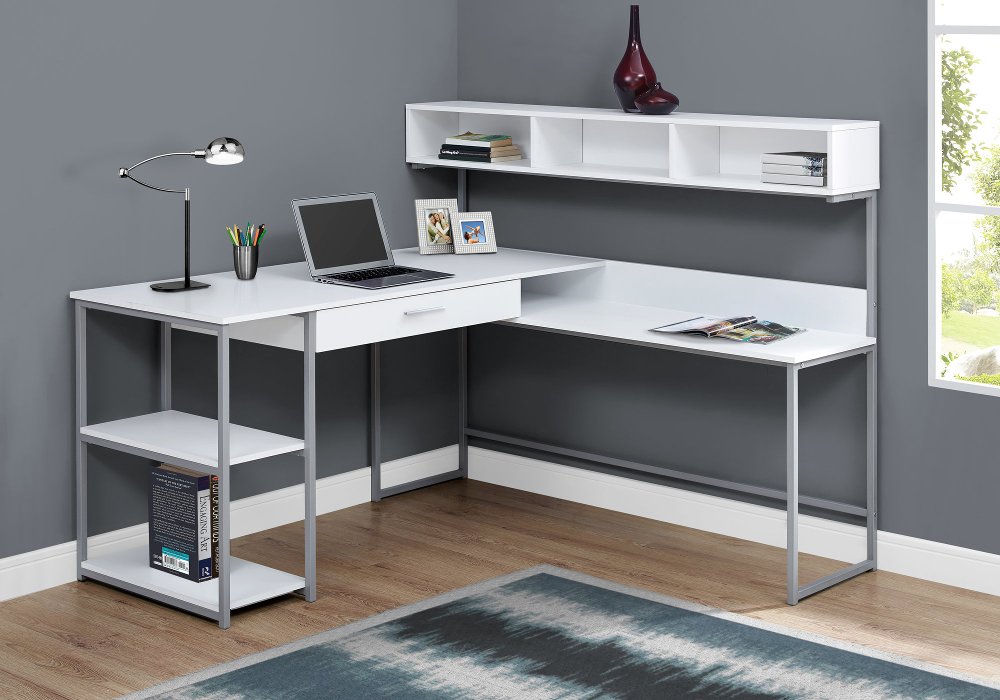
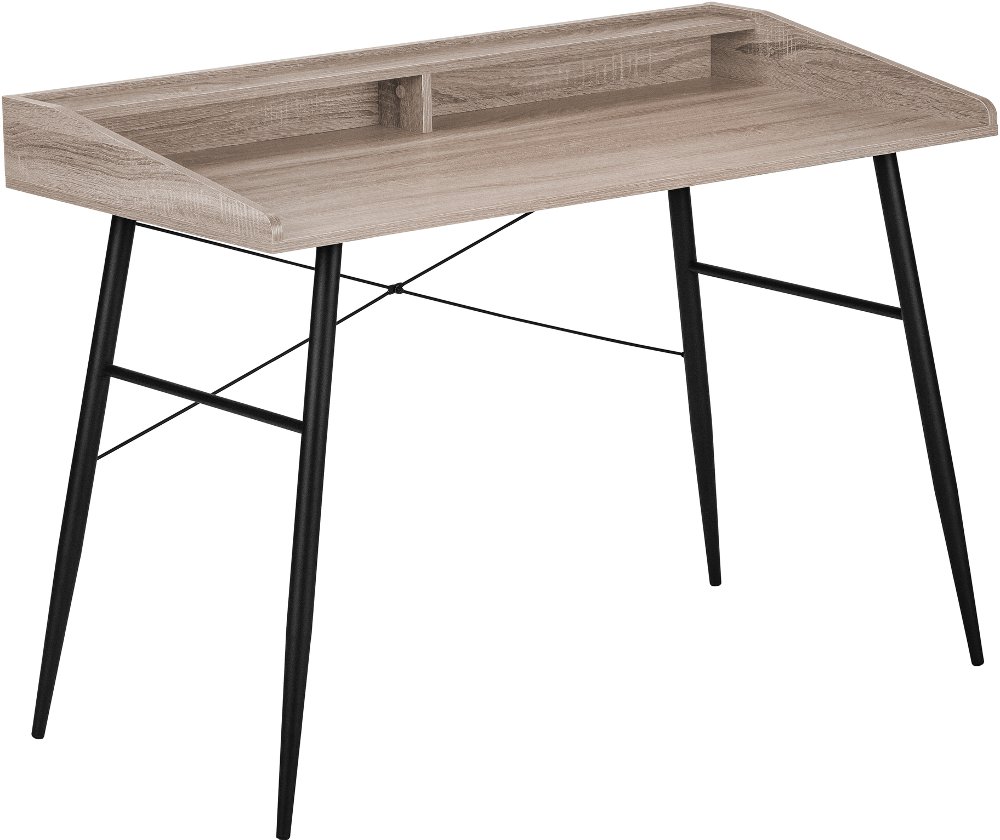
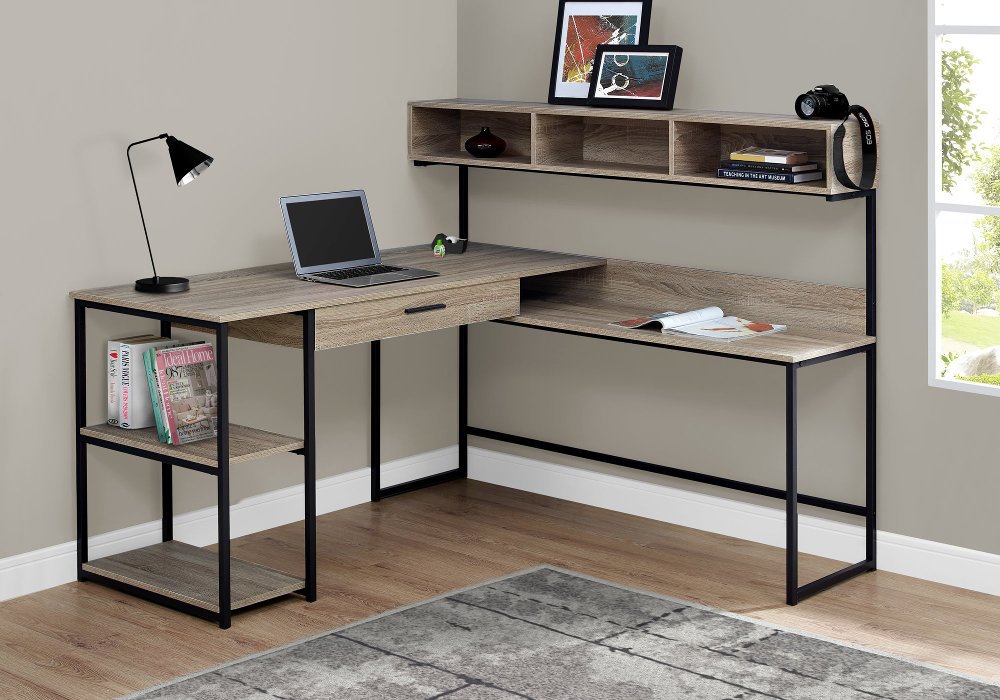
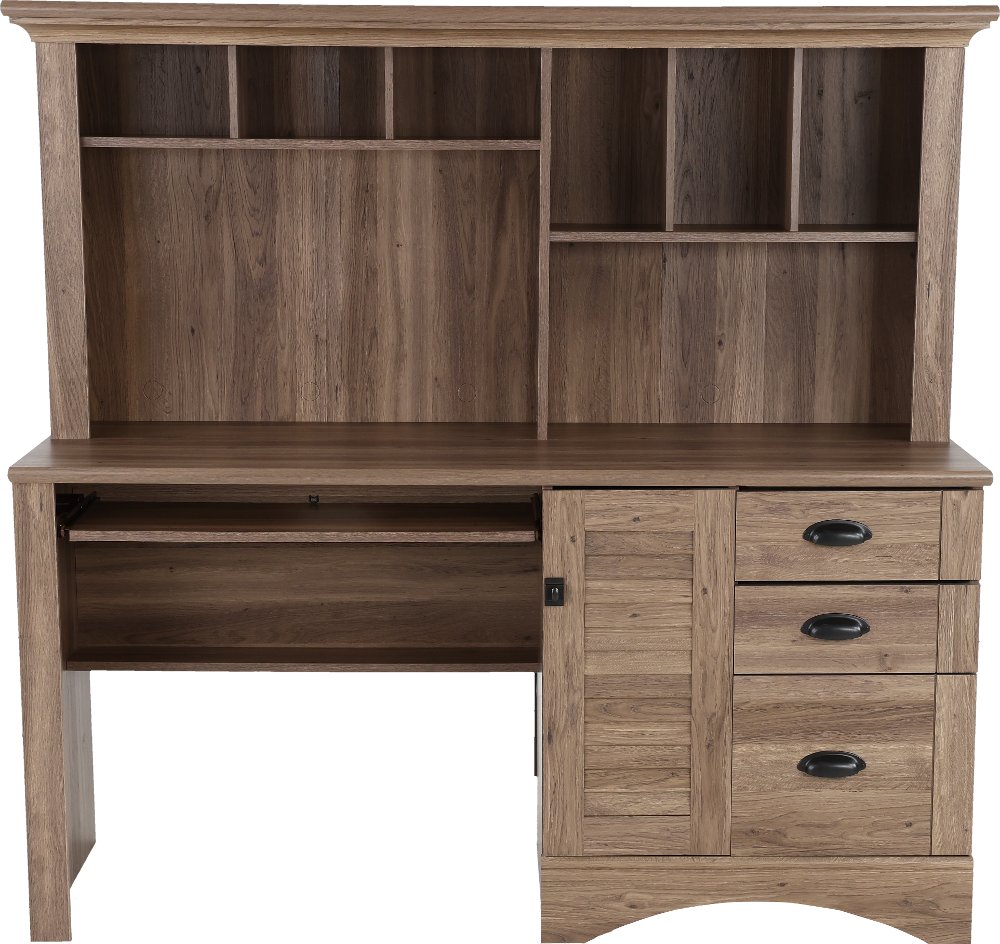
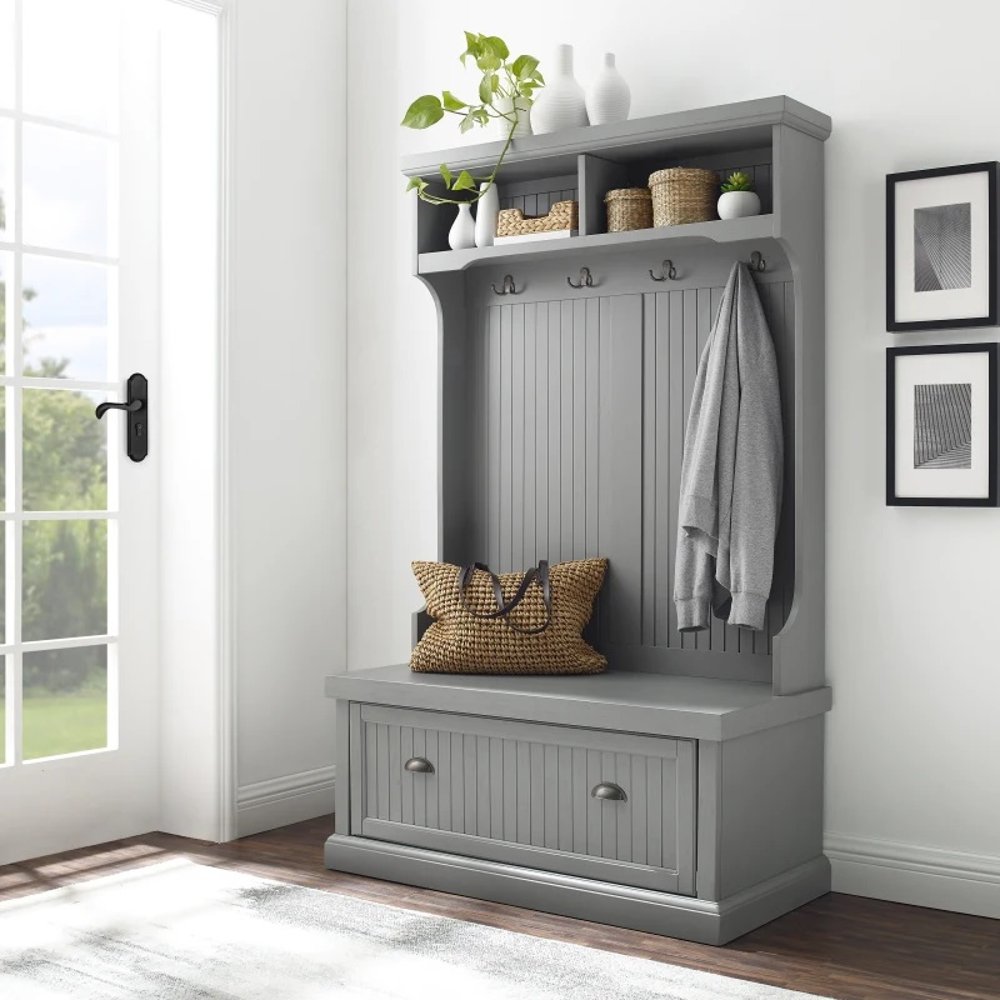
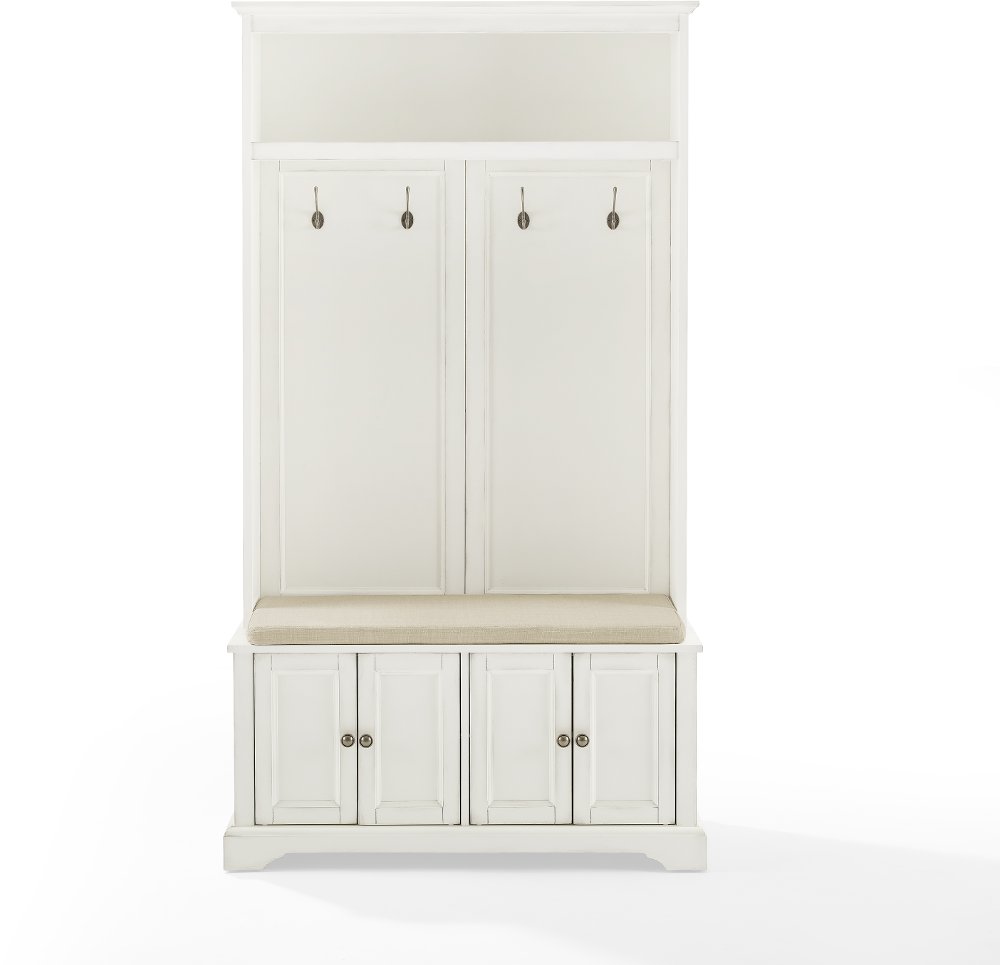
Desk cubbies are open storage compartments that keep books, papers, office supplies, and small essentials organized at or near a work surface. They may be built into a desk, arranged beneath the desktop, or incorporated into a hutch above it. Separate desktop organizers can provide similar storage without replacing an existing desk. Unlike a deep drawer that hides its contents, an open cubby makes a notebook, pencil cup, or charging cable easy to spot and reach. That visibility is useful in a home office where meeting notes need a reliable landing place, a student’s bedroom where textbooks share space with homework, or a family workspace used by several people throughout the day. Smaller compartments suit stationery and everyday supplies, while taller or wider openings can accommodate books, folders, and storage baskets. A desk with cubbies can also give each activity its own place: reference materials on one side, creative supplies on the other, and a clear stretch of desktop in between. For someone who works with a laptop, that arrangement helps preserve room for handwritten notes or an external keyboard. For a child practicing handwriting, nearby compartments can make putting away crayons and workbooks a manageable part of the routine. In a shared workspace, assigning a cubby to each person keeps individual projects separate without requiring a separate desk for everyone. Open storage also leaves room for personality. A favorite photograph or a small decorative object can sit alongside useful supplies, making the workspace feel connected to the rest of the home. The most practical arrangement balances display with everyday function, leaving frequently used materials accessible rather than filling every opening. Baskets and fitted bins can gather loose pieces, while a few open compartments keep the things needed most often in plain view. This mix works especially well in multipurpose rooms, where a desk might serve as a work station during the day and a place for household paperwork later.
Materials and construction influence how desk cubbies look, feel, and hold up to daily use. Solid wood brings natural grain and variation, giving a workspace a warmer furniture-like character. Wood veneer offers a real wood surface over a supporting core, while engineered wood with a laminate or other applied finish can create a consistent appearance across the desk and its storage compartments. Metal elements can add a clean, structural look that pairs easily with simple office furniture. Durability depends on more than the material name, though. Secure connections, well-supported shelves, neatly finished edges, and a surface suited to everyday handling all matter when books slide in and out several times a day. A compartment holding a few envelopes faces different demands from one filled with heavy reference books, so the manufacturer’s weight limits deserve attention. Adjustable shelves offer flexibility for changing supplies, while fixed dividers provide a consistent layout for established routines. Finish choice also affects how comfortably the desk fits into a room. Light finishes can keep a large hutch from feeling visually heavy, darker tones can complement traditional furnishings, and painted surfaces can coordinate with existing shelving or bedroom furniture. Matching every piece exactly isn’t necessary; repeating a wood tone or metal finish can help the space feel connected. Regular care is usually straightforward, but it should follow the furniture’s specific instructions. Dust can collect at the back of open compartments, especially behind books and bins, so occasional emptying makes cleaning more thorough. A soft cloth and an approved cleaning method help protect the surface, while drying any dampness promptly reduces prolonged moisture exposure. Keeping drinks on a coaster and lifting storage baskets rather than dragging rough bottoms across shelves can help preserve the finish. For busy households, easily wiped surfaces and uncomplicated compartments can make routine upkeep less of a chore.
Fit matters just as much as storage capacity, particularly when cubbies share space with a chair, monitor, or nearby doorway. Overall desk dimensions show how much room the furniture occupies, but the interior width, height, and depth of each compartment determine what actually fits inside. A cube that holds a paperback may not accommodate an upright binder, and a basket’s handles can require more clearance than its base. For bulkier supplies and larger containers, Deep Storage Cubbies offer another storage format to consider alongside everyday desktop organization. Extra depth can be useful, although frequently used objects are easiest to retrieve when they stay near the front. Under-desk cubbies should leave comfortable knee space and allow the chair to move naturally, rather than forcing the person seated to work off-center. Above-desk storage needs enough clearance for the intended screen setup, including room to adjust a monitor without bumping a shelf. A desktop organizer also takes up working space, so its footprint matters when a desk already holds a keyboard, lamp, and notebook. Cable openings, where included, can help route cords away from work materials; plugs and power adapters still need enough room to pass through and sit without being pinched. In a compact bedroom or apartment, vertical cubby storage can make good use of the space above a desk, provided the unit is installed and secured according to its instructions. Tall furniture may require wall anchoring, and heavier contents generally belong in lower compartments within the stated load limits. Reach is another everyday consideration: a child’s school supplies or an adult’s frequently used files belong where they can be accessed comfortably. Desk cubbies can also make a thoughtful addition to a student’s study area or someone’s first home office when the dimensions and intended use are known. With the right proportions and a sensible arrangement, they give daily essentials a dependable home while keeping the desktop ready for the task ahead.
Read More