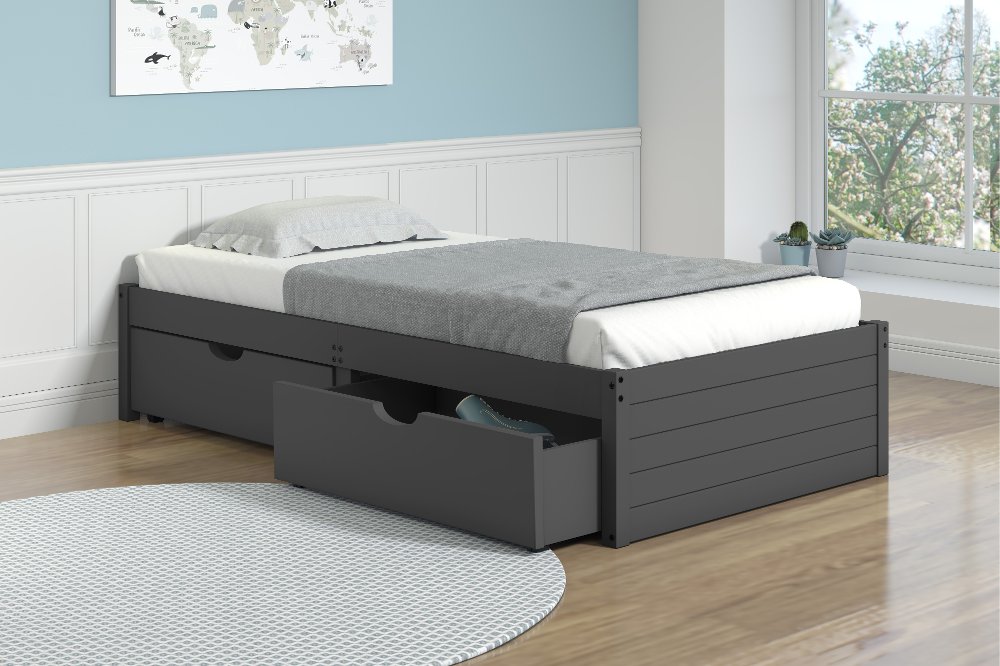
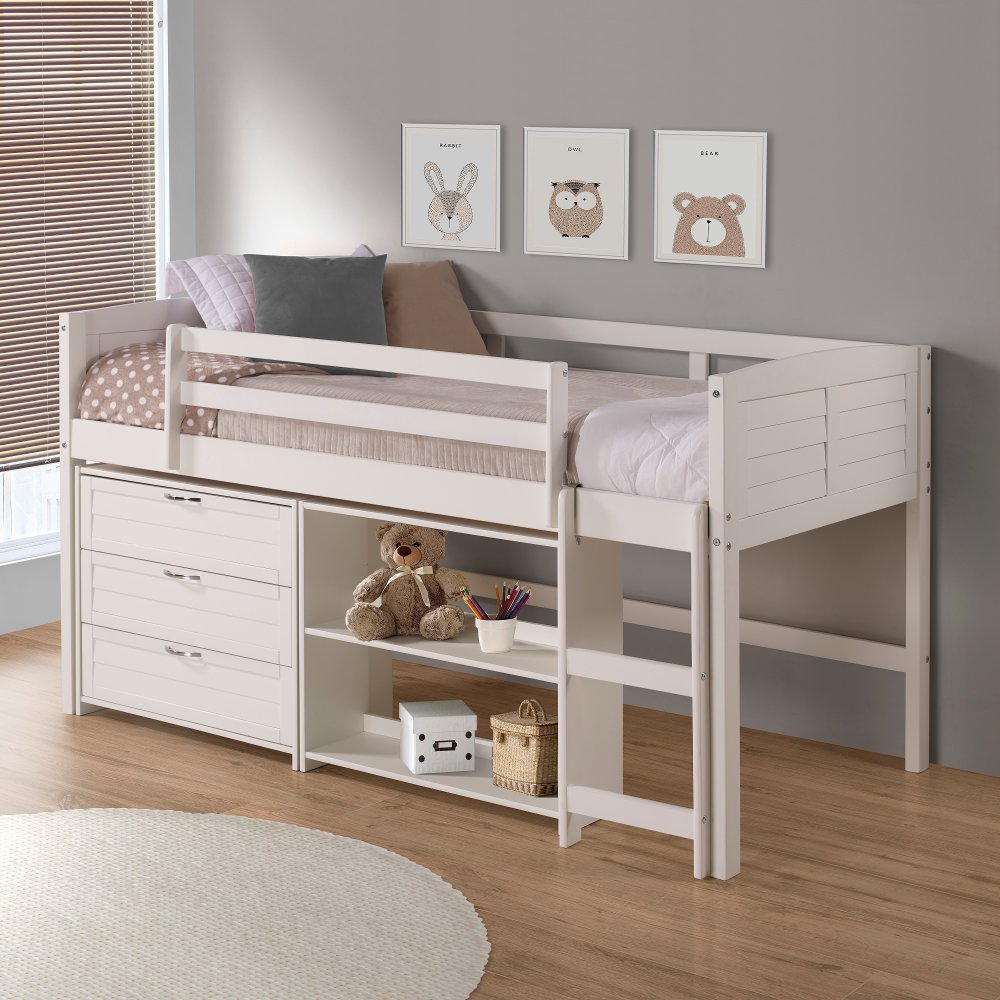
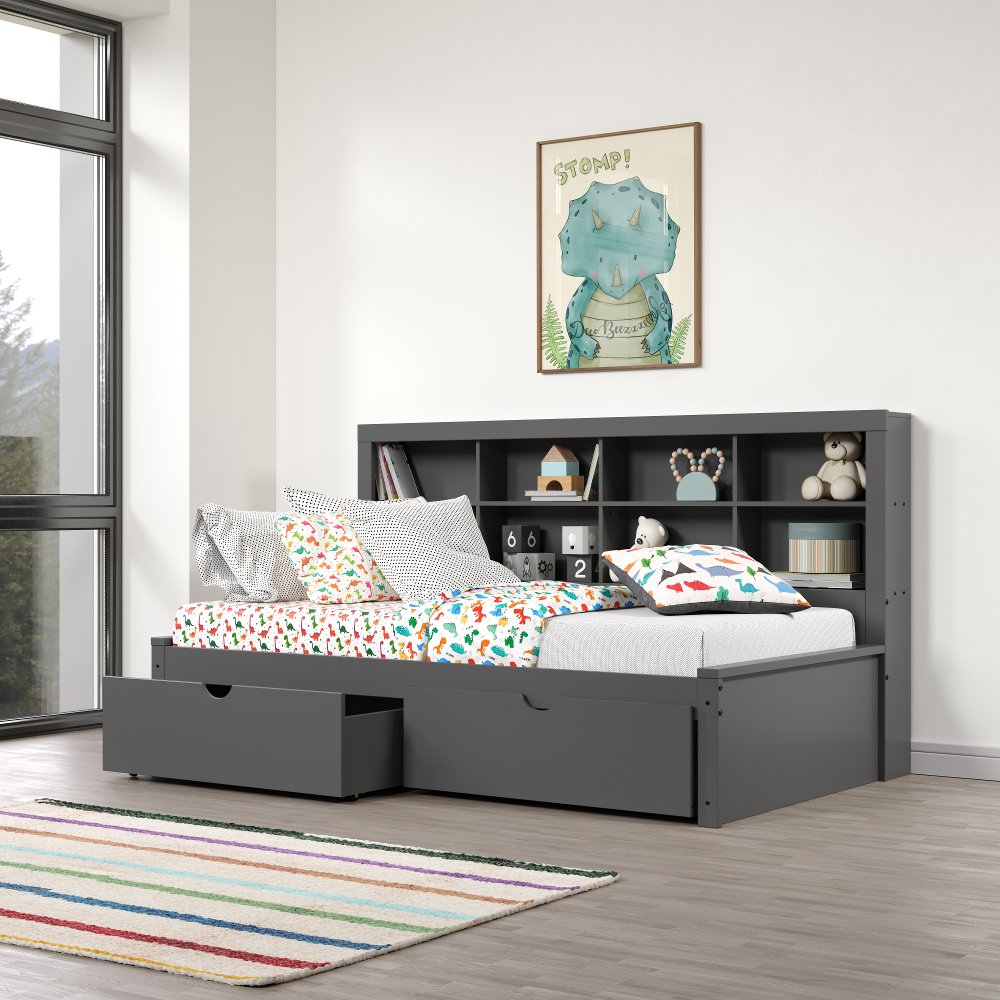
Drawer beds are bed frames with built-in pull-out drawers beneath the mattress, giving you a place to sleep and a place to store everyday essentials in the same footprint. Also called storage beds, and sometimes captain’s beds, they put the space under your mattress to work without adding another piece of furniture to the room. That’s especially helpful in a smaller bedroom, where a separate chest of drawers might crowd the walkway or leave little room beside the bed. Instead of sliding loose bins across the floor, you can tuck folded pajamas, extra sheets, or sweaters into drawers designed to fit the frame. The result feels a little calmer: fewer things piled on a chair, fewer blankets spilling from the closet, and more open floor space for getting dressed. Drawer beds come in several configurations, and the arrangement matters as much as the amount of storage. Platform storage beds typically have a solid or slatted mattress support system with drawers along the sides, at the foot, or both. Captain’s beds often have taller bases with deeper drawers or multiple rows of storage, although the name and layout vary by manufacturer. Daybeds with drawers bring similar convenience to multipurpose rooms, pairing a spot for lounging with space for guest linens underneath. A storage drawer isn’t the same as a trundle, which holds an additional mattress, so check the description when comparing designs. Twin and full drawer beds can work well in children’s rooms, teen bedrooms, and compact guest spaces, while queen and king storage beds offer room to spread out without giving up the opportunity to organize below. For anyone settling into a first apartment, sharing a bedroom, or making better use of a home with limited closets, a bed with drawers can solve a familiar problem: having enough storage without filling every available wall. During the cooler months, that extra space is particularly welcome for flannel sheets and the spare blanket you reach for after the lights go out.
Choosing a drawer bed starts with the room around it, not just the mattress size. Measure the frame’s overall width and length, including the headboard and footboard, since those dimensions can extend beyond the mattress itself. Then consider where each drawer opens. Side drawers need clearance beside the bed, and footboard drawers need space between the end of the bed and the opposite wall or furniture. There isn’t one clearance measurement that works for every design; use the listed drawer extension when available, and allow enough room to stand or kneel comfortably while reaching inside. A nightstand can block a drawer even when the rest of the room looks spacious, so picture the furniture in place before making your choice. If one side of the bed will sit against a wall, a design with accessible drawers on the other side or at the foot may make more sense. It also helps to compare interior drawer dimensions rather than drawer count alone. Several shallow drawers are handy for socks, sleepwear, and folded shirts, while deeper compartments may better accommodate spare bedding. A bulky comforter can fill a drawer quickly, so match the storage to what you actually plan to keep there. Check drawer weight limits, too, especially if you’re thinking about storing books or other heavy belongings. Mattress support deserves the same attention. Many platform drawer beds don’t need a box spring, but that depends on the bed’s construction and your mattress requirements. Confirm the required foundation, slat spacing, center support, and compatible mattress dimensions before purchasing. Consider the finished sleeping height with your mattress in place, particularly for a child or anyone who prefers an easier step into bed. Finally, review assembly requirements and the delivery path through your home. Storage components can make these frames heavier and more involved to assemble than a simple bed frame, and knowing what to expect helps you plan for a smoother setup.
The best drawer bed for your home should feel right in the room and hold up to the way you use it. Wood and wood-look finishes can bring warmth to a bedroom, while upholstered designs soften the look and offer a comfortable backdrop for reading when the headboard is suitably padded. Solid wood, veneers, and engineered wood each appear in storage furniture, often together, so look beyond the finish to the construction details. Drawer joinery, bottom panels, support rails, and hardware all affect how a drawer handles everyday use. Drawers may run on attached glides or roll on casters beneath the bed; with rolling designs, consider whether your flooring or a thick rug could make movement harder. Handles should feel comfortable to grip, and recessed pulls can be a practical choice near a narrow walkway. In a child’s bedroom, reachable drawers can make putting away pajamas or returning toys to their place a more manageable habit. Avoid overloading them, and remind children that open drawers aren’t steps. For teens, the same storage can hold workout clothes, extra bedding, or the sweatshirt that otherwise lands on the desk chair. In a guest room, keeping fresh sheets and an extra pillow near the mattress makes preparing for an overnight visitor simpler. Couples may prefer assigning drawers by side, while someone using a smaller bedroom might reserve the entire base for clothing and free up closet shelves for other needs. Drawer dividers or soft organizers can keep smaller belongings from shifting, provided they fit without interfering with the drawer’s movement. If you still need upright storage for accessories or items you use throughout the day, coordinating Drawer Cabinets can complement the bed without requiring a matching furniture set. Balance your budget against usable storage, construction, and the features you’ll appreciate daily rather than choosing by drawer count alone. A well-chosen drawer bed earns its place quietly: clean linens close at hand, favorite clothes easy to find, and a bedroom that leaves you a little more room to relax.
Read More