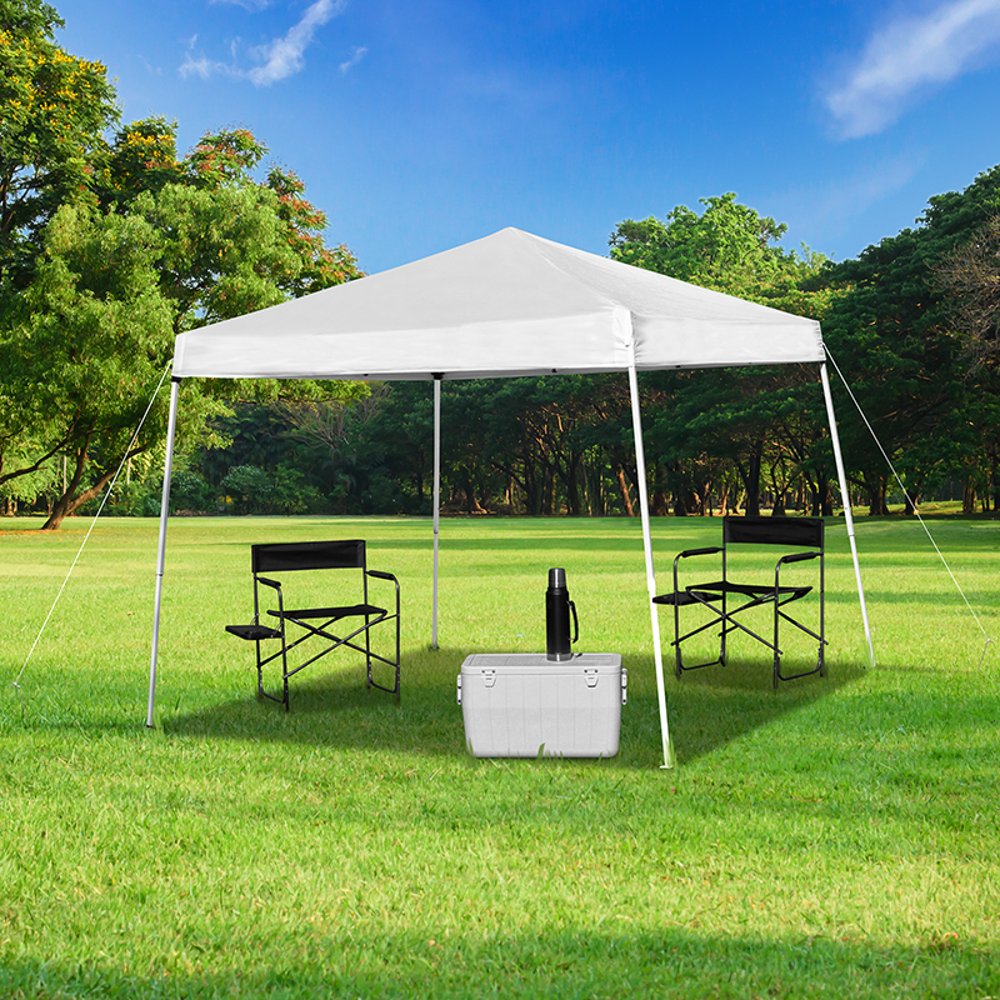
Easy setup canopy tents create a shaded gathering spot without the extra work of assembling a shelter pole by pole. Most pop-up designs pair a folding accordion-style frame with a fabric roof, so the main structure stays connected between outings. That convenience makes them a practical choice for backyard lunches, youth sports sidelines, tailgating, craft markets, and campsite picnic areas. A folding table beneath the canopy can become a place to serve sandwiches, display handmade goods, or keep score while the next team takes the field. The details that make setup easier include central push-up locking hubs, easy-to-grip height controls, clearly marked release points, and storage bags that open wide enough to accommodate the folded frame. A center-lock design can reduce the number of separate locking points to engage, while covered release buttons can help keep fingers away from moving joints. Even a canopy designed for one-person setup may be easier to handle with a second adult, especially when fitting the roof or positioning a larger frame. Setup time depends on the design, shelter size, terrain, and familiarity with the mechanism; anchoring the tent is part of setup, not an optional finishing touch. In general, pop-up canopy assembly involves opening the connected frame, securing the roof as directed, engaging the locking mechanism, adjusting the legs, and anchoring the shelter according to its instructions. Some designs allow the fabric top to stay attached during storage, while others require removal, so that detail matters if frequent use is part of the plan. For someone heading to a weekend market or managing folding chairs, snacks, and sports equipment, fewer loose components can make packing feel much more manageable. Easy setup canopy tents also make useful gifts for families who spend time outdoors, recreational sports fans, or hobbyists who sell at community events. The most thoughtful fit depends on where the recipient will use the shelter, how much weight they can comfortably move, and whether its folded length fits their vehicle.
Canopy size matters in two ways: the space the legs occupy and the shade the roof provides. A nominal 10-by-10-foot canopy may describe the base footprint or roof dimensions, depending on the design, so check both measurements rather than assuming they’re identical. Slant-leg frames can have a smaller roof than their ground footprint, while straight-leg frames often make it easier to arrange tables and chairs within the shelter’s boundaries. Neither measurement guarantees a fixed patch of shade all day, because the sun’s angle changes where that shade falls. For a family picnic, allow room to pull chairs out from the table without bumping the legs. For a craft booth, consider the display table, a seat behind it, and enough clearance for visitors to browse comfortably. Guy lines and anchors may require space beyond the frame itself, which matters on a narrow patio or within an assigned event space. Adjustable legs offer different clearance settings, helping accommodate seated gatherings or standing conversations, but the frame still needs a stable, suitable surface. A roof peak measurement isn’t the same as headroom along the edges, so entry height deserves attention, particularly for taller adults. Adjustable Canopies are worth considering when flexible height is important for different outdoor activities. Materials also affect how a shelter feels to transport and how it holds up over time. Steel frames are commonly chosen for their sturdy feel, though they can be heavier to carry and need protection wherever their finish becomes scratched. Aluminum frames are often lighter and resist rust, but their strength still depends on tubing dimensions, joint construction, and overall design. Polyester roofs are common, with coatings that may provide water resistance or ultraviolet protection. Fabric weight, reinforced corners, secure attachment points, and well-finished seams all deserve attention. A water-resistant roof isn’t necessarily waterproof, and a UV protection claim should be supported by the stated fabric rating. Shade helps make outdoor time more comfortable, but sunscreen and other sun protection still matter, especially when sunlight reaches beneath the roof.
The right easy setup canopy tent should suit the way it will be used, carried, and cared for after the gathering ends. A wheeled carry bag can be helpful across a parking lot, while wide handles and a manageable packed weight matter more when carrying the shelter over grass or gravel. Wheels that roll smoothly on pavement may struggle in loose sand, so beach outings call for careful attention to transport and anchoring requirements. Stakes may suit appropriate soil, while pavement generally calls for compatible weights or another manufacturer-approved anchoring system; requirements vary by shelter and location. Secure every required anchor point, and remember that weights and stakes don’t make a lightweight canopy safe in strong winds. Temporary pop-up shelters aren’t intended to remain outside through storms or carry accumulated snow. During cooler months, a canopy can still define a comfortable spot for a daytime gathering in suitable weather, but it should come down when conditions exceed its stated limits. Sidewalls can add privacy or reduce low-angle sunlight, though they also catch wind and may change the anchoring requirements. Mesh panels can help limit insects when properly fitted, but an open-sided canopy alone won’t provide that protection. Keep grills, fire pits, and fuel-burning heaters away from the shelter, following the clearance requirements for both the canopy and the appliance. After use, gentle cleaning with mild soap and water is often suitable for canopy fabric, subject to the care instructions. Let the roof and frame dry completely before storage to help prevent mildew, odors, and corrosion. If a damp pack-up is unavoidable, reopen the shelter to dry as soon as practical. Brushing grit from sliding legs and checking hinges, seams, and locking points can help keep the next setup straightforward. Never force a stiff joint or fold fabric into a moving connection. A dry storage spot, an intact carry bag, and compatible replacement parts, where supported, can help extend the shelter’s useful life. With the right dimensions, manageable construction, and care, a portable canopy can become a dependable part of outdoor plans, from a table of handmade pottery to a shady seat beside the playing field.
Read More