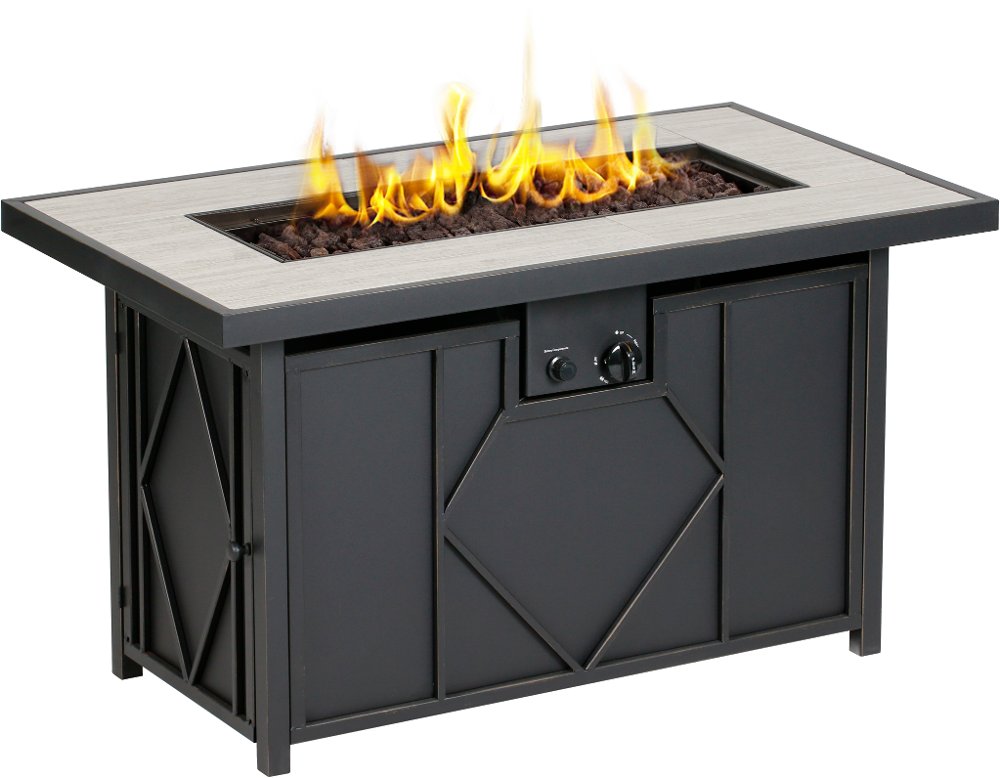
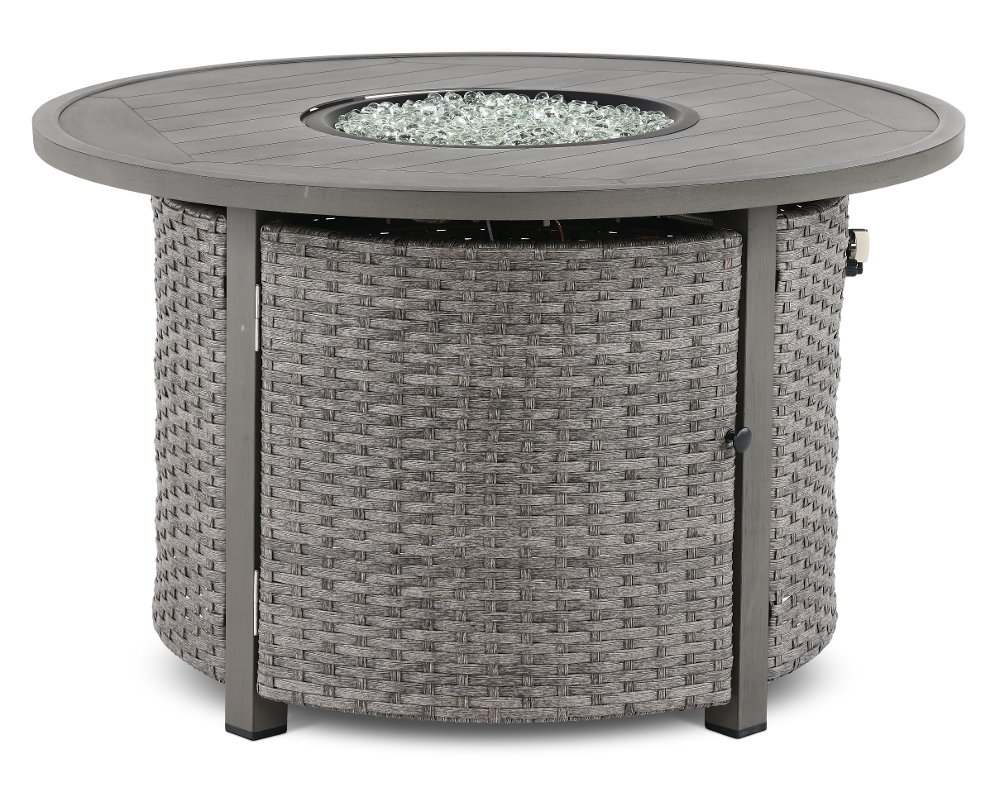
Gray propane fire pit tables bring the glow of a flame to your outdoor seating area while giving the space a useful gathering point. The gray finish is especially easy to coordinate: soft ash tones sit comfortably beside light cushions and natural wood, while deeper charcoal shades complement black metal frames, patterned rugs, and more structured patio furniture. A textured gray surface can suggest the look of stone or concrete, while a smooth finish creates a cleaner, more tailored appearance. Color matters beyond the table itself, too. Against a pale patio surface, a darker gray table adds definition; alongside dark furniture, a lighter gray finish keeps the seating arrangement from looking too heavy. Shape and scale help determine how naturally the table fits into everyday use. A rectangular fire pit table often works well in front of an outdoor sofa, giving several people access to the tabletop without crowding the seats. A square design can anchor a group of lounge chairs, and a round table softens the arrangement while eliminating corners along nearby walking paths. Before choosing a size, consider the full footprint of the furniture, including room to pull out chairs, stretch your legs, and walk comfortably around the group. The tabletop dimensions alone don’t tell the whole story; the base may affect foot room, and the space required around the flame extends beyond its opening. Height also changes the experience. A lower table generally suits relaxed lounge seating, while a taller design may pair better with upright chairs, depending on the seat height and available knee clearance. Picture the way the area gets used: two chairs angled toward each other for conversation, a sectional with friends gathered along its length, or a small seating nook just off the patio. Among outdoor propane fire pit tables, gray finishes offer a flexible foundation for each of these arrangements without overwhelming the surrounding furniture.
Materials influence a gray propane fire pit table’s appearance, weight, upkeep, and long-term durability. Powder-coated aluminum is generally lighter and naturally resists rust, making it practical when rearranging a seating area is part of your routine. Steel can provide a substantial, sturdy frame, though keeping its protective finish intact matters because exposed steel can rust. Concrete and concrete-look composite designs offer a substantial appearance, but their weight, surface care requirements, and resistance to cracking vary by construction. A stone-look finish doesn’t necessarily mean the table is made from solid stone, so the material description is worth a close look. Tile and porcelain surfaces bring another option, with individual care needs for the tabletop, joints, and supporting frame. The best fit depends on how you plan to use the space as much as the look you prefer. A table that stays in one established seating area can accommodate different priorities than one that needs to move occasionally. Propane also shapes the experience. It provides a controllable flame without loading firewood or cleaning out wood ash, although the burner and fire media still need routine attention. Some designs hold the propane cylinder inside the base; others use an external cylinder with a hose and may require a separate enclosure. Check the required cylinder size, whether a cylinder is included, and how easily the fuel compartment opens before settling on a layout. Access matters when it’s time to replace or refill the tank. Ignition systems and flame controls differ, and fuel consumption depends on burner output and the setting used. A higher heat rating alone doesn’t guarantee that every seat will feel equally warm. Table height, burner placement, and seating distance all affect the experience. Glass beads or lava rock can change the flame’s appearance, but only manufacturer-approved media belongs in the burner area. A matching burner cover, when included or approved for the design, can create additional tabletop space after the flame is off and the unit has cooled.
Everyday details often determine how much you enjoy a fire pit table after it becomes part of your patio. A broad tabletop edge can provide space for a mug or small plate, provided those objects remain outside the manufacturer’s required clearance from the burner. It’s a handy feature for a quiet conversation after dinner, though a fire pit table shouldn’t be treated as a cooking appliance unless it’s specifically designed and approved for that purpose. For households with children or pets, the flame, heated surfaces, and fuel connections require thoughtful placement and close supervision. Keep walking routes clear, position hoses where they won’t become trip hazards, and use the table only outdoors in a well-ventilated setting. The manufacturer’s instructions should determine clearances from furniture, walls, overhead structures, and combustible materials; appearance alone can’t establish whether a location is safe. A level, suitable supporting surface also helps the table sit securely. Care starts with allowing the unit to cool completely and following the specified shutdown procedure before cleaning or covering it. Many finished surfaces benefit from a soft cloth and mild soap, but concrete, stone, coatings, and tile may call for different cleaners. Abrasive pads and harsh chemicals can damage finishes, so match the cleaning method to the material rather than treating every gray surface alike. Clear debris from the burner area as directed, keep ventilation openings unobstructed, and inspect accessible hoses and connections according to the owner’s manual. A properly fitted cover can help keep the table clean when it’s not in use, but it shouldn’t trap moisture against the finish or go over a warm burner. Gray propane fire pit tables can suit frequent hosts, couples creating a comfortable conversation area, or homeowners furnishing a dedicated outdoor lounge. As a housewarming gift, one deserves advance coordination: the recipient needs an appropriate outdoor location, compatible seating, and a practical plan for propane storage and refills. With those details considered, the table becomes a welcoming place to settle in, share a conversation, and enjoy the outdoor space you’ve made your own.
Read More