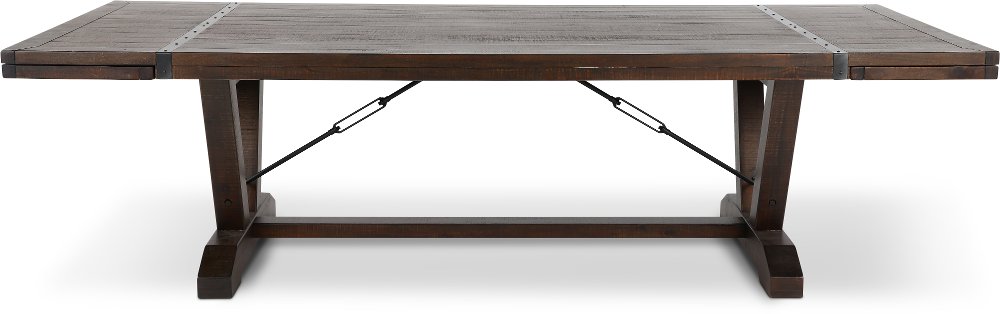
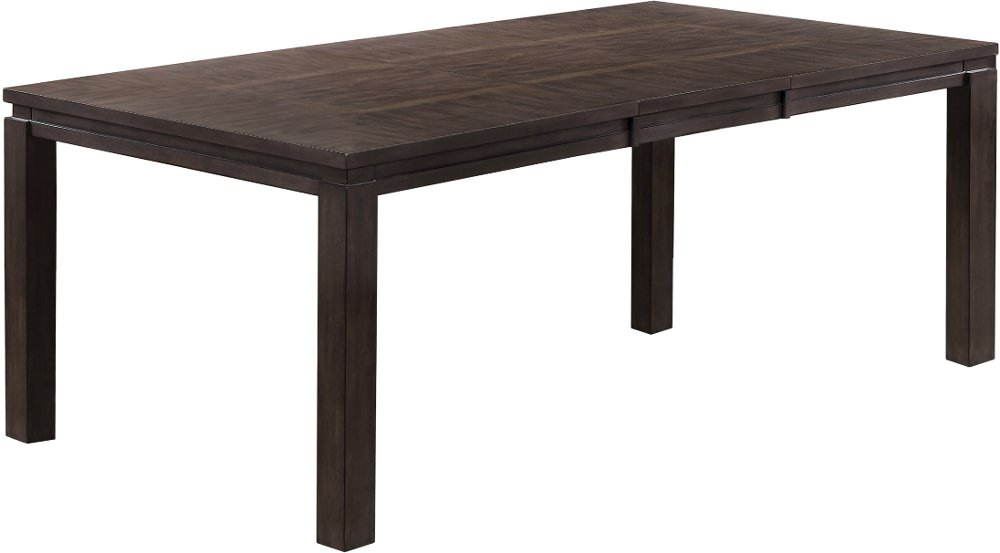
A leaf dining table expands with a removable insert, a folding extension, or hinged side panels, giving you more tabletop space when you need it. In its smaller configuration, it keeps everyday meals comfortable without taking up unnecessary room. Extended, it makes space for extra place settings, serving dishes, or a board game that stretches well past dinner. That flexibility suits homes where the dining area handles several jobs: breakfast before school, a laptop in the afternoon, and a shared meal in the evening. Different leaf designs make that flexibility possible in different ways. Traditional extension tables often separate at the center so one or more removable leaves can fit between the two halves. Some designs store those inserts beneath the tabletop; others need a separate storage spot. A butterfly leaf folds along a hinge and typically tucks into the table when it’s not in use, keeping the extension close at hand. Drop leaf tables have hinged sections along the sides that lower to reduce the table’s footprint and lift into place when supported. Some tables extend from the ends instead, so the placement and operation of the extra sections can vary. These details matter as much as the finished size. A table that expands easily can suit a household that changes its seating arrangement several times a week, while separate leaves can work well when extra space is needed less often. The closed and extended dimensions tell different parts of the story, and both deserve attention. A longer tabletop doesn’t automatically mean every additional chair will fit comfortably, especially if the legs, pedestal, or apron limit knee room. For couples, growing families, and people who enjoy bringing friends together, leaf dining tables offer a practical middle ground between a table sized only for daily use and one that permanently fills the room.
Materials and construction give an expandable dining table much of its character, from the feel of the edge beneath your hand to the way its surface handles everyday use. Solid wood brings natural grain variation and can often be repaired or refinished, depending on its construction and finish. It also responds to changes in indoor humidity, so a stable environment helps the top and leaves stay properly aligned. Wood veneer over a stable core offers the look of real wood with a construction that can help limit movement, although deep scratches may be harder to repair because the surface wood layer is thin. Laminate surfaces can be practical for busy eating areas, with care requirements that depend on the specific material and edge construction. No tabletop is completely protected from hot pans, sharp objects, or standing moisture, and the finish deserves just as much consideration as the material underneath it. Shape influences the experience around the table, too. Rectangular leaf dining tables create a familiar arrangement for shared meals and often work well in longer rooms. Square designs can keep everyday seating compact, while round tables make conversation easy across the tabletop. Some round extension tables become oval when a center leaf is added, preserving curved ends while gaining length. For a breakfast nook, apartment dining area, or kitchen corner, round drop leaf tables offer a curved tabletop when open and a smaller footprint with one or both sides lowered. A pedestal base can give chairs more freedom around the perimeter, though the base itself still affects foot space. Four-leg designs provide a different look and feel, with leg placement shaping where additional chairs can sit. Clean lines and restrained finishes fit easily into simple interiors, while turned legs, shaped edges, and visible grain bring a more traditional presence. The best match feels connected to the surrounding room without needing to duplicate every finish already there.
A comfortable fit includes the space around the dining table, not just the tabletop itself. About 36 inches between the table edge and a wall or nearby furniture is a useful starting point for pulling out chairs, while a busy walkway behind seated diners often benefits from 42 to 48 inches or more. Those clearances matter in the extended position as well as the closed one. A table may fit neatly into a room until an added leaf brings it close to a sideboard or blocks the route to the kitchen. Around 24 inches of table edge per person is a common planning allowance, but wider chairs, arms, generous place settings, and the position of the base can call for more room. Chair height and apron clearance also affect comfort, particularly when mixing an existing set of chairs with a new table. For frequent use, the extension mechanism deserves close attention: slides should move smoothly, alignment pins should meet correctly, and supports or locks should hold the expanded surface securely according to the manufacturer’s design. A well-supported leaf helps keep plates steady and the eating surface even across the seams. Everyday care is straightforward but important. A soft cloth, prompt spill cleanup, coasters, and trivets help protect the finish without adding much work to the routine. Cleaning products should match the manufacturer’s recommendations, since harsh cleaners and abrasive pads can damage some surfaces. Separate leaves need protected storage where they won’t be scratched, exposed to moisture, or placed under uneven pressure; a fitted storage bag can help protect the finish. Moving the table by its base or frame rather than lifting it by an unsupported leaf helps protect the joints and hardware. With the right proportions, a useful expansion system, and care suited to its materials, a leaf dining table can stay comfortable for an ordinary dinner for two and feel just as welcoming when more people pull up a chair.
Read More