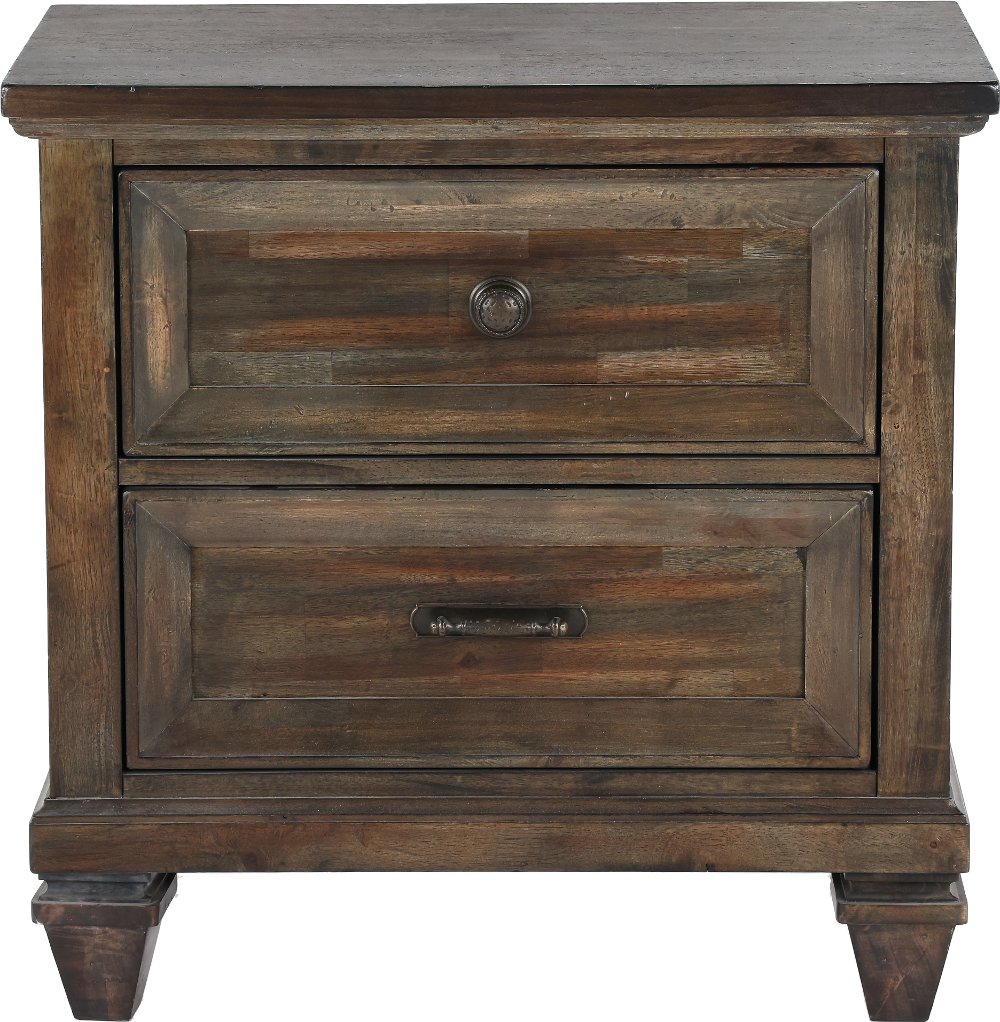
Medium brown nightstands are bedside tables with a midtone brown finish that brings warmth to a bedroom without the pale look of light wood or the heavier visual presence of dark espresso. Their color can lean toward honey, caramel, walnut, or a more muted brown, giving you room to coordinate with different bed frames, dressers, and flooring. The finish describes the appearance rather than the material, so a medium brown nightstand may feature solid wood, wood veneer, engineered wood, or another surface with a wood-look finish. Visible grain adds character, while a smoother, more uniform surface creates a quieter backdrop for a lamp, framed photo, and everyday essentials. These nightstands work especially well when you want the bedroom to feel welcoming but still pulled together. Next to an upholstered bed, brown tones offer a pleasing contrast to soft fabric. Against a painted bed frame, they introduce another layer of texture. Beside a wood bed, a complementary finish can look more natural than trying to match every grain pattern exactly. Style details make a difference, too: tapered legs and simple drawer fronts suggest mid-century design, substantial bases and framed drawers feel more traditional, and clean lines with understated hardware suit contemporary rooms. The same medium brown color can take on a different personality depending on those details. Warm finishes pair comfortably with cream bedding, earthy greens, and muted blues, while brown with less red or yellow in it can sit easily alongside gray upholstery and black accents. Look at the finish in the context of the whole room, including the floor, since two brown surfaces can have noticeably different undertones. For a more textured look, Rustic Brown Nightstands offer a related direction to explore, with an emphasis on rustic styling rather than color alone.
A medium brown nightstand earns its place through everyday usefulness as much as appearance. The right fit puts your lamp switch, glasses, and phone within comfortable reach instead of leaving you stretching down toward the floor or up above the mattress. A top near the height of your mattress is a helpful starting point, though the best height depends on your bed and how you use the surface. A low platform bed often calls for a shorter bedside table, while a taller mattress and foundation may need something higher. Width and depth matter just as much. A narrow nightstand can leave breathing room beside a bed in a small apartment, while a wider design can look balanced next to a king-size frame and provide space for a larger lamp. Measure the available floor space with the bed in its usual position, and account for baseboards, nearby doors, and the room needed to open drawers. A nightstand that fits neatly against the wall still needs to leave a comfortable path for getting into bed. Think about what stays on top and what belongs out of sight. Drawers keep charging cords, reading glasses, and personal items tucked away; an open shelf makes a book or small basket easy to reach. A cabinet compartment can hold larger bedside necessities, depending on its interior dimensions. If a design includes charging features, the connection type, cord placement, and access to a wall outlet deserve attention. Two matching nightstands create an orderly look, but each side of the bed can also serve different needs. One person may want generous drawer storage, while another prefers an open shelf and a clear tabletop. Coordinating finish tones and similar heights can help different designs feel intentional together. In a guest room, a simple surface for a lamp, water glass, and phone gives visitors a convenient place to settle their belongings. For someone furnishing a first apartment or refreshing a bedroom, a nightstand can also make a thoughtful housewarming gift when the room measurements and preferred style are known.
Materials and construction help determine how a medium brown nightstand handles daily use. Solid wood offers natural grain variation and can develop small signs of wear over time, which may suit a relaxed bedroom. Wood veneer places a thin layer of real wood over a supporting core, providing wood character without requiring every component to be solid lumber. Engineered wood and laminate surfaces can create a consistent appearance, with performance depending on the quality of the materials, construction, and finish. No single material tells the whole story. Sturdy joints, a stable base, well-attached hardware, and drawers that move smoothly are worth considering alongside the surface. A drawer intended for a few small essentials has different demands than one that will hold a stack of books, so the intended load matters. Raised legs can make cleaning underneath easier, while a base that sits close to the floor creates a more substantial look. Care usually starts with regular dusting using a soft cloth and following the manufacturer's instructions for the specific finish. If a lightly damp cloth is recommended, dry the surface promptly rather than leaving moisture behind. Coasters help protect the top from water rings, and a felt pad beneath a lamp can reduce scratches when it shifts. Avoid dragging rough-bottomed objects across the surface, and keep abrasive cleaners or harsh solvents away unless the care instructions specifically allow them. Direct sunlight may change the appearance of some finishes over time, so placement can affect how evenly the color ages. When moving the nightstand, empty it first and lift rather than drag it to help protect the legs, joints, and floor. Medium brown can make a practical foundation for a bedroom that evolves: new bedding, a different lamp, or a fresh wall color can change the room while the bedside furniture continues to serve its purpose. A well-proportioned nightstand with useful storage and a finish you enjoy gives everyday routines a comfortable, dependable place to land.
Read More