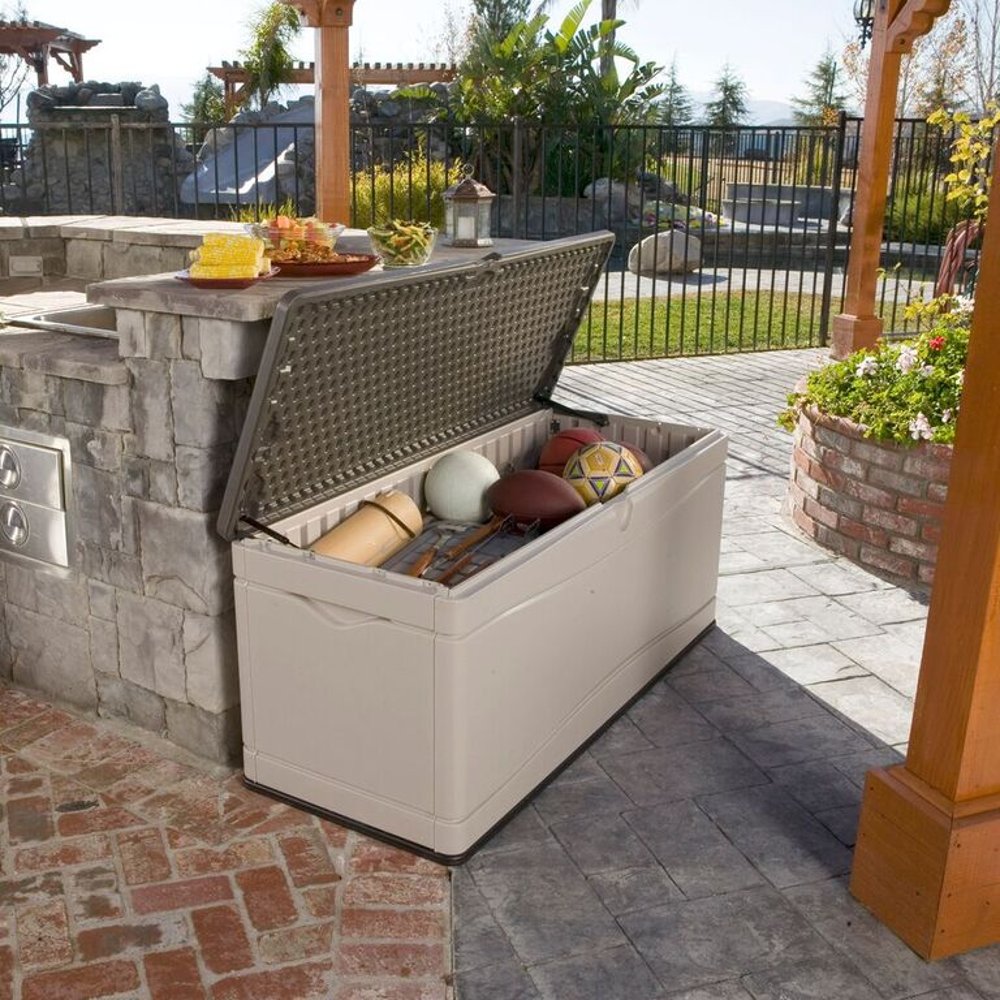
An outdoor deck box is a storage container designed to organize patio cushions, gardening supplies, pool accessories, and other outdoor essentials while helping protect them from dirt and exposure. It gives loose belongings a home without adding another indoor storage chore. Instead of carrying chair cushions through the house or leaving a watering can beside the back door, you can keep everyday supplies close to where you use them. Outdoor deck boxes suit patios, decks, balconies, porches, and poolside seating areas, with sizes ranging from compact containers to roomy storage chests. Capacity is often listed in gallons, but interior dimensions tell you more about what will actually fit. As a general shopping reference, small deck boxes under 50 gallons can work for hand tools, outdoor throw pillows, or a short garden hose. Medium boxes around 50 to 100 gallons may accommodate chair cushions or a collection of pool toys, while larger boxes over 100 gallons offer more room for bulky lounge cushions and other oversized belongings. These ranges aren’t standardized, and cushion thickness, box shape, and the lid opening all affect usable space. A long bench cushion may need more interior width than a high-capacity box provides, so measuring the belongings you plan to store helps avoid a cramped fit. Exterior measurements matter just as much. Your storage box should leave space for walking, pulling out chairs, and opening nearby doors, with enough clearance above and behind it for the lid to move freely. On a narrow balcony, a compact footprint can be more useful than maximum capacity. On a larger deck, a wide box along an open wall can hold a seating set’s cushions without interrupting the gathering area. A little extra room inside makes everyday access easier, especially when you’d rather grab one pillow than unpack the entire chest. The best fit brings useful storage to your space while keeping the layout comfortable and easy to navigate.
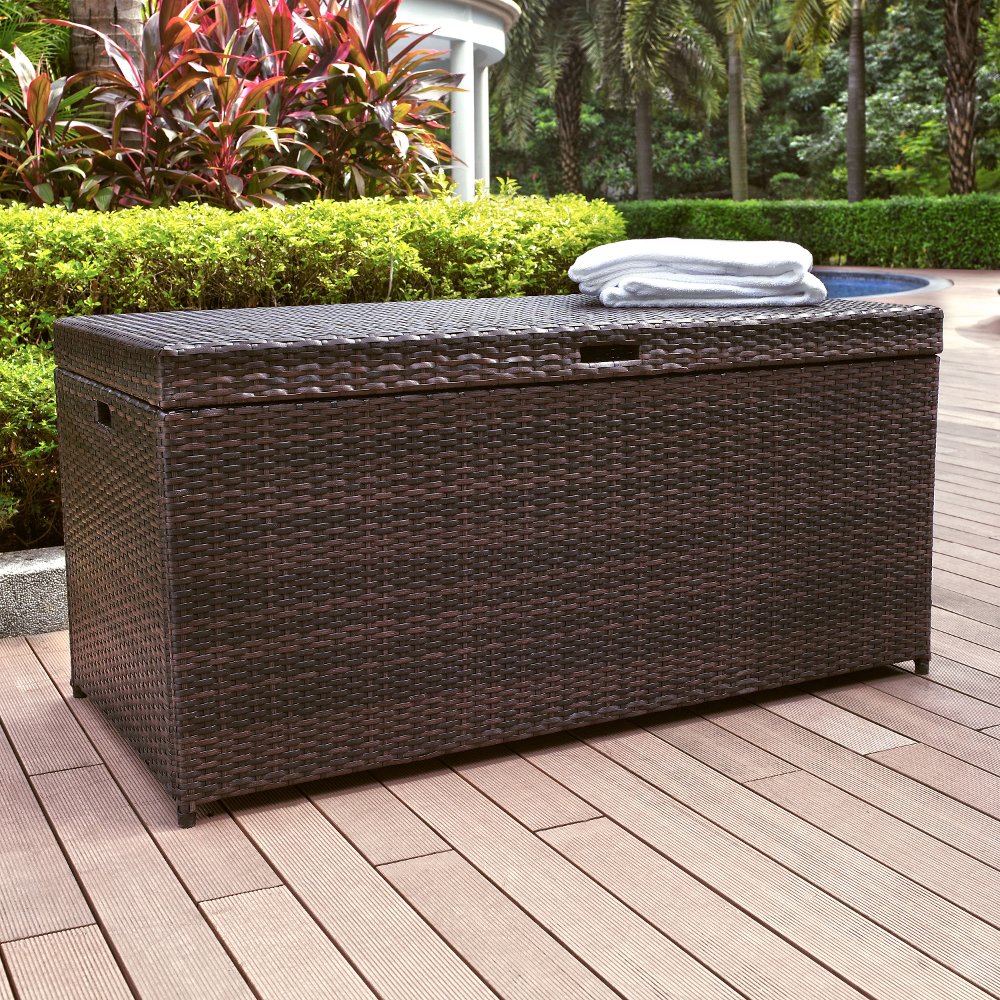
Materials influence how an outdoor storage box looks, how it handles exposure, and how much upkeep it needs. Resin and plastic deck boxes are common choices because they don’t rust and usually clean up with mild soap and water. Polypropylene and high-density polyethylene, often called HDPE, are plastics used in outdoor storage; performance depends on the construction and any protective treatments, not just the material name. UV-resistant materials can help limit fading and deterioration from sunlight, although no finish stays unchanged indefinitely. Molded wood-grain textures and woven-look panels bring visual detail without the maintenance associated with natural wood. Wooden deck boxes offer genuine grain and a furniture-like appearance that can complement a dining table or lounge arrangement. Cedar and teak are examples of woods used outdoors, but wood storage still benefits from appropriate care, sound joinery, and a finish suited to its placement. Depending on the wood and manufacturer’s recommendations, upkeep may include cleaning, refinishing, or allowing the surface to develop a natural patina. Metal storage boxes can provide a sturdy structure, with corrosion resistance depending on the metal, coating, and condition of the finish. Across materials, look beyond the exterior to the base, hinges, lid fit, and panel connections. Weather-resistant doesn’t automatically mean waterproof, and a closed lid alone doesn’t guarantee that cushions will stay dry in wind-driven rain. Overlapping lid edges, protected seams, and raised bases can help manage exposure, while ventilation can help moisture escape. A level location away from roof runoff, sprinklers, and standing water gives the box a better setting for everyday use. Fabric belongings should be clean and completely dry before storage, since even a well-protected container can trap moisture from damp cushions. Most routine care is straightforward: wipe away soil, clear debris from lid edges, and follow the recommended cleaning method. Abrasive cleaners and pressure washing can damage some surfaces or force water through joints, so gentler cleaning is often the better approach.
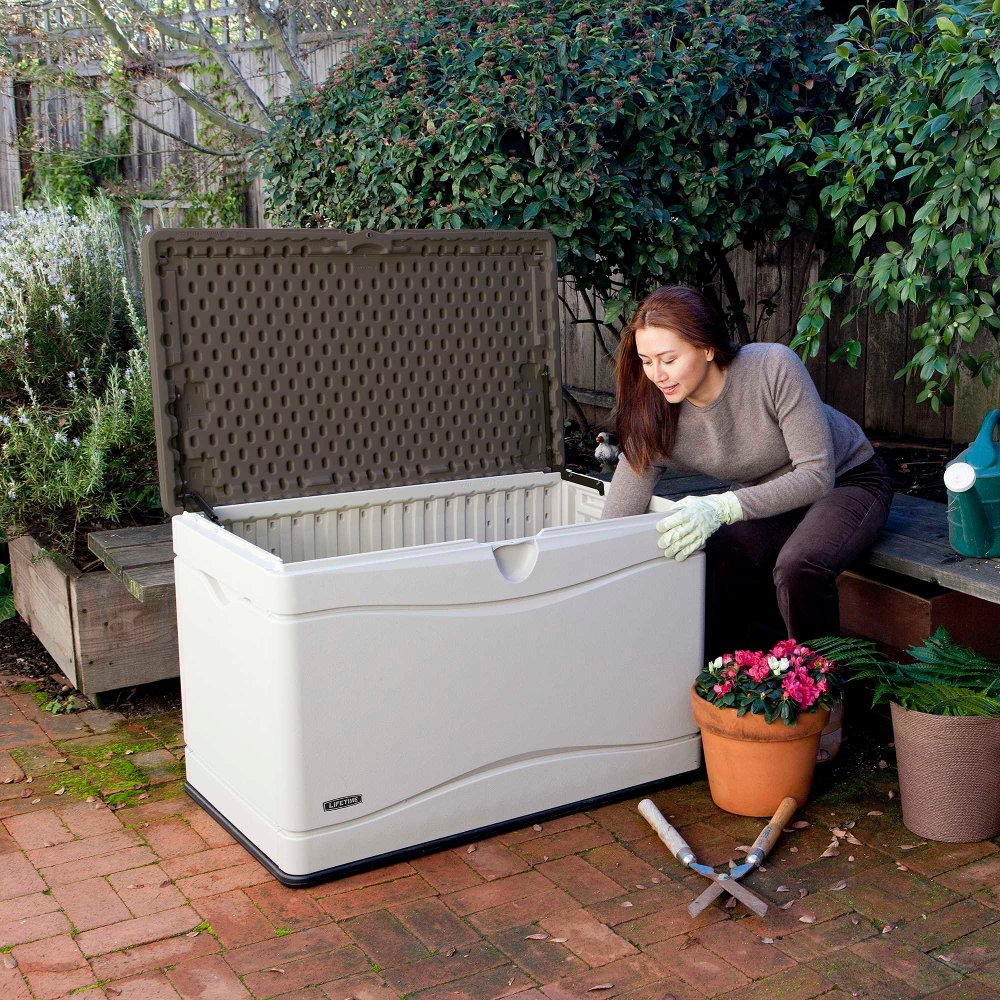
Everyday convenience comes down to details you’ll notice each time you open the lid. A hinged top gives you access without setting a separate cover on the ground, and supported lids or lift-assist mechanisms can make a large storage chest easier to use. Those features vary, so check how the lid operates and keep children clear of hinges and closing edges. A deck box isn’t a play space, and children should never climb inside. Handles can help with repositioning, although a box filled with supplies may need to be emptied before moving. A lockable lid can discourage casual access, but it shouldn’t be treated as secure storage for hazardous chemicals, valuables, or anything requiring controlled storage conditions. Some outdoor deck boxes also serve as seating or provide a surface for lightweight belongings. That versatility can be useful on a smaller patio, but only sit on a box explicitly rated for seating, and follow its stated weight limit. A flat lid isn’t necessarily a bench. For cushion storage, a box beside your outdoor deck chairs keeps soft seating essentials within reach and makes putting the area away simpler. Families may appreciate room for pool noodles and outdoor games, while gardeners can keep gloves, empty pots, and small tools together without mixing dirty equipment with clean fabrics. Removable bins or simple dividers, where suitable, help prevent little belongings from disappearing beneath larger ones. Appearance matters, too: a neutral finish can blend with surrounding furniture, while a wood-look chest can add texture to a plain deck. For someone settling into a home with a patio, a thoughtfully sized deck box can also make a practical housewarming gift. Whether it holds two pillows or a full collection of lounge cushions, useful outdoor storage makes the space feel more settled, with fewer belongings underfoot and more room to enjoy the seating area.
Read More