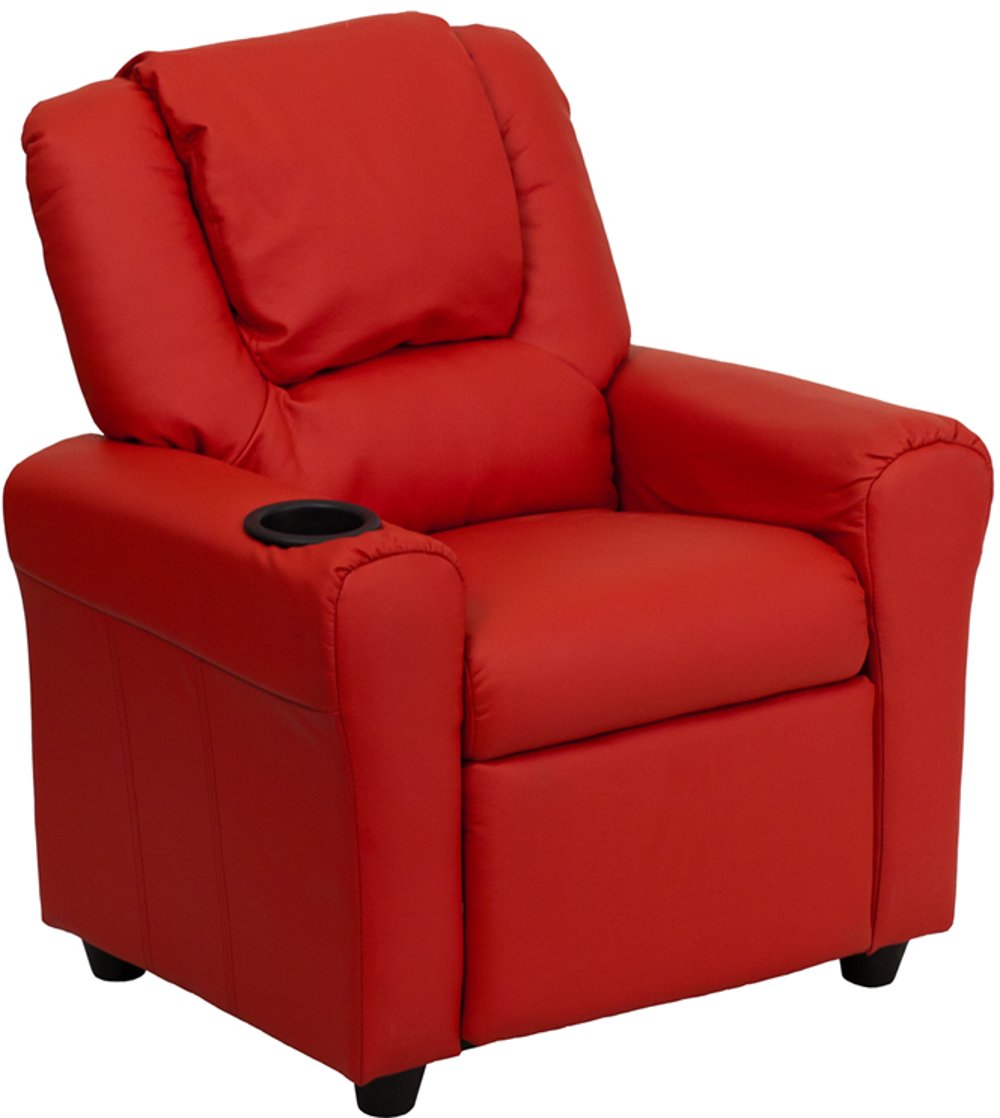
Red recliners combine the comfort of an adjustable lounge chair with a color that gives a room personality. From bright cherry and clear scarlet to deep burgundy and brick red, these chairs can serve as a focal point or fit into a space that already has warm, rich tones. A red recliner chair beside a neutral sofa creates a distinct place to settle in without requiring a whole room of matching furniture. Picture a burgundy chair next to a walnut side table, a reading lamp, and a cream-colored rug: the chair brings color, while the surrounding pieces keep the room relaxed. Brighter reds work especially well with charcoal, white, and black, while muted reds pair naturally with tan upholstery, wood finishes, and textured fabrics. The upholstery also influences how the color looks. Smooth leather can catch the light and emphasize a chair’s curves, while woven fabric gives the same shade a softer, more understated appearance. Color may look different under daylight and lamps, so an upholstery sample, when possible, helps you judge how a red tone fits your space. Traditional red recliners often feature generously padded arms, fuller backs, and rounded silhouettes. More streamlined shapes can complement contemporary living rooms, home offices, and media rooms without looking oversized. A reclining accent chair can also create a comfortable reading spot in a bedroom, provided there’s enough room to use its footrest and backrest. For coordinated accents beyond the chair, the Red Furniture collection provides another way to explore the color throughout your home. Coordination doesn’t have to mean an exact match. A patterned pillow with a touch of red, a warm wood cabinet, or artwork with similar tones can connect the chair to the rest of the room. The best visual fit lets the red recliner feel intentional while leaving room for the furniture and belongings you already enjoy.
Reclining features shape how a chair fits into everyday life, whether you’re watching a movie, reading a few chapters, or putting your feet up after a long day. Manual recliners use a lever, handle, or pushback motion to adjust the chair, depending on the design, and generally operate without an electrical connection. A lever-operated chair may be convenient when you prefer a straightforward adjustment, while a pushback design often keeps the reclining mechanism less visible. Power recliners use buttons or other controls to move the backrest and footrest, allowing gradual adjustments rather than relying on body pressure. Some designs include separately adjustable headrests or lumbar support, but those features vary by chair. Power reclining and power lift are different functions: a lift recliner raises and tilts the seat to help the user transition toward standing, while a standard power recliner adjusts the lounging position. For someone who would benefit from standing assistance, the chair’s controls, fit, and lifting motion deserve a close look. Rocking, gliding, and swivel functions offer other ways to relax or turn toward a conversation, although not every chair combines these movements with reclining. Room measurements matter just as much as the mechanism. A recliner’s upright dimensions don’t tell the whole story; its fully extended length and required wall clearance determine whether it can open comfortably. Wall-hugger designs typically need less space behind them than conventional recliners, but they still require the clearance specified for that design and room in front for the footrest. In a shared living room, leave a clear route around the extended chair so someone can reach the sofa without stepping over it. A nearby table should remain easy to reach without interfering with moving parts. Power models also need a suitable power source, with cords routed away from walkways and the reclining mechanism. Seat height, depth, and width help determine personal comfort: your feet should rest comfortably on the floor when seated upright, and the back should support you without making you slide forward. Taller users may prefer a longer footrest and higher back, while shorter users may feel more supported in a shallower seat.
Upholstery, cushioning, and construction influence both the feel of a red recliner and how it holds up to regular use. Leather brings a smooth surface and a distinctive appearance, though leather types and finishes differ in softness, maintenance needs, and resistance to everyday wear. Some leathers develop visible character over time, while others have protective finishes intended to make routine care more manageable. Faux leather can offer a similar look, but its composition and surface quality affect how it wears; it shouldn’t be treated as interchangeable with genuine leather. Fabric recliners offer a wide range of textures, from soft microfiber to more visibly woven upholstery. Microfiber’s closely constructed surface can be practical for everyday seating, although stain resistance and cleaning methods depend on the particular material. In a home with children or pets, upholstery performance information is more useful than color alone. Red can make certain marks less noticeable, but it doesn’t prevent stains, scratches, or fading. A chair used for hours each day also needs more than an inviting first impression. Frame construction, cushion resilience, secure joints, and a smoothly operating mechanism all contribute to lasting comfort. Firmness is personal: a plush seat may feel inviting for movie nights, while a more supportive cushion may suit someone who likes to sit upright and read. Check how easily you can reach the controls and whether the armrests support your elbows naturally. For routine care, follow the upholstery’s cleaning instructions rather than assuming every red recliner tolerates the same cleaner. Blot spills promptly with a clean cloth, vacuum fabric gently where recommended, and use only leather-care products appropriate for the finish. Direct sunlight can fade upholstery, so placement away from prolonged exposure helps preserve the color. Keep small objects and loose cords clear of moving components, and follow the manufacturer’s instructions for operation and maintenance. A red recliner can be a thoughtful gift for someone furnishing a new home or replacing a favorite reading chair, but comfort and color are personal enough that choosing together often makes the gift more useful. With a suitable fit, practical upholstery, and the right reclining motion, the chair becomes a welcoming place to enjoy everyday downtime.
Read More