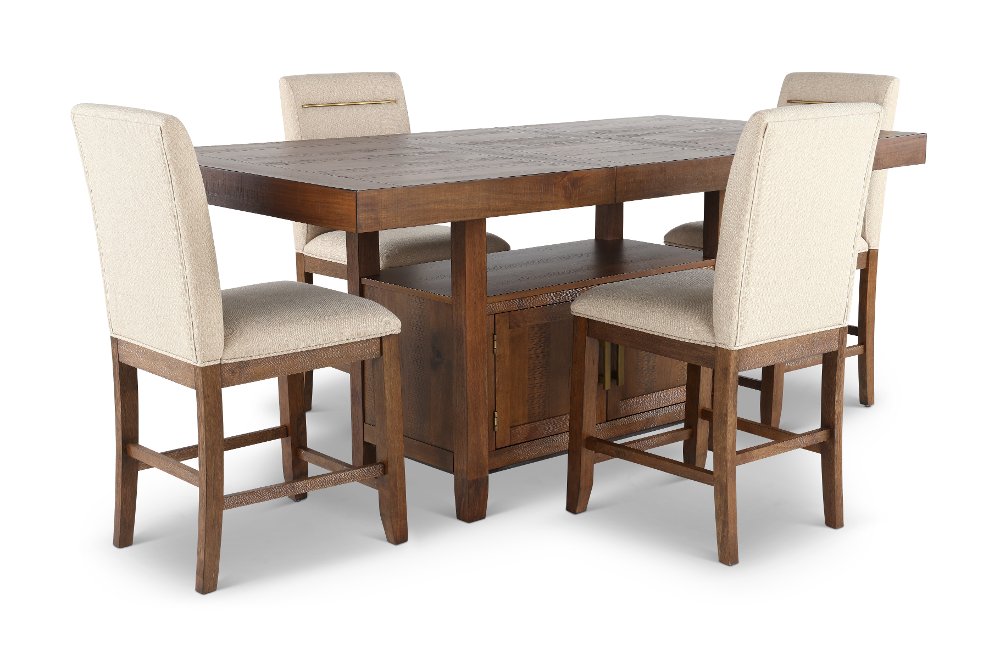
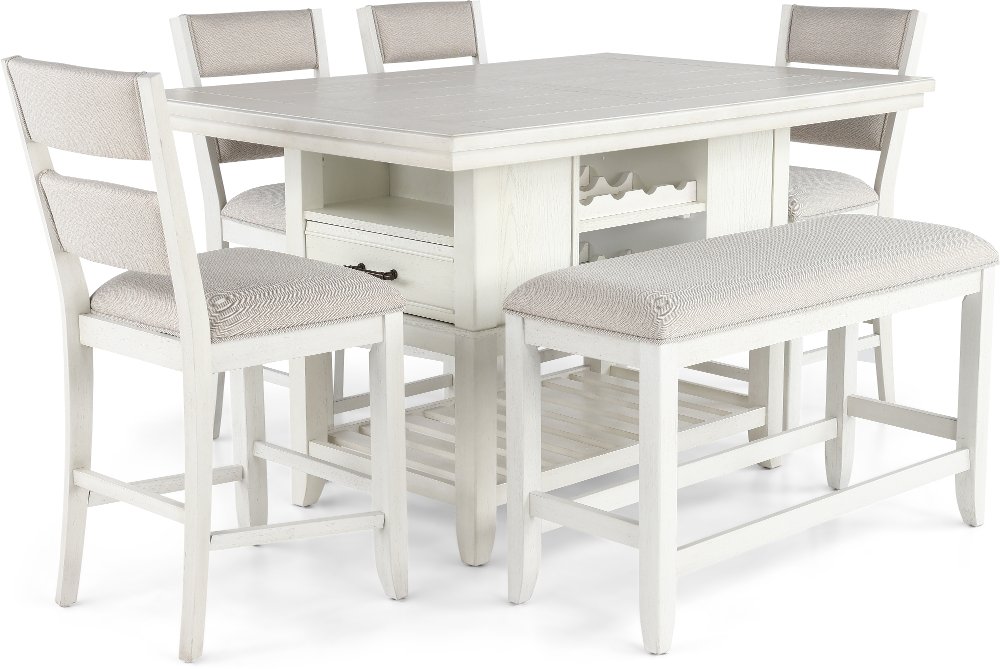
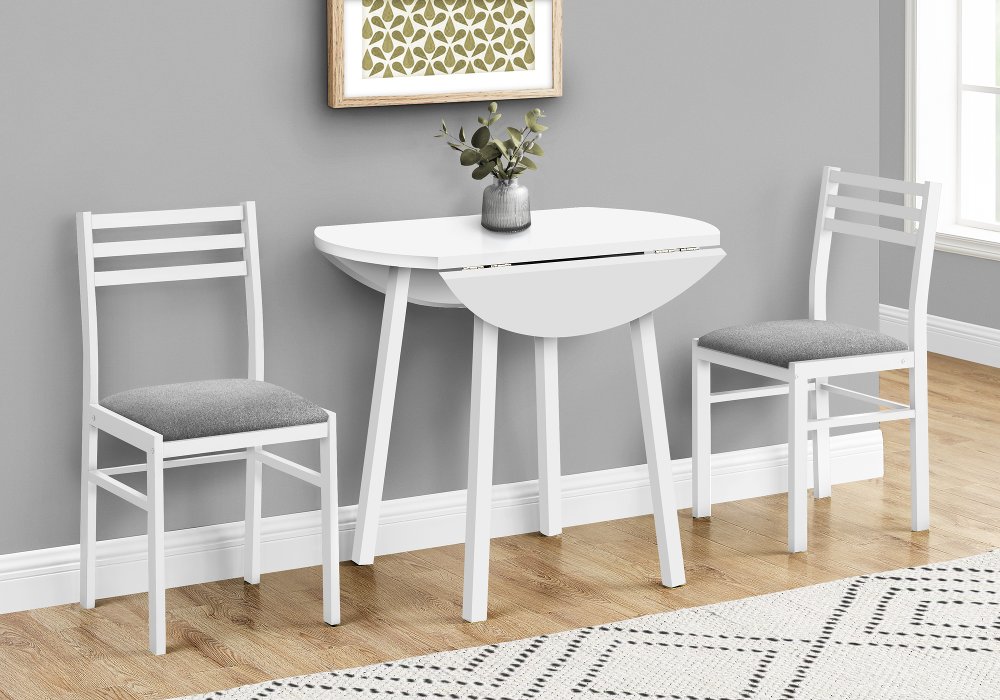
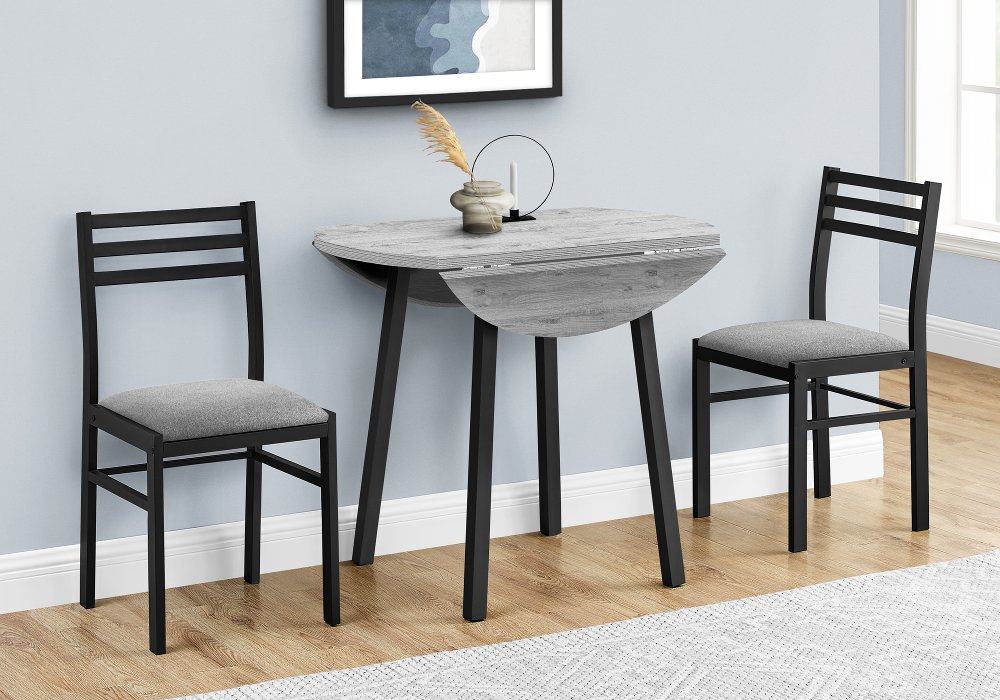
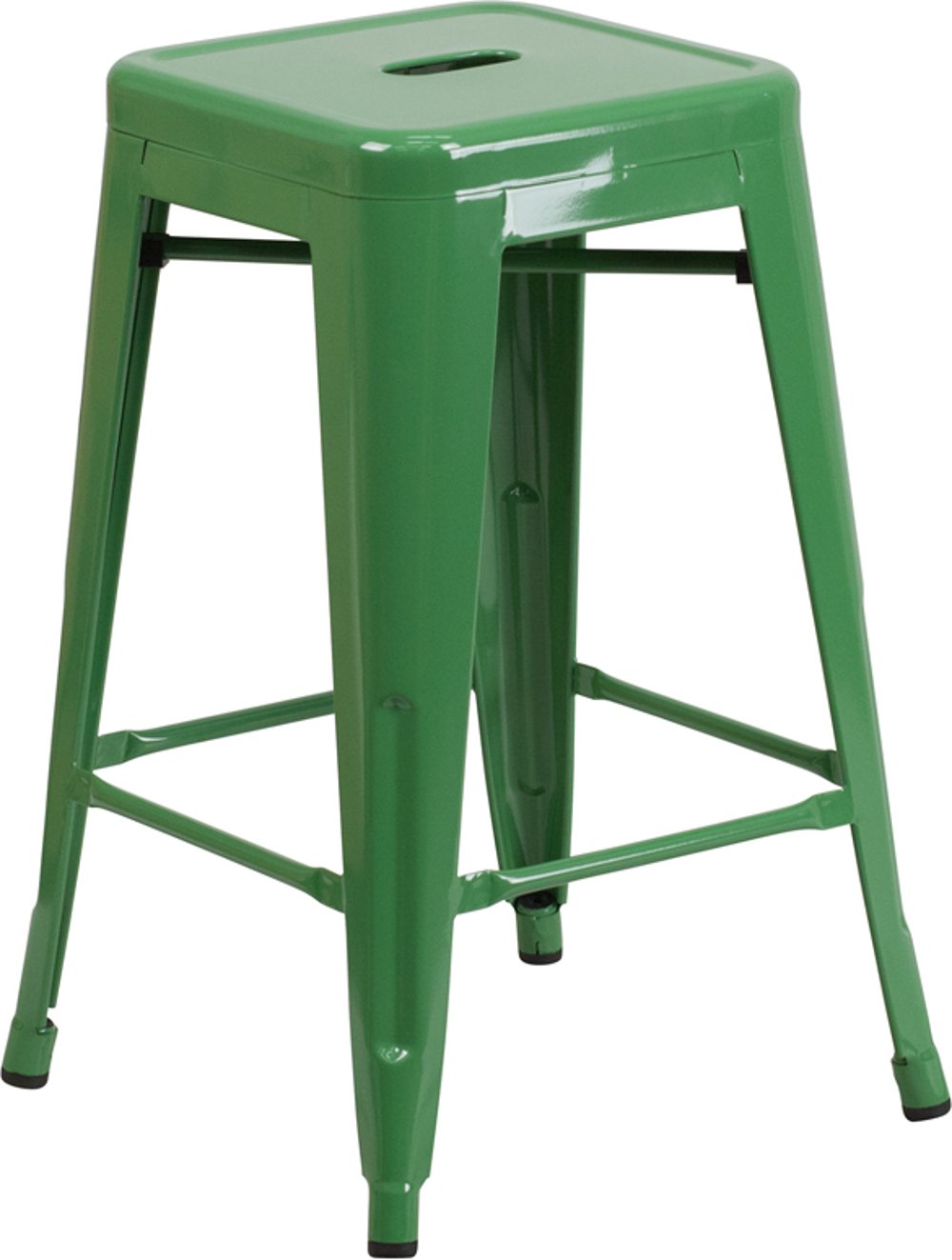
Rustic counter height dining sets bring the texture of natural-looking wood and the easygoing feel of a gathering table into kitchens, breakfast nooks, and casual dining rooms. Their taller profile creates a comfortable place for quick breakfasts, shared meals, and conversation while someone finishes cooking nearby. Counter height tables typically stand about 34 to 36 inches tall and pair with seats roughly 24 to 26 inches high; they’re taller than standard dining furniture but lower than most bar height tables. That distinction matters when you’re coordinating a dining area with a kitchen island or replacing existing seating. The rustic look comes through in visible grain, knots, distressed details, and finishes that range from pale, weathered tones to deep brown. A warm wood top with a painted base leans farmhouse, while dark metal legs and a textured wood surface bring an industrial feel. Simple silhouettes make these sets equally at home alongside clean-lined cabinets, woven rugs, and contemporary lighting. Materials influence both appearance and everyday performance. Solid wood offers natural variation and, depending on its finish and construction, may allow refinishing down the road. Wood veneers give furniture a real wood surface over a supporting core, though their thin surface requires care to avoid deep scratches. Engineered wood with a decorative finish offers another approach to the rustic look, with performance depending on the material, edge protection, and surface coating. Metal frames add visual contrast, and secure joints and a well-supported base matter more to stability than a rugged appearance alone. Deliberate distressing can help minor signs of use blend into the design, but it doesn’t make a tabletop scratchproof or waterproof. For a coordinated space beyond the kitchen nook, Rustic Dining Sets offer a broader look at this relaxed style. The most satisfying choice ties those finishes and textures to the way your household actually gathers, whether that means two coffee cups each morning or a full table at dinner.
Size and seating layout determine how naturally a rustic counter height dining set fits into your room. A compact three-piece arrangement generally includes a table and two seats, making it a practical match for an apartment kitchen or a dining corner shared by two people. Five-piece sets commonly pair a table with four seats, while seven-piece arrangements often accommodate six. Check the listed components rather than relying on the piece count alone, especially when a bench is part of the configuration. Square tables create a balanced setting for smaller groups, rectangular tops work well in longer rooms, and round tops soften corners where people move around the dining area. A pedestal base can free up space near the corners, although its shape still affects where feet and chair legs fit. Allow about 36 inches between the table edge and a wall or nearby furniture so diners can pull out their seats; busy walkways benefit from more clearance, often 42 to 48 inches. Measuring with the seating pulled out gives a more realistic picture than measuring the table alone. Around 24 inches of tabletop width per person is a useful starting point, with additional room for wider chairs or generous place settings. Seat-to-table clearance matters, too: roughly 10 to 12 inches between the seat and the underside of the tabletop is a common comfort target, but a deep apron can reduce usable thigh space. Counter height chairs with supportive backs and reachable footrests can make longer meals more comfortable, while backless stools tuck neatly beneath some tables to keep sightlines open. Upholstered seating adds softness, though it calls for a different cleaning routine than wood seats. Taller seating can be less convenient for young children, shorter diners, or anyone who has difficulty climbing onto a chair, so consider everyone who uses the table regularly. Shelves, drawers, and extension leaves add flexibility when included, provided they leave enough knee room and don’t crowd surrounding furniture.
Everyday use gives rustic counter height dining furniture its purpose beyond its appearance. A small set can turn an overlooked corner into a dependable spot for breakfast and a laptop, while a larger arrangement gives family members room to eat, spread out a board game, or sit together over takeout. In an open floor plan, the elevated tabletop can help define the dining area without adding a room divider. Storage beneath the top is especially useful when nearby cabinets are full: an accessible shelf can hold placemats or baskets of napkins, and a drawer can keep small dining essentials close. For a table that doubles as a homework station, surface texture deserves attention. Deep grooves and heavily textured planks contribute rustic character but can catch crumbs or make writing on a single sheet of paper awkward; a smoother top or a protective desk mat better suits that routine. Durability also depends on details that are easy to overlook, including the table’s weight capacity, chair construction, hardware, and the manufacturer’s intended use. Dining furniture isn’t automatically suitable for standing on, outdoor use, or heavy kitchen prep simply because it has a substantial look. Regular care keeps the finish looking welcoming. Follow the manufacturer’s instructions, wipe up spills promptly, and use coasters, placemats, and trivets to protect against moisture and heat. A soft cloth is usually a better starting point than an abrasive pad, and wood polish or household cleaners should only be used when approved for the finish. Upholstered seats need care matched to their fabric cleaning code, while metal components benefit from gentle cleaning and thorough drying. Felt pads help protect flooring, and periodically checking fasteners can address loosening from daily movement. With proportions that suit your room, seating that supports your household, and materials that match your routine, a rustic counter height dining set becomes an inviting place to settle in for the ordinary moments that make a home feel lived in.
Read More