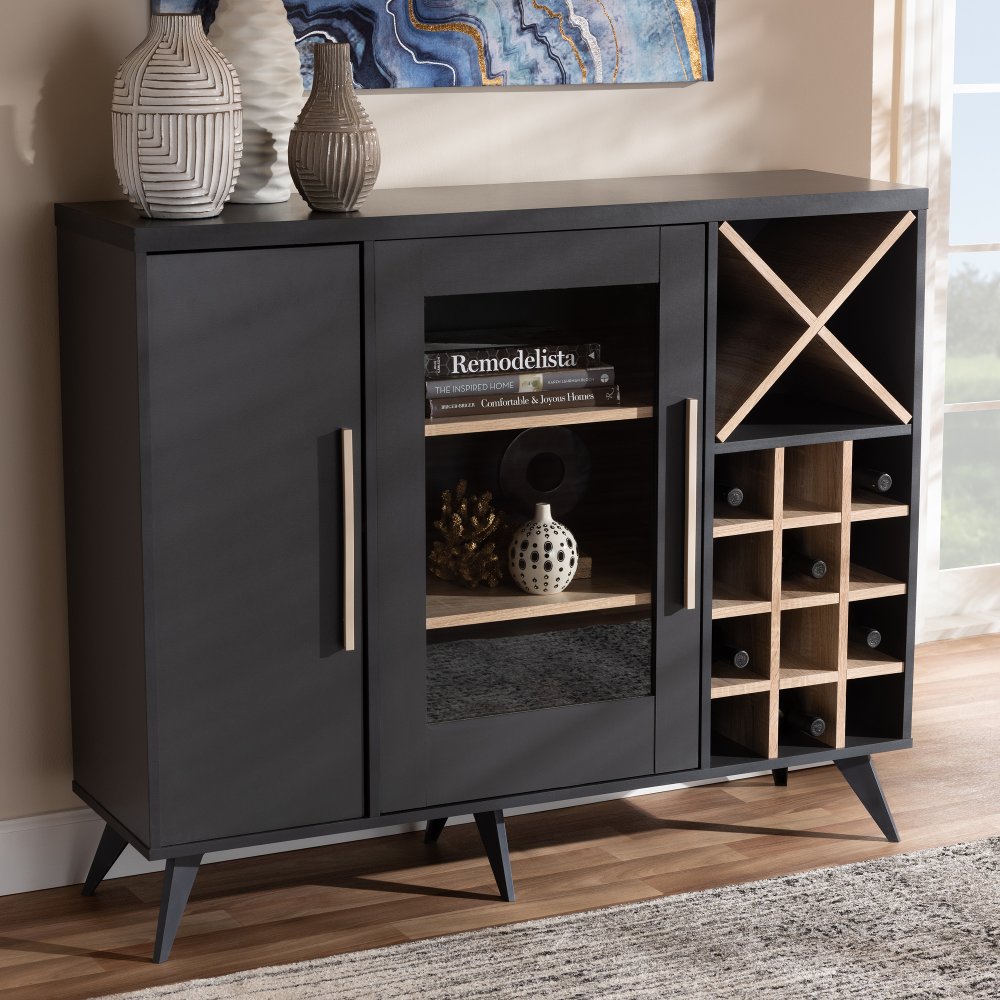
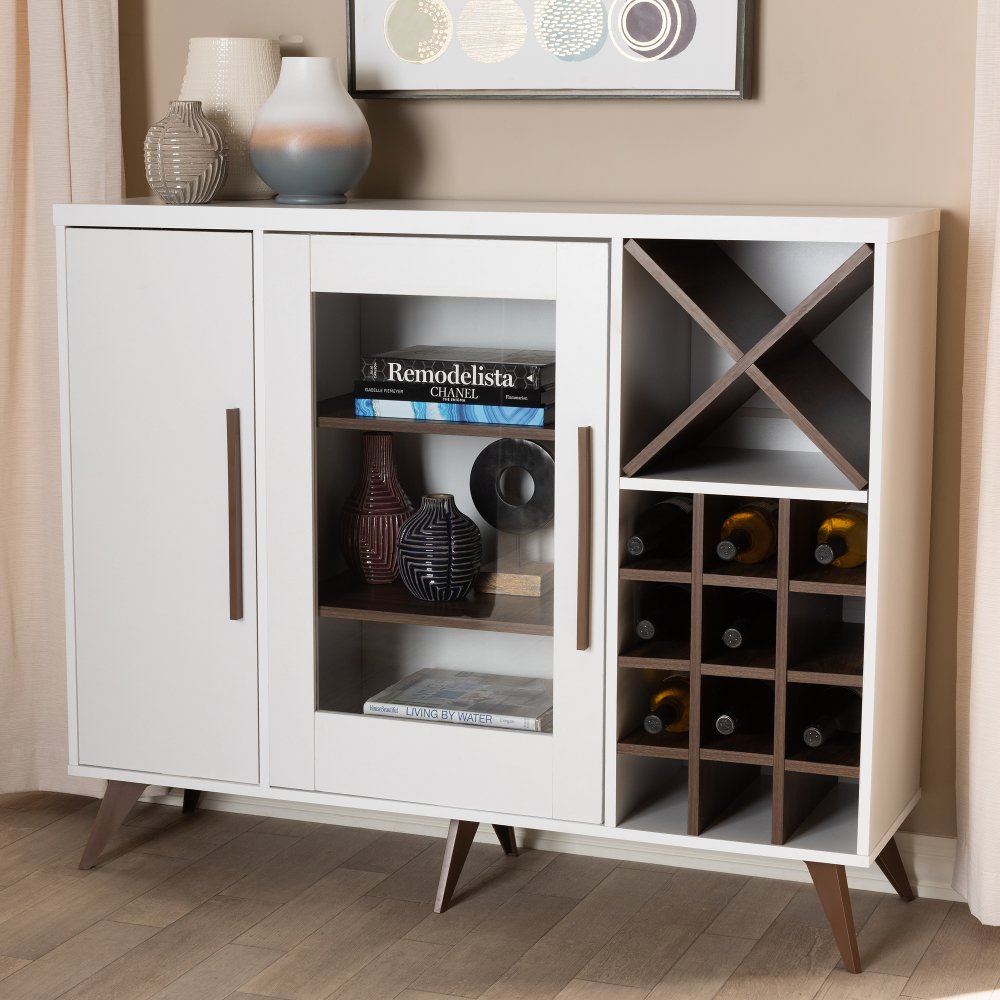
Rustic wine racks bring practical bottle storage and a relaxed, lived-in feel to a kitchen, dining room, or gathering space. Their appeal comes from materials and details that feel at home alongside a sturdy dining table, a favorite sideboard, or open shelving filled with everyday dishes. Visible wood grain, earthy finishes, and simple metalwork give these racks character without making the room feel overly decorated. A wooden rack with a weathered finish can complement farmhouse furniture, while a wood-and-metal design can connect rustic textures with the clean lines of an industrial or modern space. Rustic doesn’t have to mean rough or bulky, either. A compact rack with slim supports and a lightly distressed finish can add warmth to a smaller room without overwhelming it. Materials influence both the appearance and the everyday performance of a wine rack. Solid wood offers natural variation in grain and color, while wood veneers over engineered panels can provide a consistent look across broader surfaces. Metal frames create a different impression, ranging from slender, open shapes to substantial supports with a darker finish. Reclaimed wood, when identified as such, may show knots, nail marks, and other evidence of its earlier use; a distressed finish can create a similar visual effect on newer material. These details contribute to the style, but smooth bottle-contact surfaces and secure joints matter just as much as appearance. A rack should support bottles comfortably, with no sharp edges or loose connections that could catch a label or let a bottle shift. The finish deserves attention, too: a sealed surface is generally easier to wipe clean than unfinished wood, particularly in a space where drinks get poured. For a coordinated room, look for a wood tone that shares an undertone with nearby furniture rather than trying to match every grain pattern. Dark metal can echo cabinet hardware or dining chair frames, while lighter wood keeps the overall look easygoing. The result is useful storage that feels like part of the room, not an accessory added as an afterthought.
The right fit depends on where the rack will live and how bottles move through your home. A countertop wine rack keeps a modest selection close at hand, but it also shares space with food preparation, small appliances, and serving dishes. Measuring the usable surface helps preserve enough room to work comfortably. A freestanding design can turn an open stretch of wall into a beverage area, while a wall-mounted rack can keep bottles off the counter when the wall structure and installation method provide the required support. Dimensions should account for more than the empty rack itself. Bottlenecks may extend beyond the frame, and hands need room to slide each bottle in and out without bumping a cabinet, doorway, or nearby chair. Bottle capacity is useful for comparing layouts, though the size and shape of the bottles you keep also matter. Wider sparkling wine bottles, tall bottles, and unusually shaped glass may not fit openings designed around a standard wine bottle. Check opening dimensions and intended bottle sizes when that information is provided. A rack that holds your everyday assortment comfortably will be more useful than one with extra slots that rarely fit what you bring home. For longer storage, bottles closed with natural corks are commonly kept on their sides to help maintain contact between the wine and cork; other closures may have different needs. Easy access matters, too, especially when you’re pulling out a bottle while setting the table. If the same area needs to hold serving pieces, glasses, or a corkscrew, wine racks with shelves can bring those essentials together in a more complete setup. Keep shelf weight limits and glass clearance in mind rather than assuming every open surface can support a full collection. Tall furniture may require anchoring according to the manufacturer’s instructions, and wall-mounted designs need appropriate hardware and a suitable mounting surface. In homes with children or pets, placement should also help protect glass bottles from curious hands, wagging tails, and busy pathways.
A rustic wine rack works best when its character is matched by straightforward care and sensible placement. Natural-looking surfaces can still benefit from gentle treatment: dust with a soft cloth, wipe up spills promptly, and follow the manufacturer’s directions for cleaners and finish care. Standing moisture can leave marks on wood or affect a protective coating, so a damp cloth should be followed by drying when the care instructions allow that cleaning method. Abrasive pads and strong cleaners may dull a finish or remove intentional distressing. Metal components usually need little more than regular dusting and careful wiping, but joints, fasteners, and mounting points deserve an occasional check, especially if the rack gets moved or bottles are frequently rearranged. The storage location matters for the wine as well as the furniture. An attractive spot beside a stove or in direct sunlight may be convenient, yet exposure to heat and light makes it less suitable for keeping wine. A stable location away from cooking appliances and direct sun is a more thoughtful choice. An open wine rack provides organization and display; it doesn’t replace controlled storage for bottles intended for extended aging. For everyday use, keeping a manageable selection visible makes it easier to choose a bottle for dinner and notice when a favorite spot is empty. A small tray nearby can hold a corkscrew and coasters without crowding the rack, while an adjacent clear surface makes pouring and serving simpler. These pieces suit casual hosts, couples furnishing a dining area, apartment residents building a compact beverage corner, and anyone who enjoys a collected rather than perfectly matched home. They can also make a thoughtful housewarming or wedding gift when the recipient enjoys wine and has room for the piece. For gifting, their decorating style, available space, and typical bottle collection are more useful starting points than capacity alone. Whether it holds a few dinner favorites or anchors a larger serving area, a well-chosen rustic wine rack makes everyday storage feel settled, accessible, and naturally connected to the home.
Read More