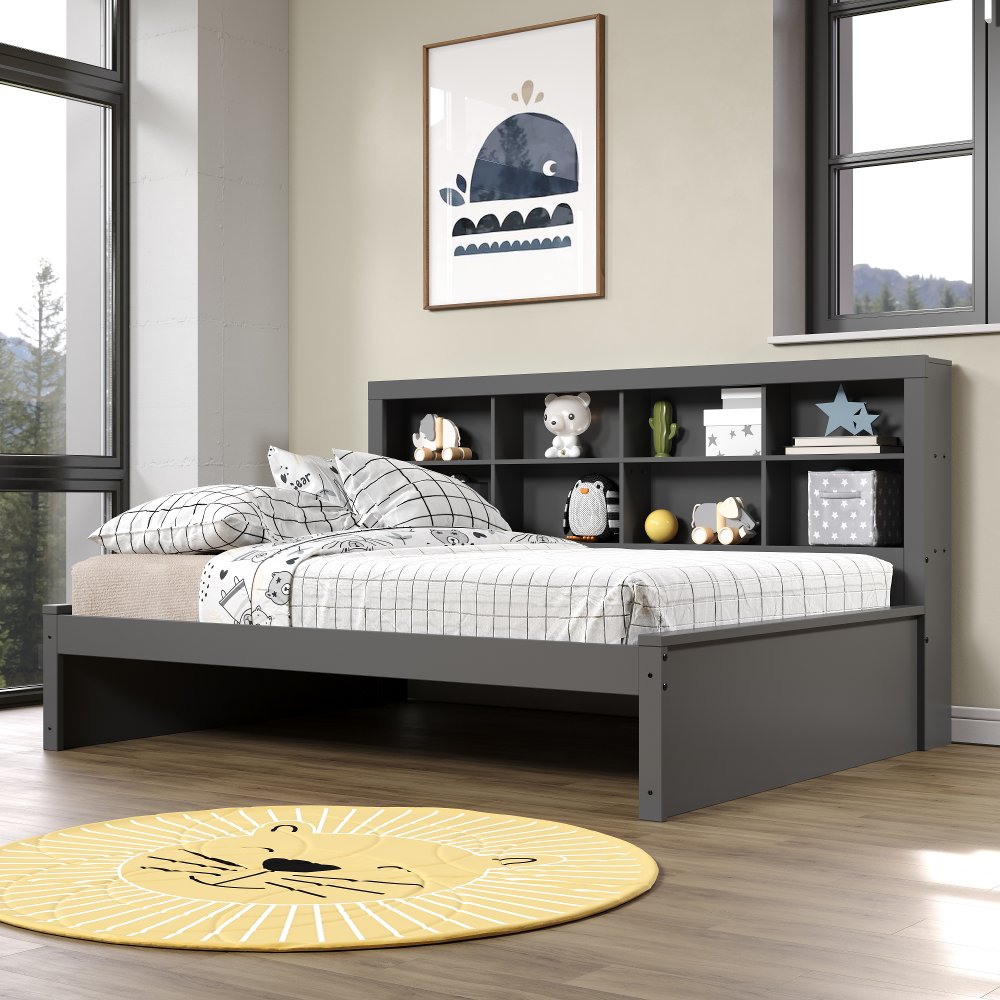
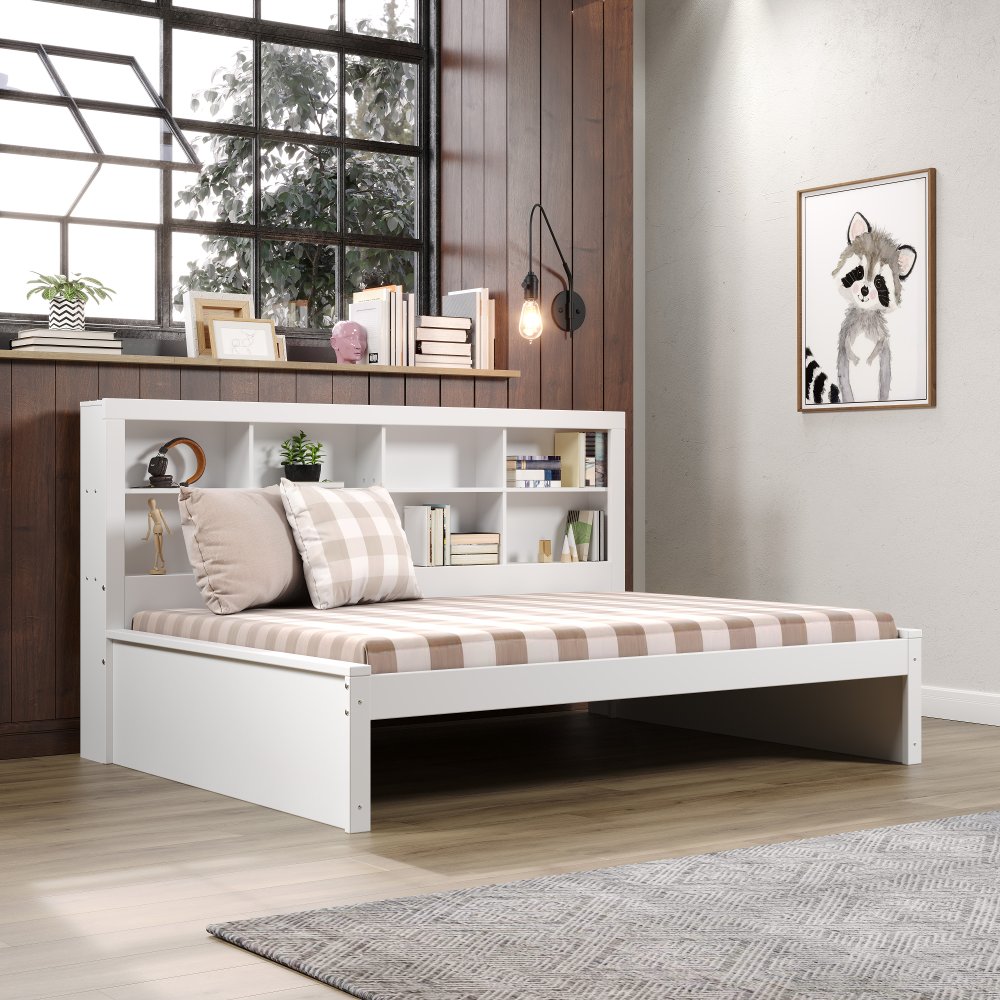
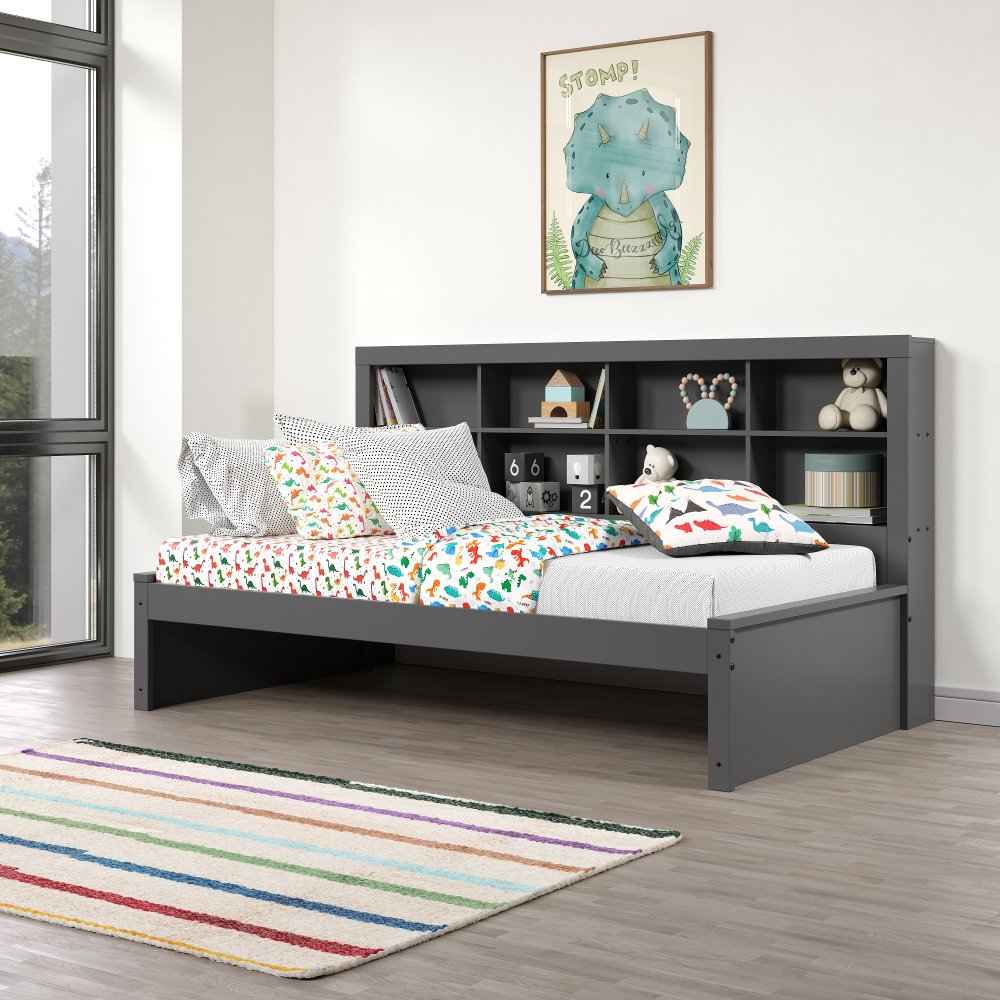
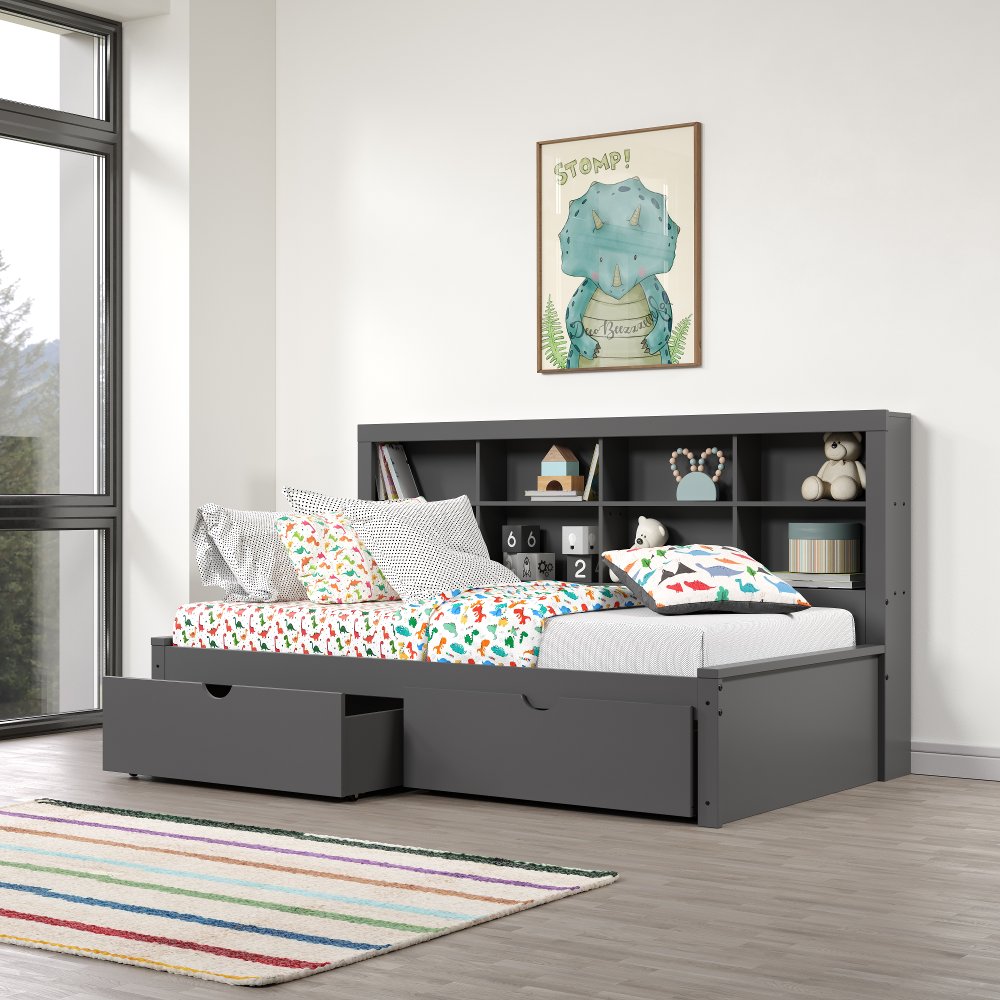
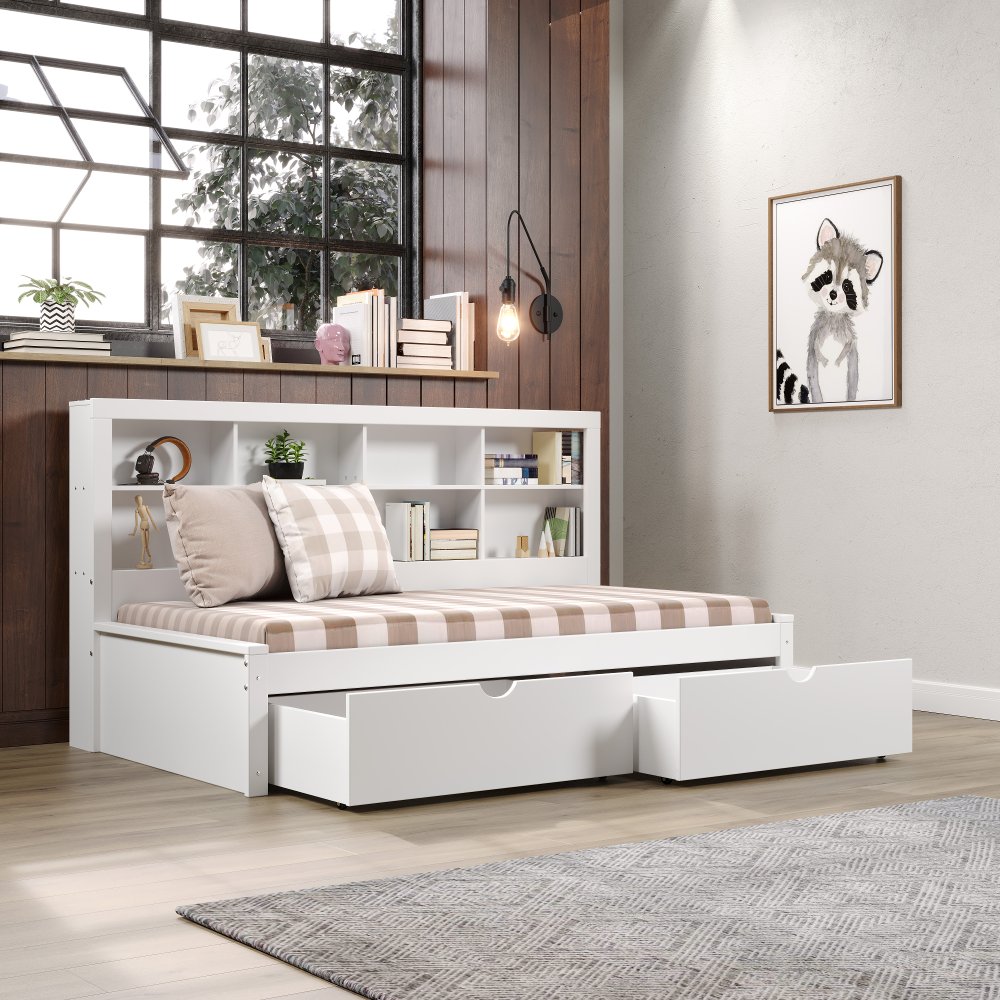
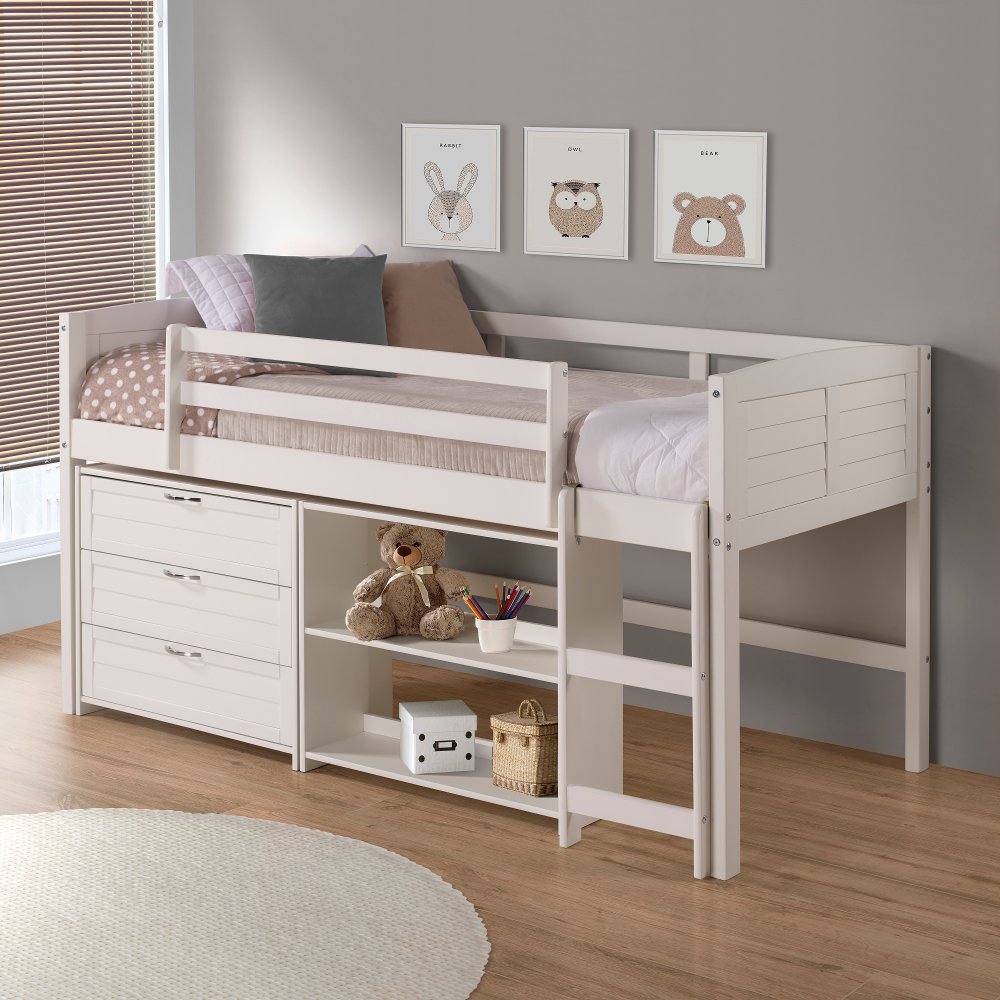
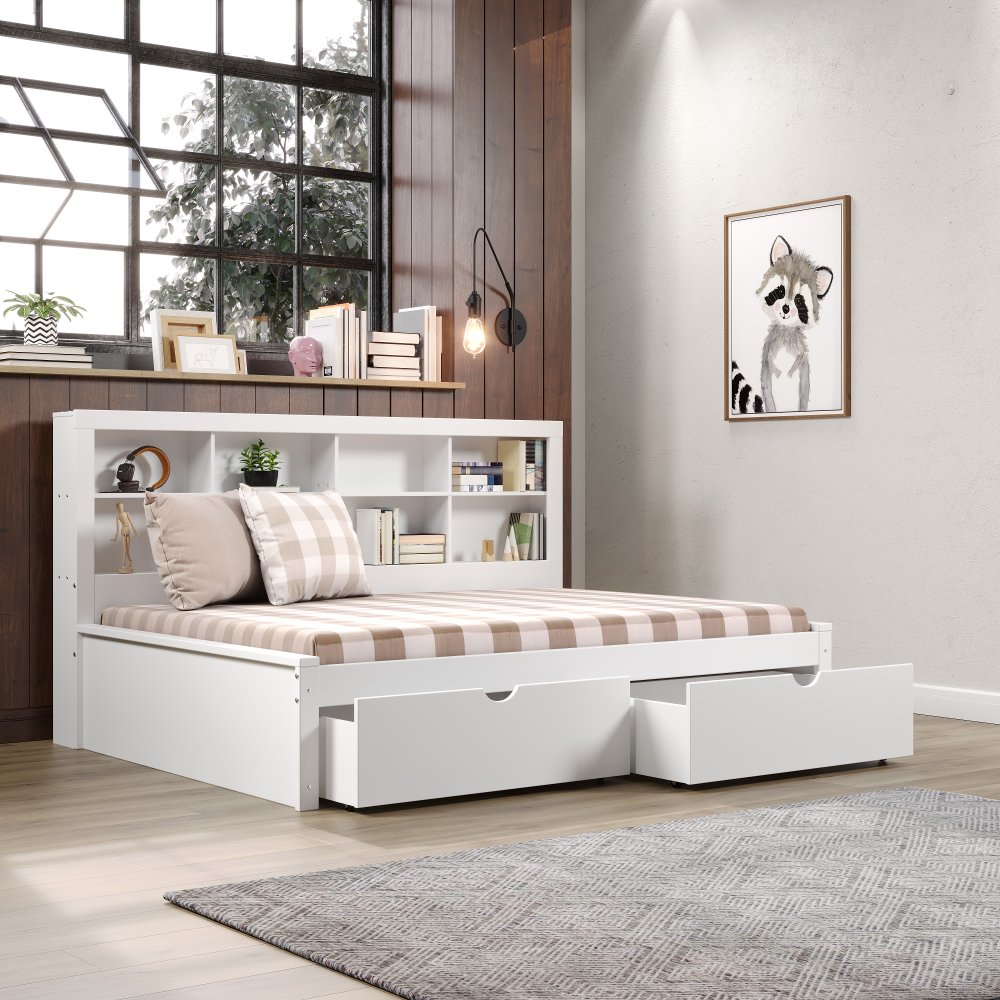
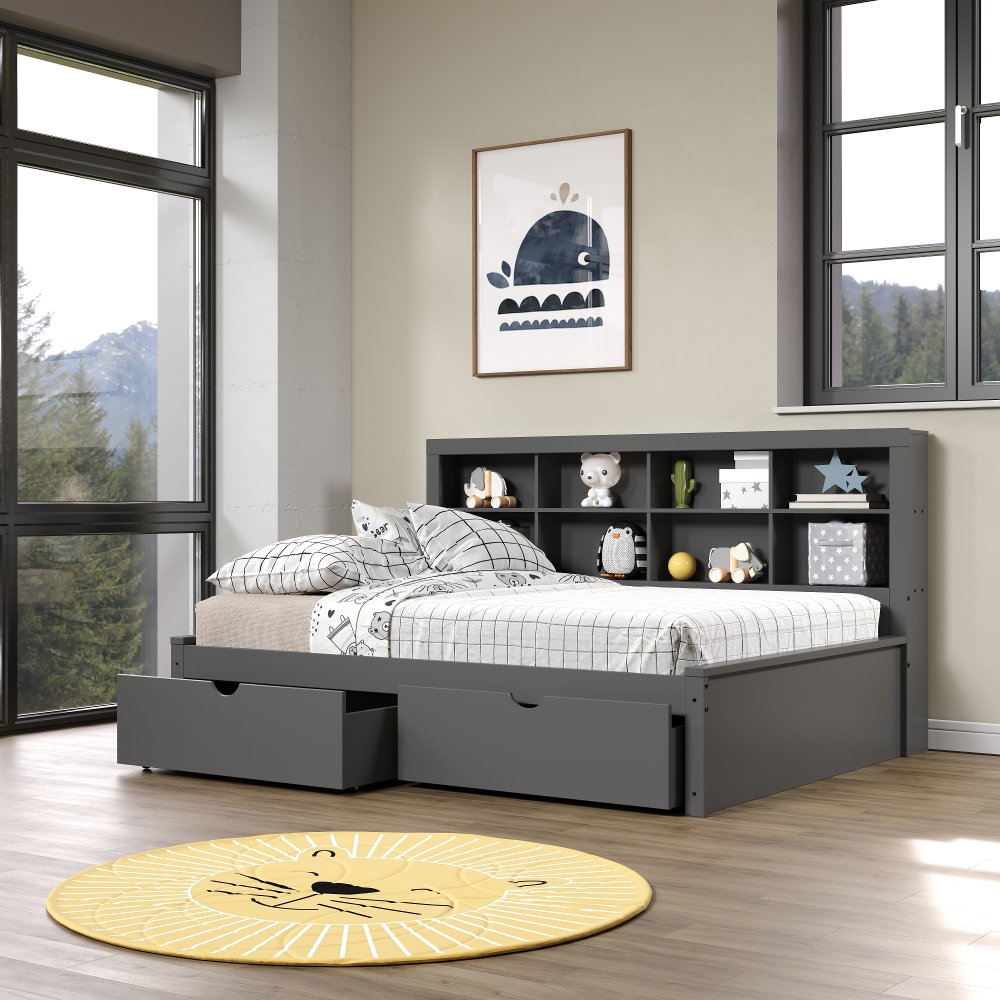
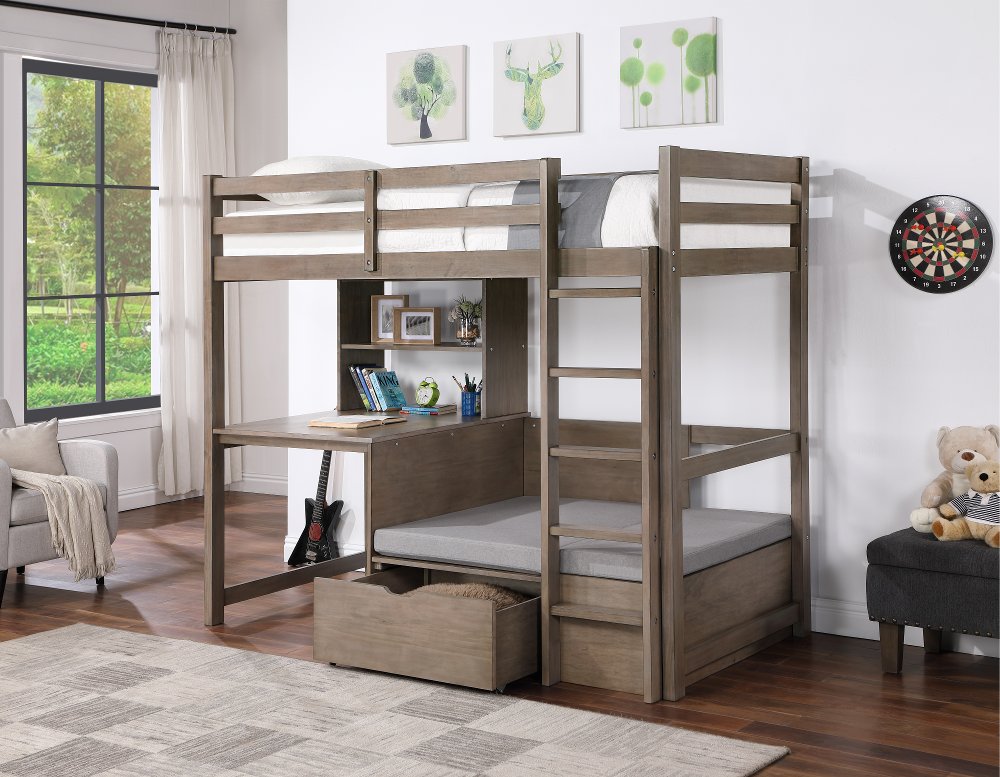
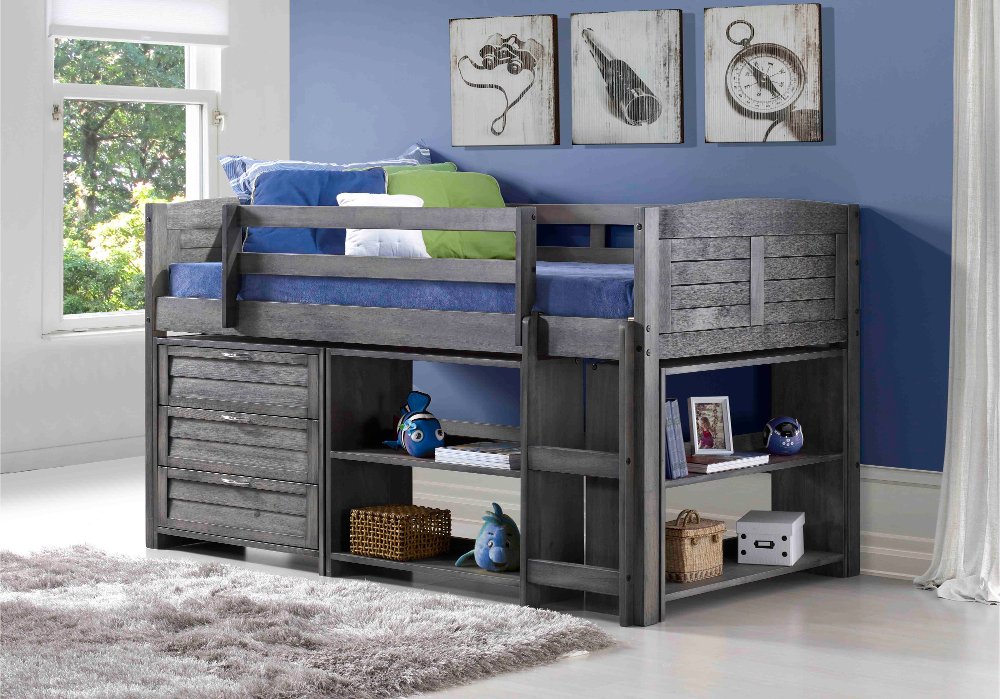
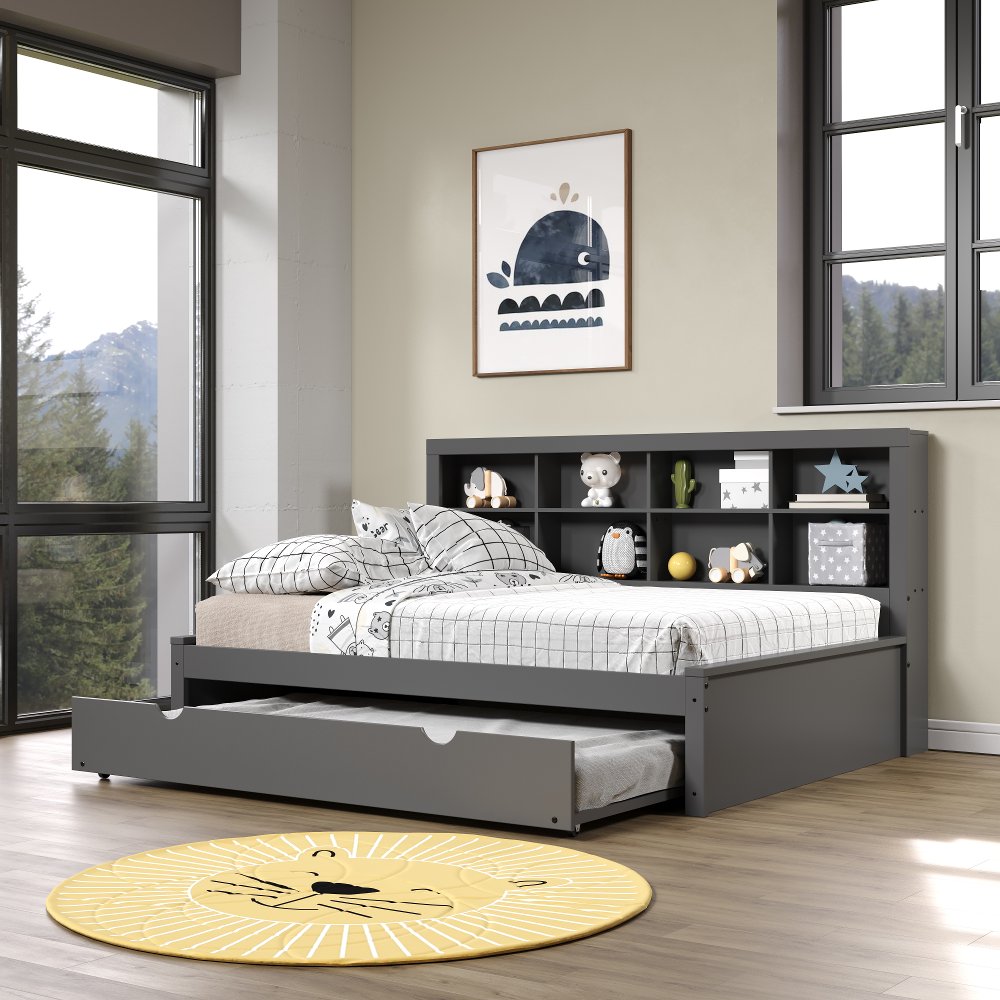
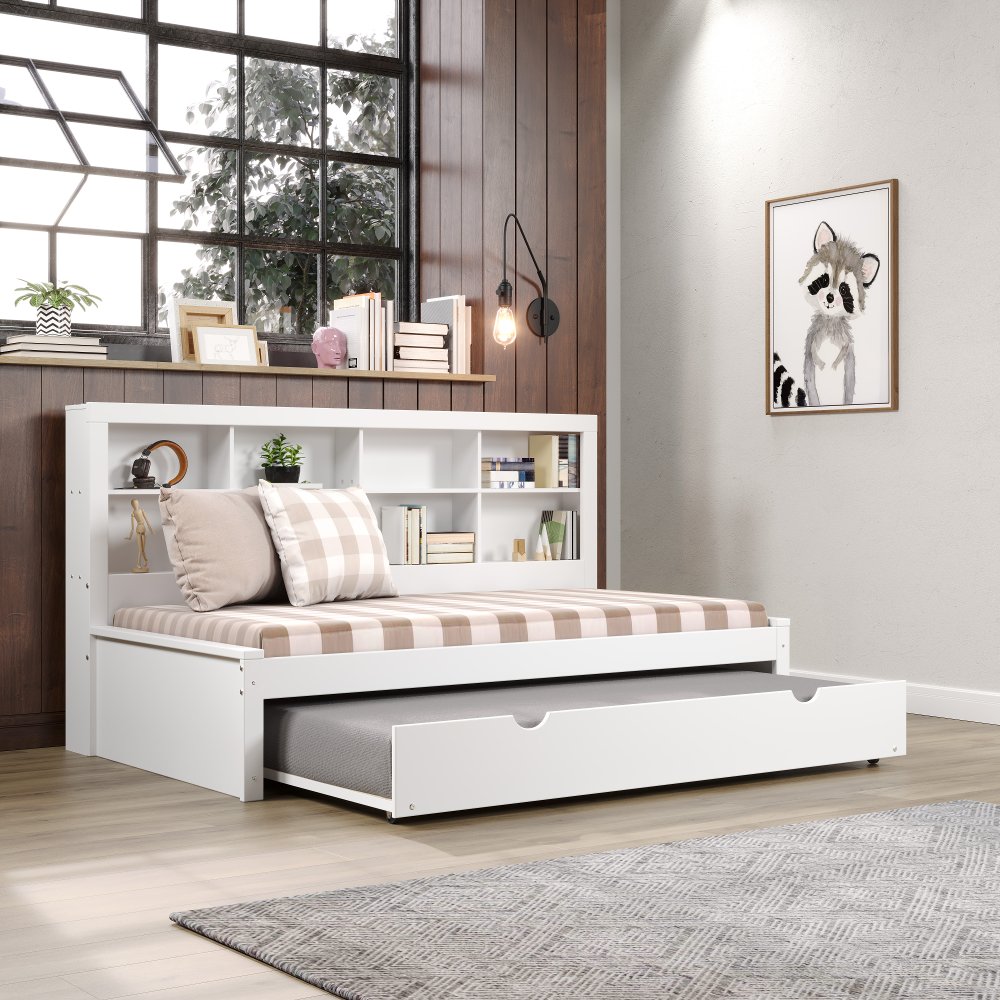
Shelf beds bring practical storage into the bed’s design, making it easier to create a comfortable bedroom without filling the floor with extra furniture. Often called bookcase beds or storage shelf beds, these frames feature shelving built into the headboard, side rails, or base. Open cubbies can keep favorite books, reading glasses, an alarm clock, framed photos, and small decorative pieces within easy reach, while drawers or cabinets provide a place for items you’d rather keep tucked away. Some styles also include under-bed drawers, side compartments, or a combination of storage options, giving you useful space for folded clothing, spare bedding, seasonal accessories, and other bedroom essentials. A shelf bed can be especially helpful in a guest room, apartment, dorm-style space, children’s room, or any bedroom where every square foot matters. Instead of placing separate nightstands on both sides of the bed, you can use the built-in shelving to create a cleaner arrangement and leave more open floor space for walking, baskets, or a small chair. For a child or teenager, the shelves can hold bedtime stories, headphones, school supplies, and a favorite collection that changes over time. In a guest room, they offer visitors a convenient place for a phone, book, or water glass while keeping the room welcoming and uncluttered. Shelf beds can also make thoughtful gifts for someone moving into a first apartment, furnishing a new bedroom, or preparing a room for a growing family. When choosing a style, start with the mattress size you need, such as Twin, Full, Queen, or King, and measure the room carefully. Account for the full width and depth of the frame, including any headboard shelving, as well as the space needed to open drawers or cabinet doors. Comparing the bed’s exterior dimensions with the room layout helps prevent surprises during delivery and makes it easier to plan rugs, dressers, and other furniture around it.
Storage style plays a major role in how a shelf bed feels and functions from day to day. Open shelves make frequently used items easy to see and reach, which can be useful for bedtime reading or displaying a few personal touches. They also invite a simple organizing routine: keep the lower shelves for heavier books or baskets, place everyday items at a comfortable height, and leave a little breathing room so the headboard doesn’t look crowded. Closed cabinets or drawers offer a more streamlined appearance and can conceal chargers, extra linens, toys, and clothing that might otherwise gather beside the bed. Some designs combine open cubbies with closed storage, giving you both display space and a place to put away visual clutter. If you prefer a minimal bedroom, consider how much shelving you’ll realistically use and choose a configuration that supports your habits rather than creating more surfaces to manage. Families may appreciate drawers that help keep blankets and toys close at hand, while readers may value deep headboard compartments for books and a bedside lamp. In smaller rooms, under-bed storage can help replace a separate storage chest, although you’ll want to check drawer clearance and make sure nearby furniture won’t block the pullout sections. Construction details matter, too. Look for a frame that feels stable, supports the intended mattress size, and matches the way you plan to use the bed. Wood finishes can bring warmth and a familiar bedroom feel, while painted or contemporary designs may coordinate easily with modern décor. Metal accents, clean lines, and mixed materials can create a lighter look, while substantial headboards and deeper shelving can give the bed a more grounded presence. Check the recommended mattress height so the sleeping surface sits comfortably in relation to the headboard and shelves. If the design includes integrated USB ports, outlets, or a charging area, think about where the bed will sit in relation to the wall and power source. Built-in charging features can help keep a phone or tablet nearby, but cords still look and work best when they’re routed neatly and kept clear of walkways.
A shelf bed can serve as the anchor for a bedroom that feels organized, personal, and ready for real life. During the warmer seasons, open shelving can hold a small fan remote, light reading, and a water bottle; during cooler months, the same storage can make room for extra throws, slippers, and a stack of cozy books. The best arrangement will depend on who uses the room. A child may need low, reachable compartments for books and soft toys, while an adult bedroom may benefit from concealed storage for linens and a clear shelf for a lamp or glasses. For shared bedrooms, consider whether each person has enough accessible storage and whether the design allows both sides of the bed to function comfortably. In a guest space, leave a few shelves or drawers open so visitors can settle in without moving your belongings. For a first bedroom or college-style living arrangement, a shelf bed can combine several everyday functions in one footprint, helping make a smaller space feel more capable. Before purchasing, confirm the frame’s assembly requirements, the location of any storage openings, and whether the layout works with your preferred side of the bed. It’s also wise to compare the bed’s materials, finish, support system, and care instructions with the rest of your furniture. Dusting open shelves regularly and using liners or baskets in storage compartments can keep the area looking fresh and make small items easier to find. If you’re considering a more traditional bed frame without built-in shelving, explore Standard Beds for additional bedroom layouts and storage possibilities. With the right size, storage mix, and finish, a shelf bed can give you a comfortable place to sleep while putting the things you use most exactly where they belong.
Read More