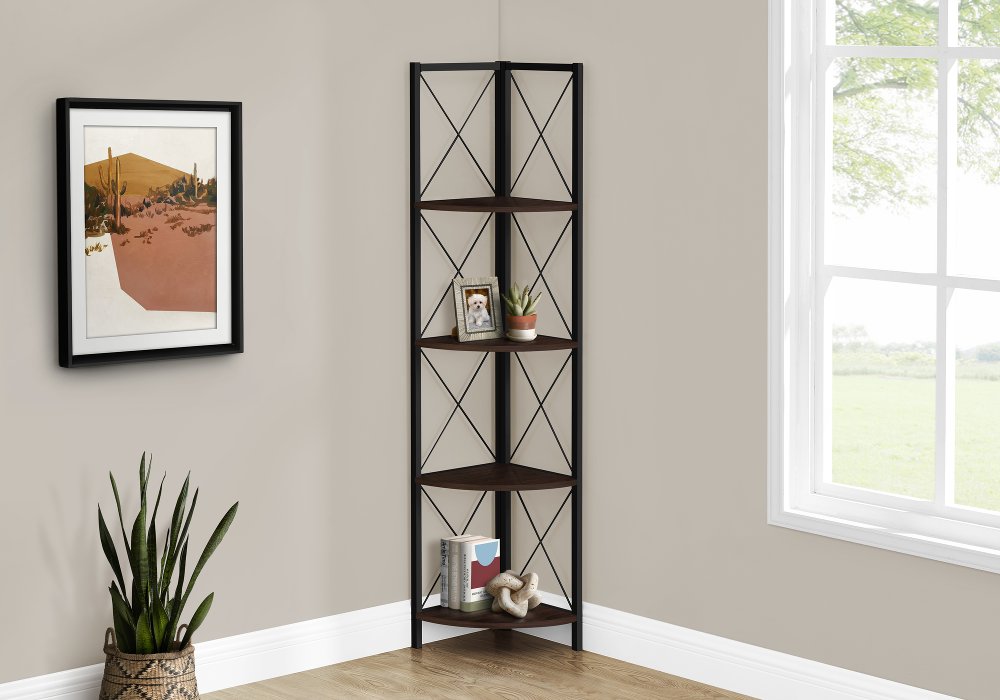
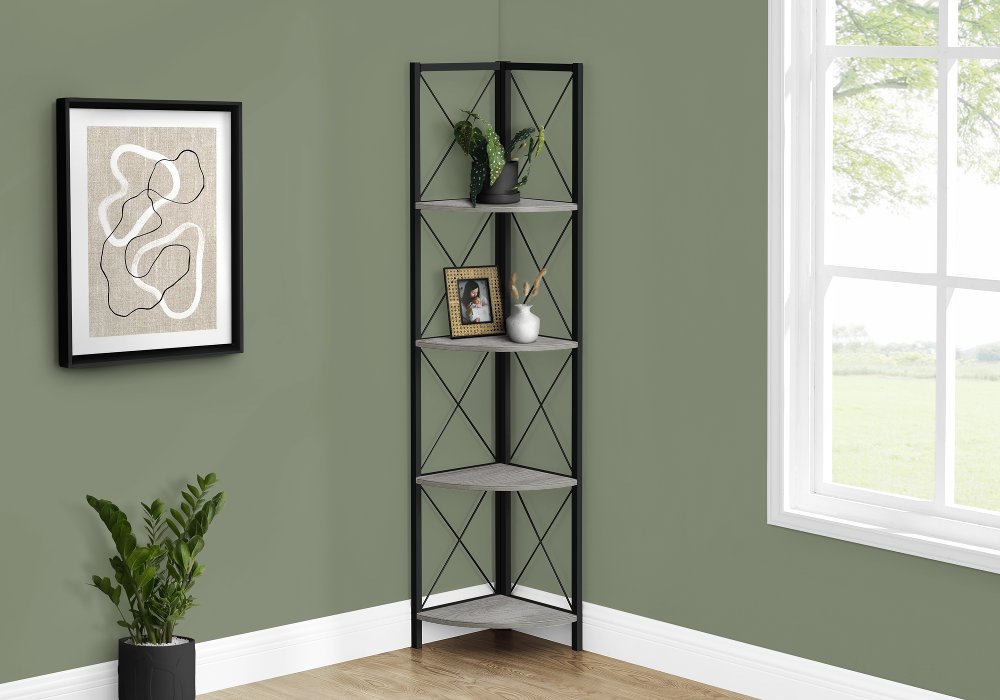
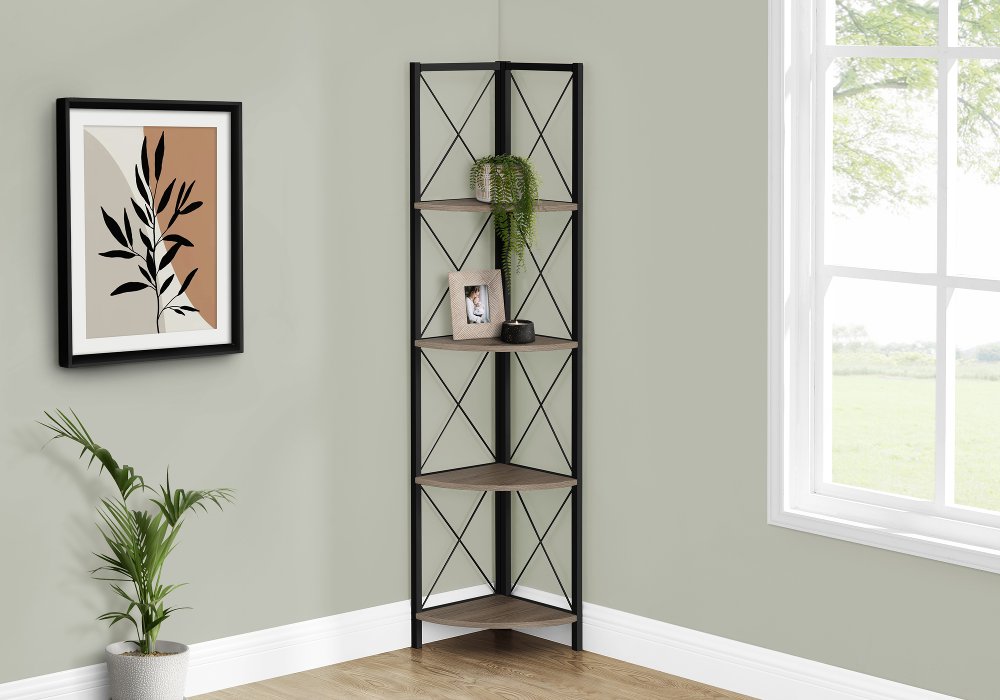
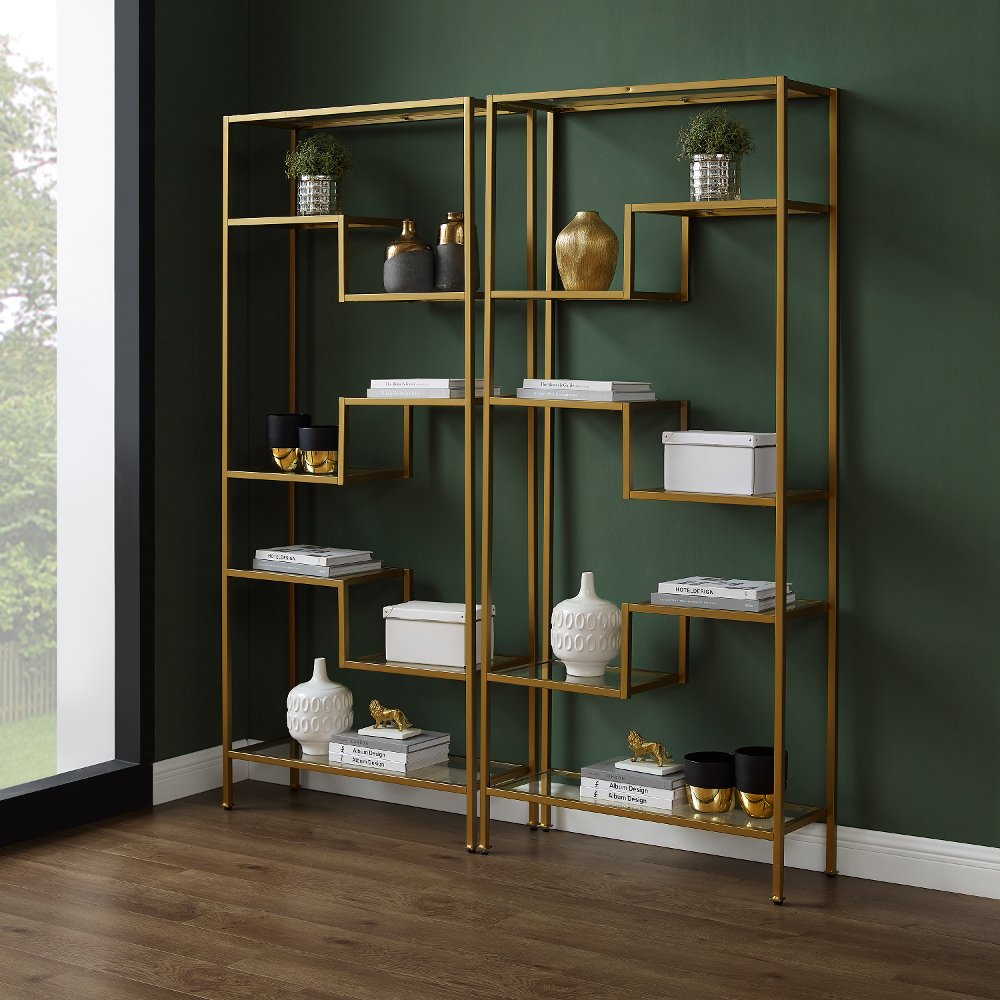
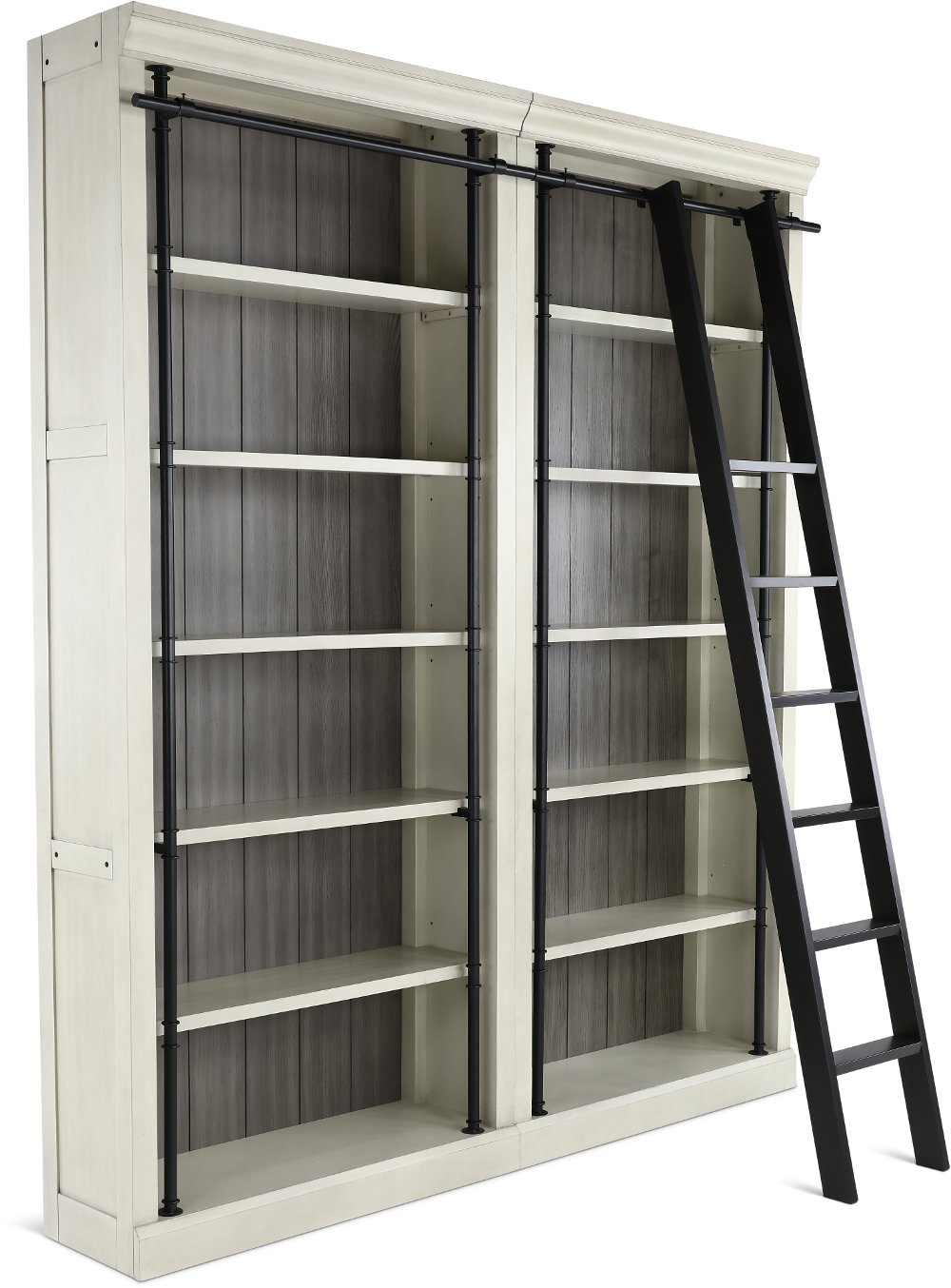
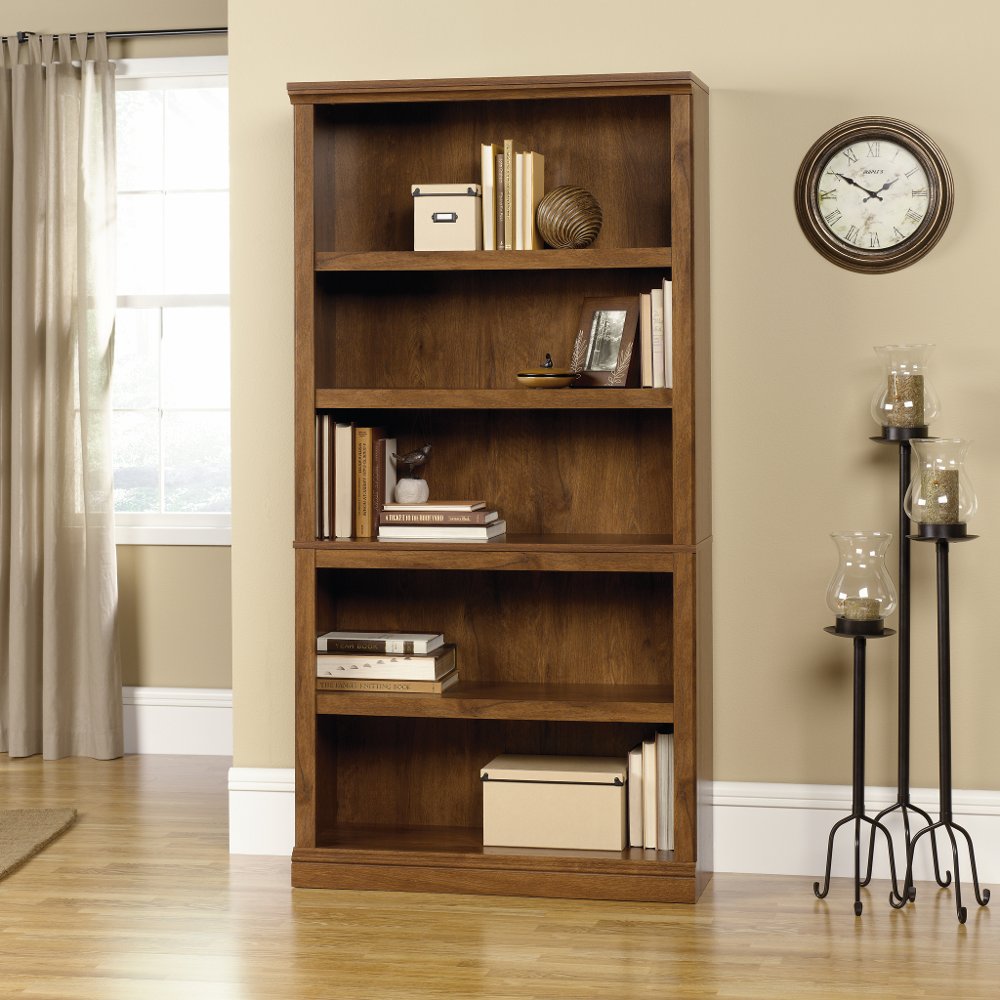
X-shaped bookcases combine open shelving with a distinctive crossed design, giving books, baskets, and decorative pieces a place to settle without making a room feel crowded. The term often describes bookcases with X-shaped braces across the back or crossed accents along the sides, rather than shelves arranged in the shape of an X. That distinction matters when choosing between a familiar rectangular bookcase with geometric details and a more sculptural storage piece. Depending on the construction, cross-bracing can help limit side-to-side movement, while decorative X accents may serve primarily as a design feature. Neither replaces proper assembly or wall anchoring when required by the manufacturer. Visually, the appeal is easy to appreciate: intersecting lines add interest to a simple frame, and open spaces let the wall color show through. Black metal paired with wood-look shelves fits naturally into an industrial living room, especially beside leather upholstery or a textured rug. Warm wood tones and crossed side panels can bring a relaxed farmhouse feel to a reading corner, while lighter finishes work well with soft neutrals and an airy home office. The same basic shape can feel rustic, tailored, or contemporary depending on the shelf thickness, frame proportions, and finish. An X-back bookcase can hold favorite novels beside a comfortable chair, keep reference books close to a desk, or give framed photos and pottery a home along an otherwise quiet wall. For readers, students, remote workers, and anyone balancing storage with display, this style offers a useful middle ground between a closed cabinet and a purely decorative accent. Open shelves keep frequently used belongings visible and within reach, though smaller objects usually feel more orderly when gathered in baskets or trays. A few stacks of books, a substantial bowl, and space around each grouping allow the crossed details to remain part of the room rather than disappear behind everything the shelves hold.
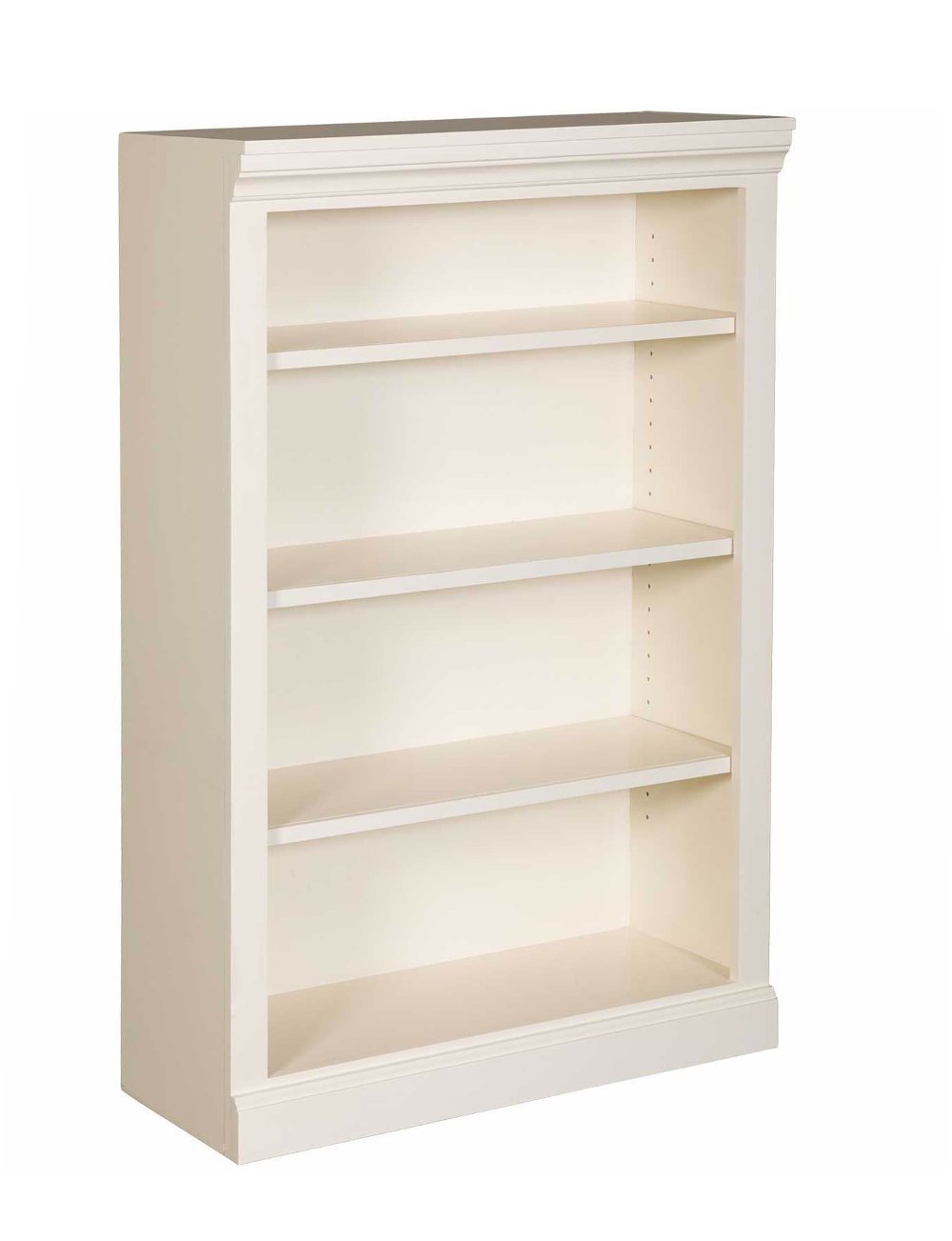
Materials and construction influence how an X-shaped bookshelf looks, feels, and handles everyday use. Solid wood can show natural grain variation and develop character over time, but it also responds to changes in humidity. Wood veneer provides a real wood surface over a supporting core, while laminate and other applied finishes offer different textures and care requirements. Engineered wood shelves can provide a consistent appearance, with long-term performance depending on factors such as thickness, span, edge protection, and the quality of the supporting frame. Metal frames often create a slimmer outline, and powder-coated finishes can be practical for daily use, although any finish can scratch if rough objects drag across it. No single material tells the whole durability story. Secure joints, level placement, sound shelf supports, and appropriate loading all matter, especially when the shelves will carry hardcover books rather than lightweight decorations. Published weight limits should guide the load on each shelf and on the bookcase as a whole; an X-shaped brace alone doesn’t establish weight capacity. Fit deserves the same attention as finish. Overall width and height show how the piece occupies a wall, while shelf depth and usable clearance determine what actually fits inside it. A row of paperbacks needs less depth than oversized art books, and office binders may need more vertical space than a fixed shelf allows. Side crosses and rear braces can also reduce clearance for baskets or objects positioned near the edges. In a narrow room, a shallower frame may preserve a comfortable walkway, while a taller bookcase can add storage without taking up much more floor space. Baseboards, outlets, door swings, and nearby vents can affect placement even when the wall measurements look right. For a lower profile or a smaller collection, three shelf bookcases offer another proportion to consider alongside taller shelving. Adjustable shelves provide flexibility as storage needs change; fixed shelves establish consistent spacing that works best when matched to the belongings intended for them.
Daily life helps determine which details will make an X-shaped bookcase especially useful. In a home office, shelves that accommodate reference materials and labeled bins can keep the desktop clearer without moving essentials too far away. In a living room, a mix of upright books and low baskets makes space for reading, hobbies, and the small belongings that otherwise collect on a coffee table. A shared household might use separate baskets for each person’s notebooks or craft supplies, while a guest room bookcase can hold a modest reading collection and a few welcoming decorative touches. Because many X-back bookcases have open sides or backs, bookends can help keep shorter rows upright and prevent books from leaning into the crossed framework. These open designs don’t conceal cables or clutter the way a cabinet does, so storage containers with a coordinated color or texture can make the arrangement feel more settled. Place heavier belongings on lower shelves, distribute weight evenly, and follow the manufacturer’s instructions for assembly, loading, and anchoring. Homes with children or pets need particular care: crossed details aren’t climbing supports, and a freestanding bookcase shouldn’t be treated as tip-resistant simply because it feels sturdy. Routine care is generally straightforward, with a soft cloth for dusting shelf surfaces, frame edges, and the intersections where dust can collect. Follow the finish-specific cleaning directions, avoid soaking wood-based components, and wipe up spills promptly. Felt pads beneath pottery can help protect surfaces, while a waterproof tray beneath a plant helps contain moisture; a tray still needs checking for leaks or condensation. Direct sunlight and nearby heat sources may affect some finishes, making placement part of long-term care. For a new graduate setting up an apartment or a reader furnishing a first home, a bookcase can also be a thoughtful gift when room dimensions and style preferences are known. Whether it supports a working library or a small collection of meaningful objects, an X-shaped bookcase brings useful storage and a recognizable architectural detail into the spaces used every day.
Read More