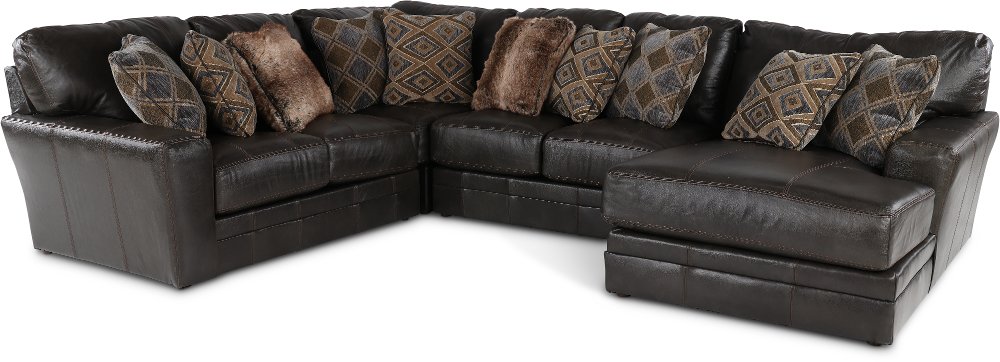
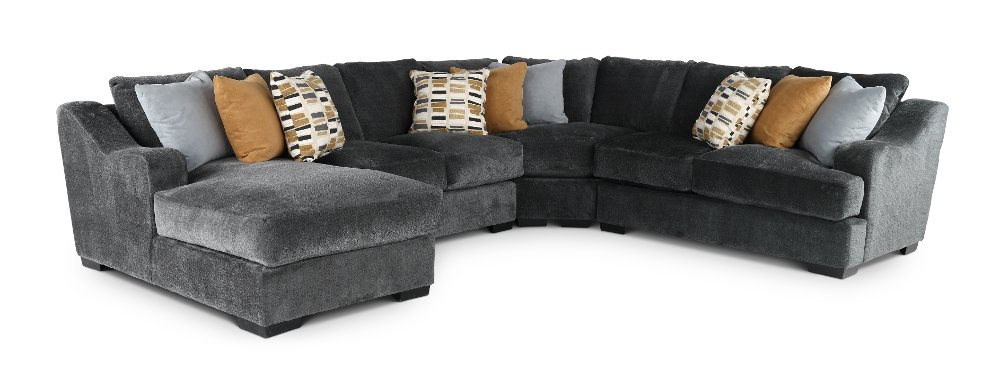
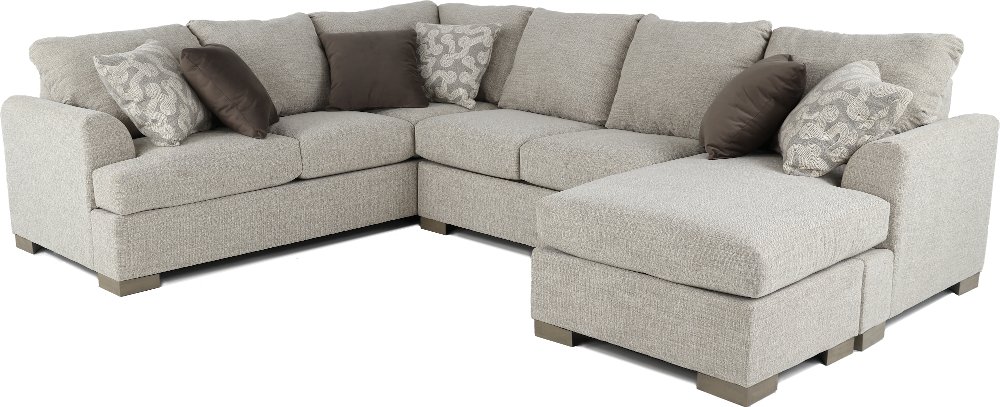
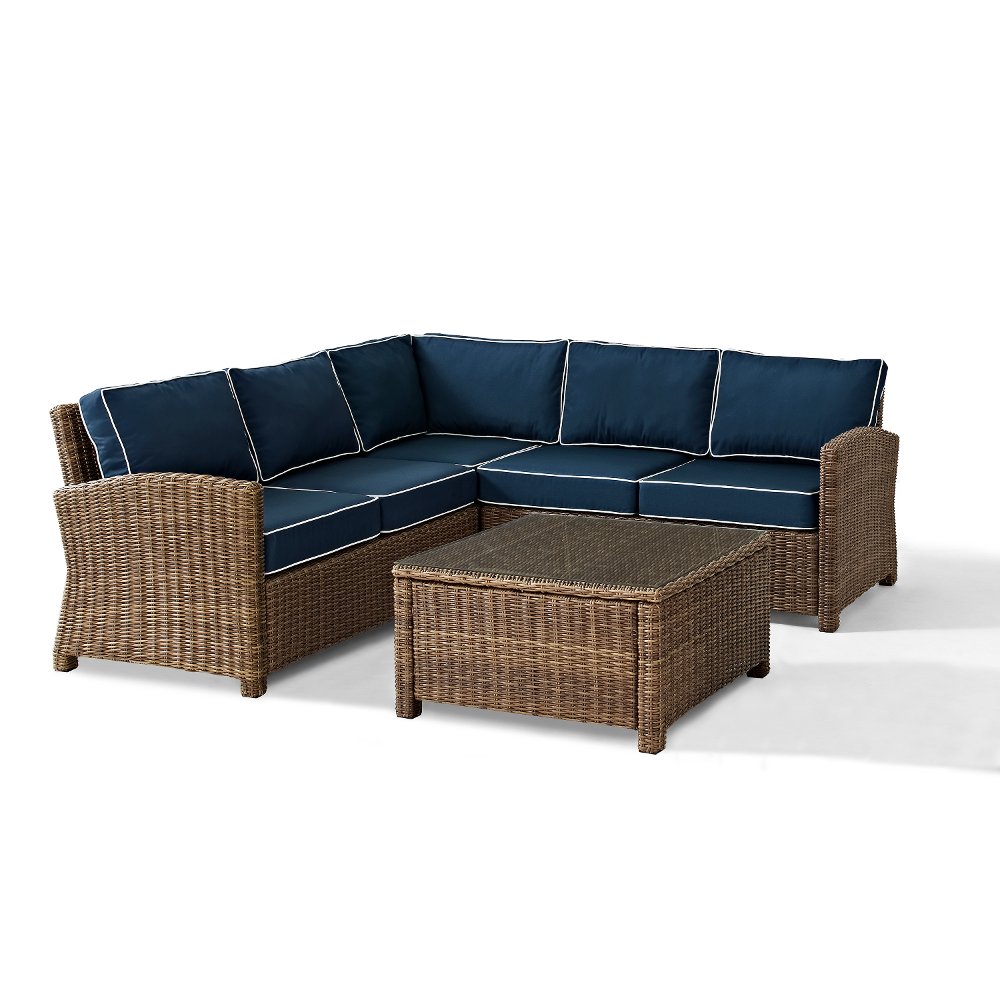
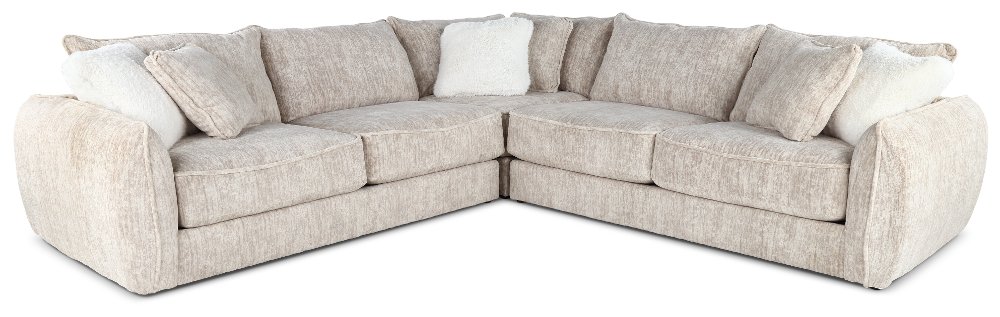
A 4-piece sectional brings together four coordinated components to create a spacious seating arrangement for a living room, family room, or open-concept gathering space. The combination may include left- and right-arm seating sections, a corner seat, an armless chair, a chaise, or an ottoman; the exact pieces depend on the design. Many four-piece sectionals seat four to six people, although seating capacity varies with cushion width, configuration, and whether one of the pieces is an ottoman rather than a seat. That generous footprint gives everyone room to settle in without scattering separate chairs throughout the room. A corner arrangement can bring the family together for a movie, while a chaise gives someone a comfortable place to stretch out with a book without taking over the neighboring seats. For households that regularly host friends, the connected layout keeps conversation close and makes the seating area feel like a natural gathering spot. L-shaped configurations work well along two walls or as a boundary between living and dining areas. Other combinations create a broader seating arrangement with more room to face one another. Modular 4-piece sectionals offer additional flexibility when individual components are designed to connect in different positions. A sectional sold in four pieces isn’t necessarily fully modular, however; some sections have finished arms, shaped corners, or connectors intended for a particular layout. The distinction matters if you expect to rearrange the room later. Comfort also depends on more than the number of pieces. Deep seats invite lounging with your feet tucked up, while shallower seats make it easier to sit upright with your feet on the floor. Taller backs, supportive cushions, and substantial armrests can make a sectional especially comfortable for everyday conversation or longer evenings in front of the television. The best match feels comfortable for the people who use it most, whether that means room for children to curl up beside a parent or supportive seating for visiting relatives.
The right fit allows a large sectional to feel welcoming rather than overwhelming. Overall width and depth matter, but so do the length of a chaise, the projection of a corner section, and the space needed to move around the furniture. A four-piece configuration can help define a roomy living area, yet its individual components still need to work with doorways, windows, fireplaces, and the path through the house. In an open floor plan, the back of a sectional can create a clear separation between spaces without adding a wall. Against a wall, the same arrangement may leave more of the center of the room open for a coffee table or play area. Painter’s tape on the floor makes the footprint easier to picture, particularly when a chaise extends farther into the room than a standard sofa would. Leave enough space to walk comfortably past that extension and reach nearby seating without squeezing between furniture. The sectional’s orientation deserves attention, too. Left-facing and right-facing descriptions can be easy to misread, so the configuration diagram is a better reference than the name alone. Delivery access is another part of the fit: separate pieces may be easier to maneuver than one oversized sofa, but each section must still clear entry doors, hallways, stair turns, and elevator openings. Removable legs or other detachable parts can help only when the furniture is designed for that adjustment. If a four-piece arrangement takes up more floor space than your room can comfortably spare, Two Piece Sectionals offer another way to enjoy connected seating with fewer components. Scale affects the finished look as much as measurements do. Low-profile backs can keep sightlines open, slim arms preserve more space for sitting, and wide arms create a substantial, relaxed presence. A suitably sized coffee table or ottoman completes the arrangement while keeping everyday essentials within comfortable reach.
Upholstery, cushioning, and construction shape how a 4-piece sectional looks, feels, and holds up to everyday life. Woven fabrics offer a broad range of textures, from smooth, tailored surfaces to nubby weaves that add depth to a neutral room. Microfiber often has a soft feel and can be practical for frequent use, while performance fabrics may offer added resistance to stains or moisture, depending on their specifications. Those features can be helpful where children carry snacks to the sofa or pets claim a favorite cushion, but no upholstery is completely protected from spills, claws, or wear. Leather brings a different feel and can develop character over time; its finish influences both maintenance needs and how readily marks show. Faux leather provides a leather-like appearance with its own care requirements, so cleaning directions should match the actual material rather than the look. Color and texture also affect daily upkeep. A textured midtone may make small marks or pet hair less noticeable than a smooth, solid surface, though the result depends on the fabric and the color of the hair. Beneath the upholstery, a sturdy frame, supportive suspension, secure sectional connectors, and well-constructed cushions contribute to lasting comfort. Foam cushions generally provide a more structured seat, while fiber or feather-blend cushions can feel softer and may need more frequent fluffing. Removable, reversible cushions can help distribute use when the design allows rotation; an attached cushion requires a different approach. Regular vacuuming with an appropriate upholstery attachment helps remove crumbs and grit before they settle into seams. Blot spills promptly, follow the manufacturer’s cleaning code, and use only recommended products. A removable cushion cover isn’t automatically machine washable. Keeping upholstery away from prolonged direct sunlight can also help reduce fading, and compatible leather care products may be recommended for certain finishes. With a layout that suits your room and materials that match your routine, a four-piece sectional becomes a comfortable anchor for shared meals on trays, relaxed conversations, and the everyday moments that make a living space feel like home.
Read More