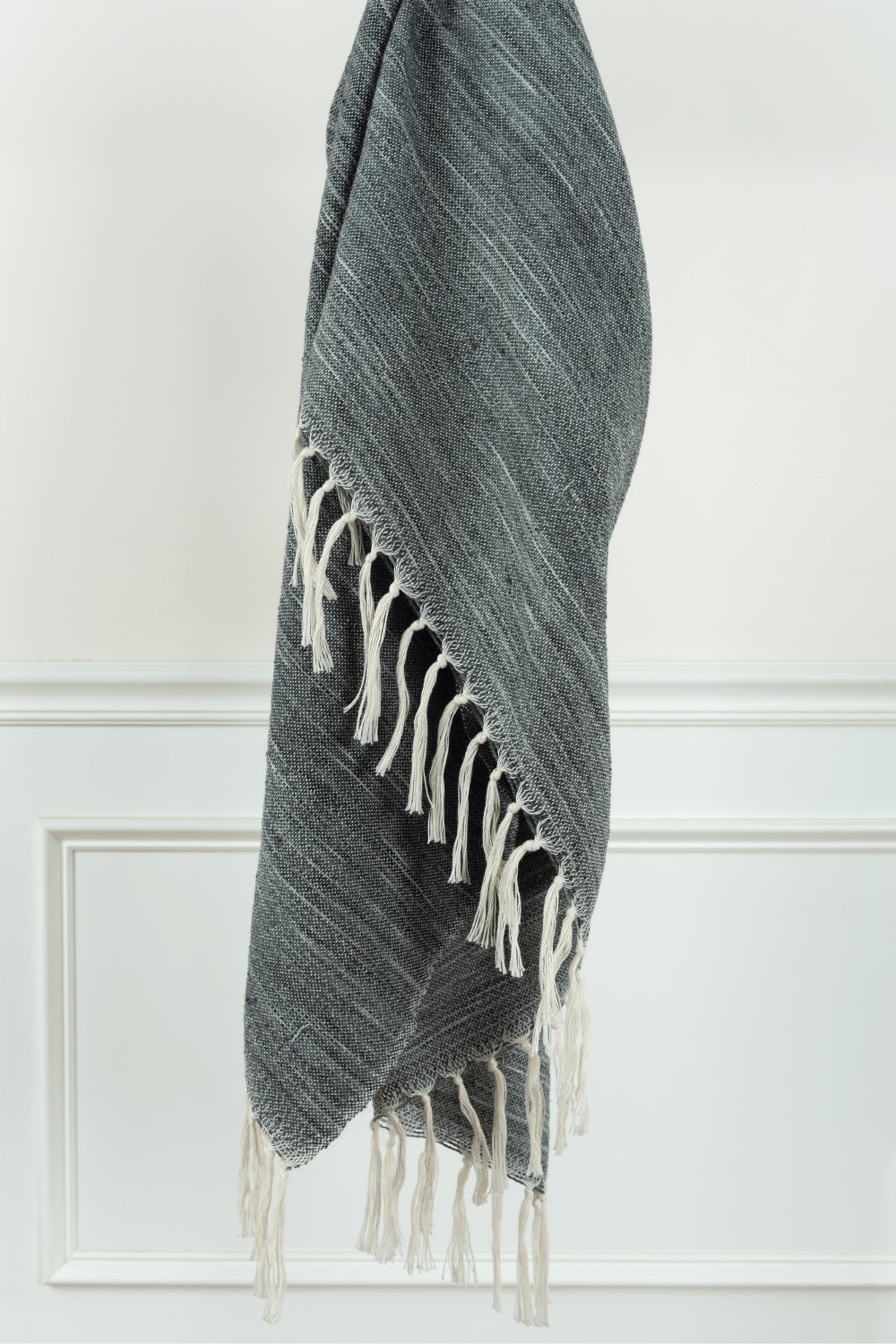
Couch throw blankets add a comfortable layer for everyday lounging and an easy way to bring color, texture, and warmth to your living room. Smaller than most bed blankets, throws sit comfortably over a sofa arm, fold into a storage basket, and stay within reach when a movie runs late or a quiet afternoon turns chilly. A common throw blanket size is 50 by 60 inches, which works well for covering your lap and legs or draping over an accent chair. An oversized throw around 60 by 80 inches offers more coverage for taller adults, stretching out on the couch, or sharing a little extra warmth. Dimensions vary, so checking the actual measurements matters more than relying on the word “oversized.” On a sectional, a larger blanket can balance a deep seat or wide chaise, but it generally won’t cover the entire seating area like a fitted furniture cover. For someone who likes to tuck a blanket around their feet, length may matter more than width; for two people sitting side by side, extra width makes more sense. Weight deserves just as much attention. A lightweight couch blanket takes the edge off a cool room without feeling bulky, while a thicker throw creates a snug layer during the cooler months. The best fit depends on how the blanket will spend most of its time: wrapped around your shoulders while reading, spread across your knees during family movie night, or folded neatly along the back of the sofa. A blanket chosen mostly for display can emphasize texture and drape, while one that gets used every evening should feel comfortable against bare arms and stand up to its recommended cleaning routine. Keeping separate throws at opposite ends of a larger couch also gives each person their preferred level of warmth without a tug-of-war over the corners.
Material shapes the feel, warmth, and everyday practicality of a sofa throw blanket. Cotton throws are often a good match for people who prefer a breathable layer with a familiar, natural feel. A lightweight cotton weave can fold fairly flat, while a heavier cotton knit brings more substance and texture. Linen throws tend to have a relaxed appearance and a drier hand than plush fabrics, making them appealing when an airy layer feels better than deep pile. Polyester fleece offers softness and warmth without necessarily adding much weight, and its flexible drape makes it easy to pull around your shoulders. Plush microfiber and faux fur create a fuller, velvety surface that can make a simple sofa feel more inviting, though dense pile may feel warmer than someone who runs hot would enjoy. Wool can provide substantial warmth and help manage moisture, but softness varies with the fiber and construction; some people find certain wool textures scratchy against their skin. Acrylic knits can offer a wool-like appearance, with care requirements that depend on the particular fabric. Fiber content alone doesn’t tell the whole story: weave, thickness, backing, and finishing all influence how a throw feels and holds up. A loosely knit blanket may look beautifully textured but catch on jewelry or pet claws more easily than a tightly woven fabric. Long fringe adds movement at the edge of a sofa, while a simple hem leaves fewer loose strands to manage in a busy household. For a blanket that will share the couch with a dog, tighter construction and a straightforward washing routine may be more useful than elaborate detailing. Machine-washable throws can make everyday cleanup easier, but the care label should confirm the water temperature, cycle, and drying method. Some fabrics need gentle washing or air drying, and high heat can shrink certain fibers or affect the feel of synthetic pile. Check whether a bulky throw fits comfortably in the washer, too, since it needs room to move during cleaning. Durable couch throws pair suitable fabric construction with care that’s realistic for the household using them.
Decorative throw blankets can give a room a more finished look without changing the furniture that already works for your home. On a smooth leather couch, a woven or knitted throw adds a softer visual contrast; on a textured upholstered sofa, a simpler fabric can keep the combination from feeling crowded. Color can either blend into the room or create a clear accent. Cream, oatmeal, taupe, and soft gray bring subtle variation to neutral seating, especially when the throw has a distinct weave. Deeper shades can anchor a pale sofa, while stripes, checks, or other patterns introduce movement against solid upholstery. For a color connection that feels easy to live with, blue sofa throws can echo a rug, artwork, or accent pillow, with muted blues offering a gentle contrast and navy adding definition. There’s no need for every textile to match exactly; repeating one or two colors at different scales often feels more relaxed. A folded throw over the arm of a compact sofa keeps the outline tidy and leaves the seat clear. Draping a lightweight blanket over the back and onto one cushion creates a longer line, while gathering a thicker throw at the corner of a chaise emphasizes its softness. Keep excess fabric off the floor and away from walking paths, especially beside a reclining seat or in a room where children and pets play. A basket beside the sofa gives everyday blankets a convenient home when the seating needs to stay open. Throws also make thoughtful housewarming or holiday gifts because they combine a personal touch with regular use. A breathable layer may suit a friend who reads by the window, while generous dimensions can make lounging more comfortable for a tall family member. For gift giving, soft texture, versatile color, and manageable care are often more useful than dramatic embellishment. Whether it becomes a favorite reading companion or the finishing layer on a well-loved couch, a throw works best when its look and feel suit the person reaching for it.
Read More