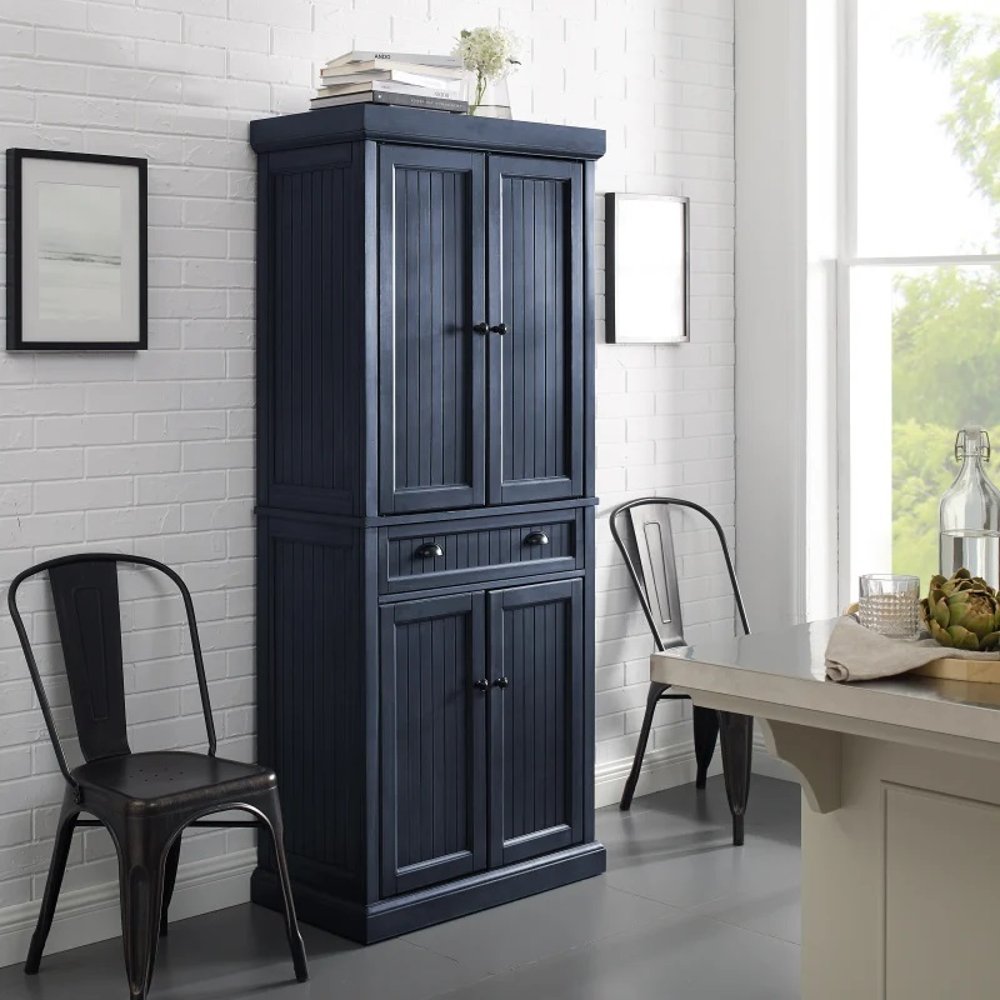
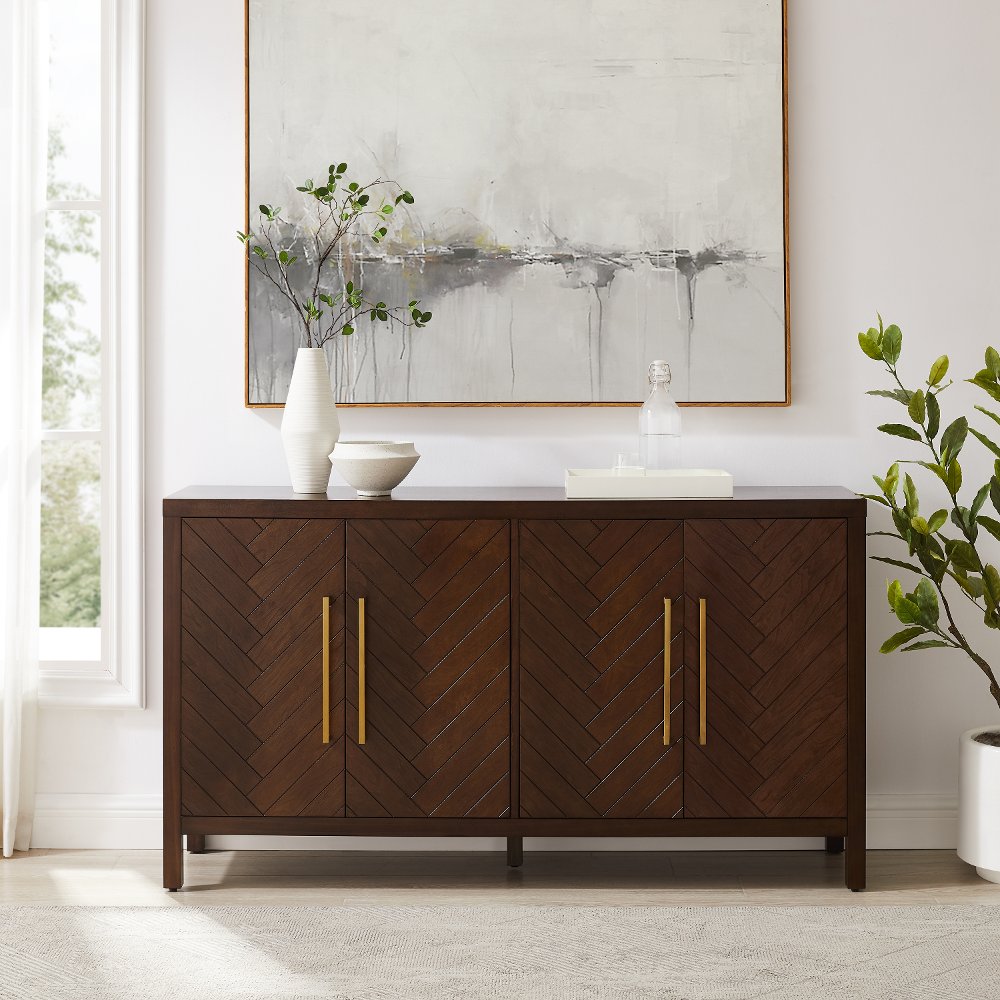
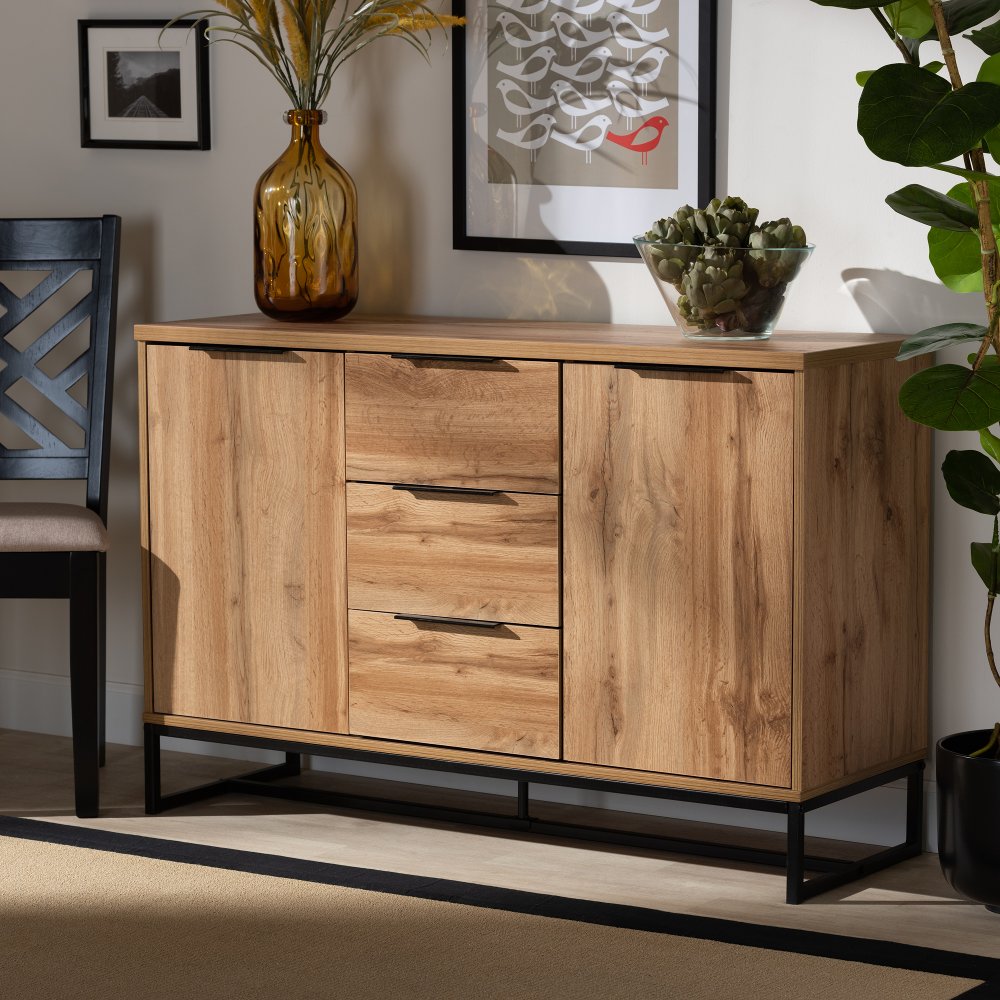
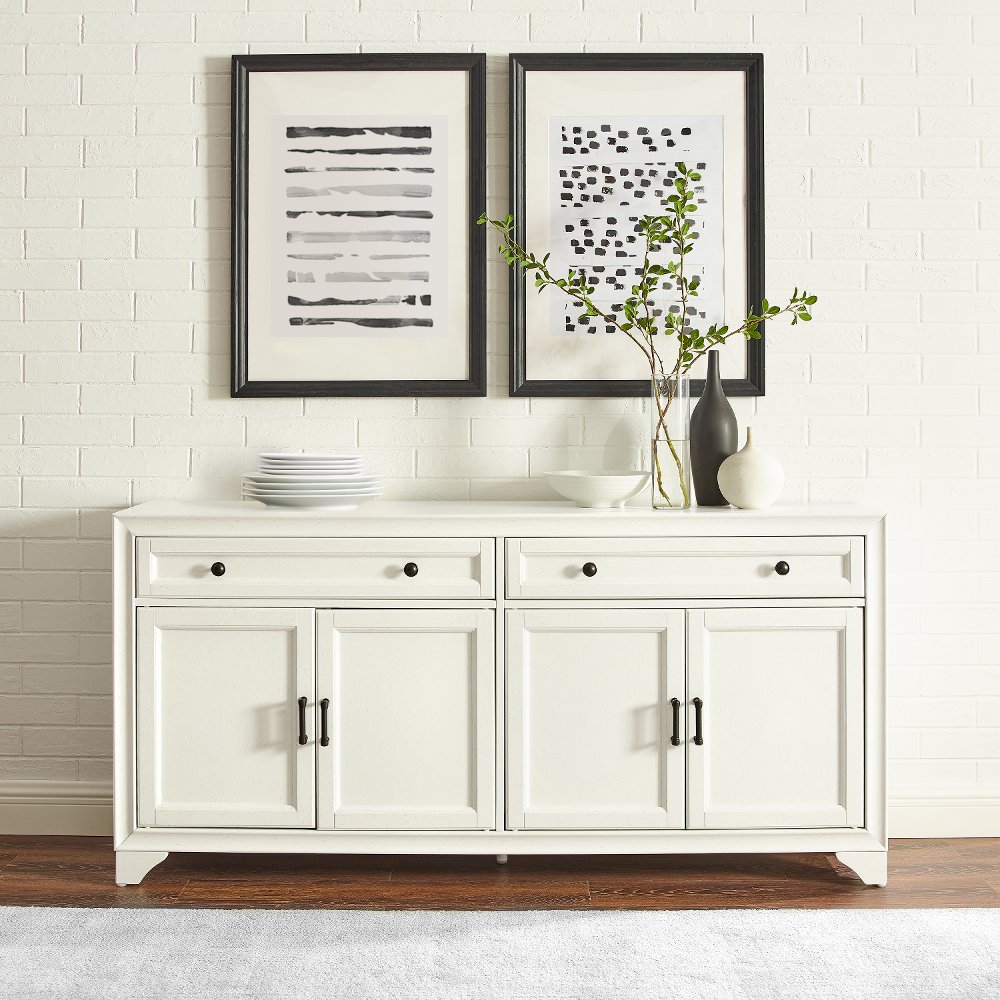
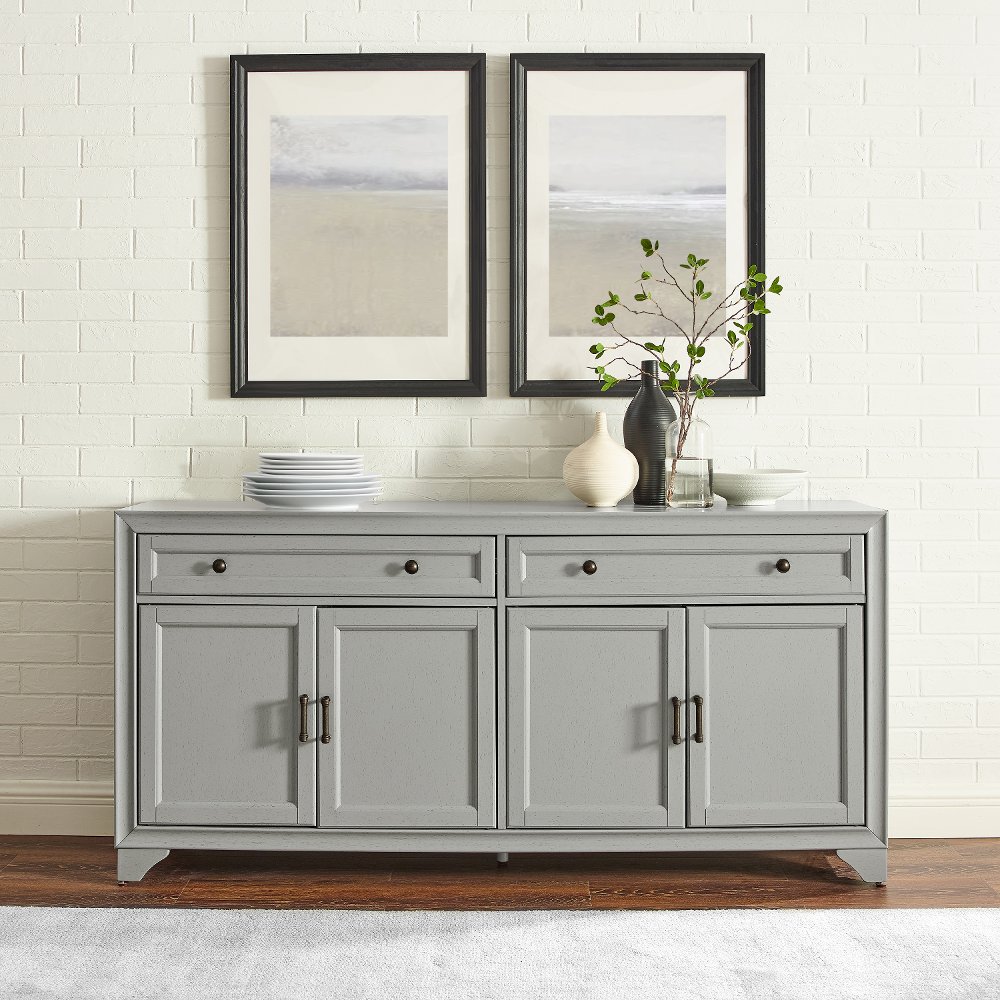
Dining room storage gives dishes, glassware, table linens, and serving pieces a home close to the table, helping the room stay organized and ready for everyday meals or a full house. Sideboards, buffets, credenzas, and hutches combine practical storage with surfaces and display space that help shape the room’s style. These furniture names sometimes overlap, so the arrangement of doors, drawers, shelves, and open compartments often matters more than the label. A low buffet or sideboard can hold stacks of dinner plates behind closed doors while keeping napkins and flatware neatly separated in drawers. A taller hutch adds vertical storage and a place to display favorite pottery or glassware without taking up as much additional floor space. Glass-front dining room cabinets keep favorite pieces visible, while solid doors give mismatched mugs, extra placemats, and everyday supplies a quieter backdrop. Open shelves make frequently used bowls easy to reach, though their contents need more regular dusting than pieces stored behind doors. The most useful layout reflects what actually comes out at mealtime. Shallow drawers suit napkin rings and utensils; deeper compartments accommodate folded tablecloths, pitchers, or larger serving bowls. Adjustable shelves offer flexibility when a tall carafe needs more clearance than a stack of salad plates. For households that gather around the table for homework as often as dinner, a separate drawer for pencils and paper can keep supplies handy without mixing them into the dish storage. Someone who enjoys hosting may prefer a broad top for setting out serving platters, while a smaller household may get more everyday use from a narrow cabinet that holds the essentials. Storage also makes a thoughtful shared-household gift for a wedding or housewarming when the recipient’s measurements, needs, and style are already known. Its usefulness comes from making familiar routines easier, whether that means setting two places for breakfast or finding the serving spoon before guests sit down.
A comfortable fit considers the dining table, chairs, doorways, and walking paths together rather than treating an empty wall as the only measurement that matters. Cabinet depth affects how much room remains when someone pulls out a chair, and an open drawer or swinging door needs its own clearance. In a dining area connected to the kitchen, preserving a clear route between the two spaces helps people carry dishes without squeezing around furniture corners. A shallow sideboard can provide meaningful storage along a narrow wall, while a wider buffet may suit a larger room where its surface can serve as an extra landing spot during meals. Tall storage uses wall space efficiently, but its proportions should also work with nearby windows, artwork, light switches, and outlets. Baseboards and trim can affect how closely furniture sits against the wall, and delivery access through doors, stairs, and tight turns matters just as much as the final placement. Inside the cabinet, usable dimensions deserve the same attention: an oversized platter needs enough shelf depth, and a tall stack of dishes needs both clearance and suitable shelf support. Storage that feels easy to use is more likely to stay organized. Frequently reached-for pieces belong within comfortable reach, with heavier dishes on lower shelves rather than overhead. In an open living and dining space, the furniture’s finish and silhouette can connect the two areas without matching every piece exactly. A warm wood tone can complement an upholstered dining chair, while a painted cabinet can introduce contrast beside a wood table. Simple fronts and slim hardware create a streamlined look; framed doors, visible grain, and substantial molding offer a more traditional presence. Glass doors bring lighter visual detail, while closed storage can make a busy room feel calmer. A cabinet with legs leaves more floor visible beneath it, whereas a solid base gives the piece a grounded appearance. Either approach can work beautifully when the scale suits the room and the storage suits daily life.
Materials, construction, and care all influence how dining room storage handles years of use. Solid wood brings natural grain and variation, and it can respond to changes in indoor humidity by expanding or contracting. Wood veneer places a thin layer of real wood over a supporting core, offering the character of wood grain without requiring every panel to be solid lumber. Engineered wood, laminate, metal, and glass each have different benefits and care requirements, so the finish and construction details are more useful than a broad material label alone. A durable surface is especially helpful where serving dishes, water glasses, and frequently handled objects come and go. Even so, a cabinet top should be protected from hot cookware, standing moisture, and rough-bottomed pottery. Trivets, coasters, and protective pads help preserve the finish, and spills are best wiped up promptly with a soft cloth. Cleaning products should follow the manufacturer’s recommendations; abrasive cleaners and excess water can damage surfaces that otherwise hold up well to everyday use. Glass doors may need occasional fingerprint removal, particularly in a busy family dining area, while textured fronts and decorative grooves can take a little extra dusting. Drawers should move smoothly, doors should sit evenly, and shelves should be appropriate for the weight they’ll carry. Dense stacks of stoneware can be surprisingly heavy, making shelf weight limits important even when plenty of space remains. Soft-close hardware, where included, can make frequent use quieter, but sturdy construction and properly installed hardware remain essential. Tall furniture should be anchored according to the manufacturer’s instructions, especially in homes with children, and heavy contents should stay low to help maintain stability. With a suitable layout and straightforward care, dining room storage can remain useful as household routines change. The cabinet that holds everyday dishes today may later make room for inherited serving pieces, a growing linen collection, or the supplies that keep a shared dining space running smoothly.
Read More