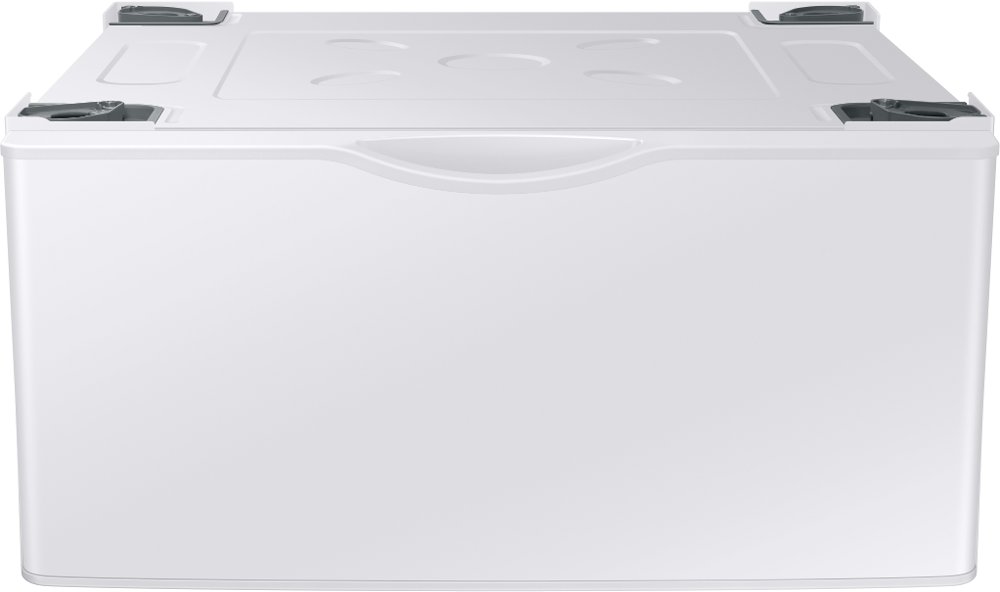
Dryer stands raise compatible clothes dryers off the floor, bringing the drum opening closer to a comfortable loading height and, in some designs, adding storage underneath. Often called laundry pedestals, these supports can make everyday tasks feel more manageable, from transferring a basket of towels to finding the last sock at the back of the drum. Many full-height laundry pedestals add approximately 12 to 16 inches of elevation, though dimensions vary, and lower-profile bases provide a smaller lift. The right height depends on both the appliance and the person using it. A raised dryer opening may reduce how far someone needs to bend, but the controls, lint filter, and top surface should still be easy to reach. That balance matters in households where several people share laundry duties or where bending and kneeling can be uncomfortable. Drawer-style dryer pedestals put otherwise unused space beneath the appliance to work, giving laundry supplies a place outside the walking path. Open-base designs serve a different purpose, providing elevation without an enclosed drawer, while certain support frames are intended for compatible compact appliances. These categories aren’t interchangeable: a laundry pedestal supports an appliance directly, while a stacking kit secures compatible appliances in a manufacturer-approved stacked arrangement. A general-purpose shelving unit or furniture riser isn’t a substitute for a support designed and rated for the dryer. For a side-by-side laundry setup, compatible pedestals can create a more consistent working height and a finished appearance. In a smaller laundry closet, a stand may make loading easier without changing the dryer’s footprint, although drawer access and door clearance still require room. Whether laundry means frequent loads for a busy family or a few baskets each week, a dryer stand earns its place by making the space more comfortable and practical. Its value comes from matching the household’s routine, not simply raising the machine as high as possible.
Compatibility is the starting point for a dependable dryer stand. A pedestal that looks wide enough may still have the wrong mounting points, support locations, or attachment hardware for a particular appliance. Matching the stand to the dryer’s exact model and checking the manufacturer’s approved accessories provides a more reliable fit than comparing appearance alone. Width, depth, supported weight, and fastening requirements all matter, along with any restrictions in the appliance installation instructions. Even a base described as universal needs careful verification; adjustable dimensions don’t establish that it’s approved for every dryer. The stand should support the appliance and its intended operating load, with the dryer secured as directed rather than simply resting on an improvised platform. Materials also influence durability. Steel construction is common in laundry pedestals, and a protective finish helps the surface tolerate everyday contact with baskets, shoes, and cleaning supplies. Strong joints, properly fitted hardware, and sturdy drawer slides are useful details to consider for a setup that will see frequent use. Adjustable leveling feet, where included, help establish firm contact with a suitable floor, but they don’t correct a weak or damaged floor. A stable, level installation matters more than an accessory’s heavy-duty label. Height also changes how the dryer fits into the room. Overhead cabinets, a fixed countertop, nearby shelving, and access to utility connections can limit how much elevation is practical. For vented dryers, the finished arrangement needs enough space for the exhaust duct to follow the manufacturer’s requirements without being crushed behind the appliance. Other dryer types may have different drainage, ventilation, or service-access needs. Gas connections and electrical connections must remain properly installed after the appliance is raised. Stacked washer-and-dryer arrangements generally aren’t suitable for standard pedestals; only a configuration explicitly approved by the appliance manufacturer should be considered. These fit details help distinguish a stand that merely occupies the right space from one that belongs in the installation.
Storage and daily use often determine which dryer pedestal feels most useful after installation. A drawer can keep fabric-care accessories and other permitted supplies together, but its usable interior height may be smaller than the pedestal’s exterior dimensions suggest. A tall detergent bottle may not fit upright, and a deep drawer can become awkward if it’s packed beyond its rated capacity. Dividers help separate smaller supplies, while smooth drawer travel makes it easier to reach something with a laundry basket nearby. Household cleaners and laundry products still belong in their original containers and out of children’s reach; a low pedestal drawer isn’t automatically a child-secure storage space. In a narrow room, the drawer needs enough clearance to open without hitting a door, baseboard heater, or opposing cabinet. The dryer door also needs a comfortable swing so a basket can sit close to the opening during unloading. A raised appliance top may be less convenient as a folding surface, so nearby counter space can become more important. For anyone planning an appliance replacement alongside a laundry-room refresh, exploring Affordable Dryers can help coordinate the dryer’s dimensions and features with an approved stand from the beginning. A pedestal from an older appliance shouldn’t be assumed to fit its replacement, even when the two dryers have similar measurements. Once installed, straightforward care helps preserve both appearance and function. A soft cloth and a manufacturer-recommended mild cleaner are usually more suitable for finished surfaces than abrasive pads or harsh chemicals. Promptly wiping up spills helps protect the finish and keeps drawer interiors clean. Accessible areas around the base also benefit from regular lint and dust removal. Loose hardware, a rocking appliance, or a drawer that no longer closes properly deserves attention according to the installation and care instructions. With a secure fit, usable storage, and a height that suits the people doing the laundry, a dryer stand can make an ordinary utility space feel more thoughtfully arranged.
Read More