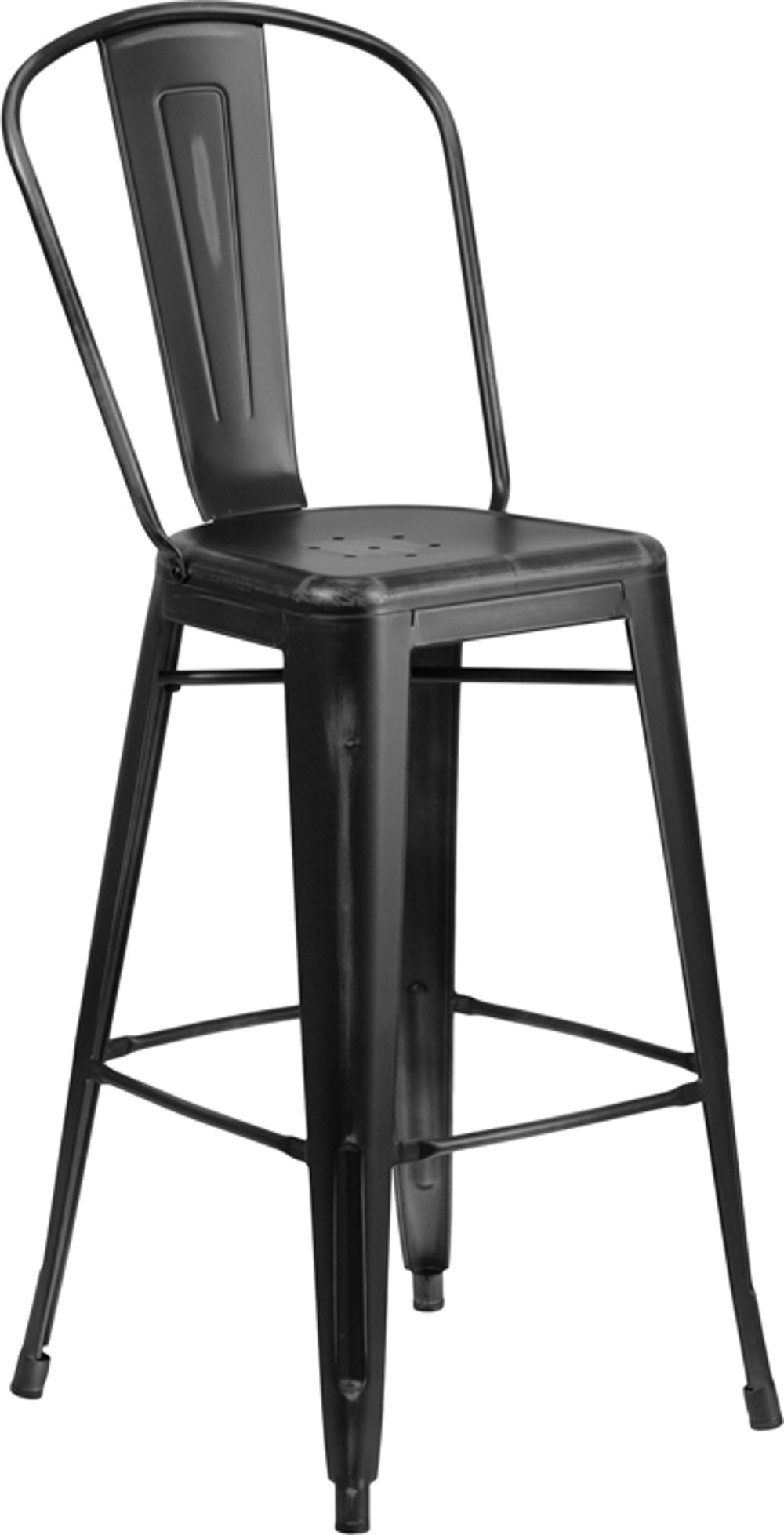
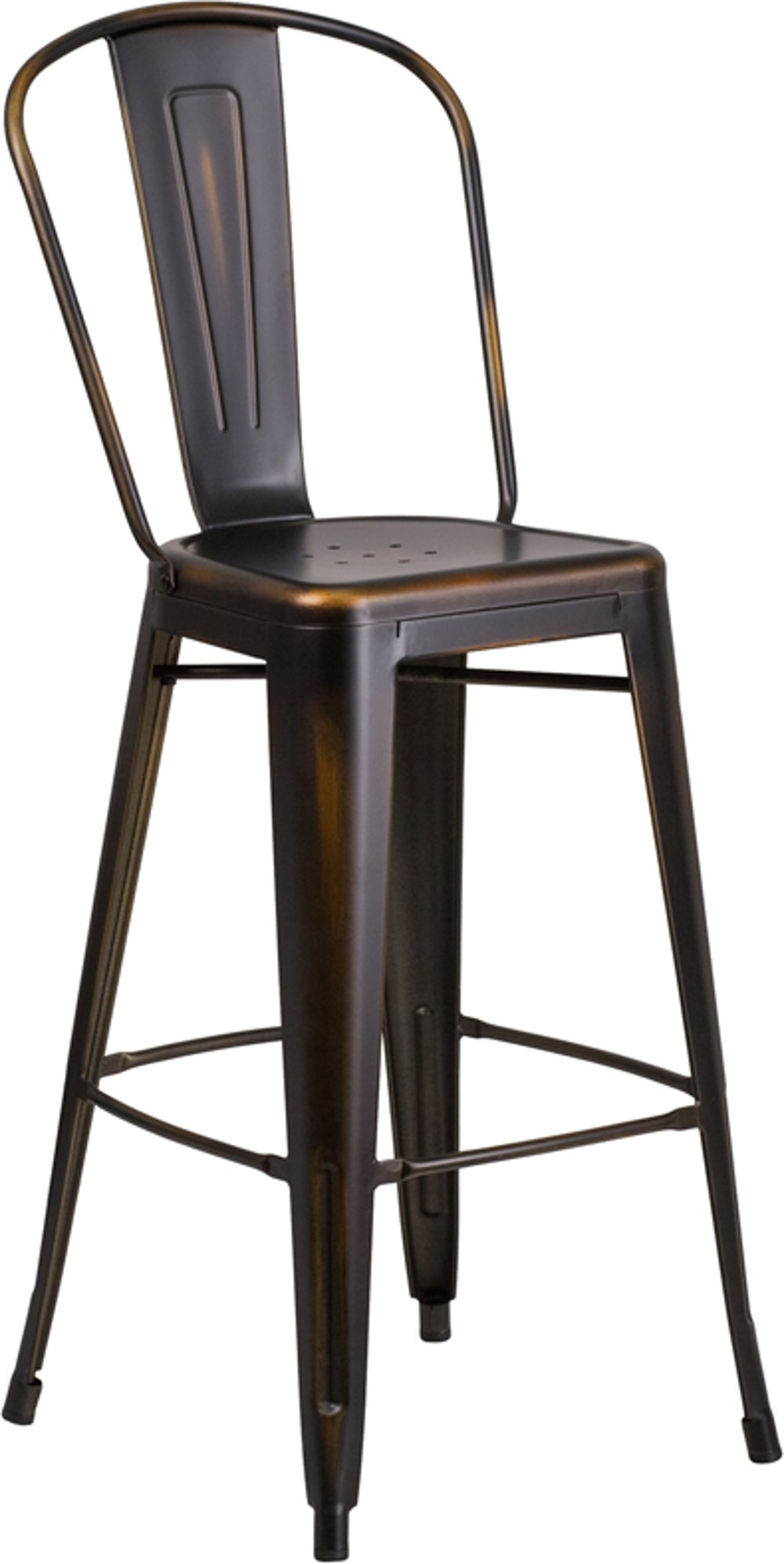
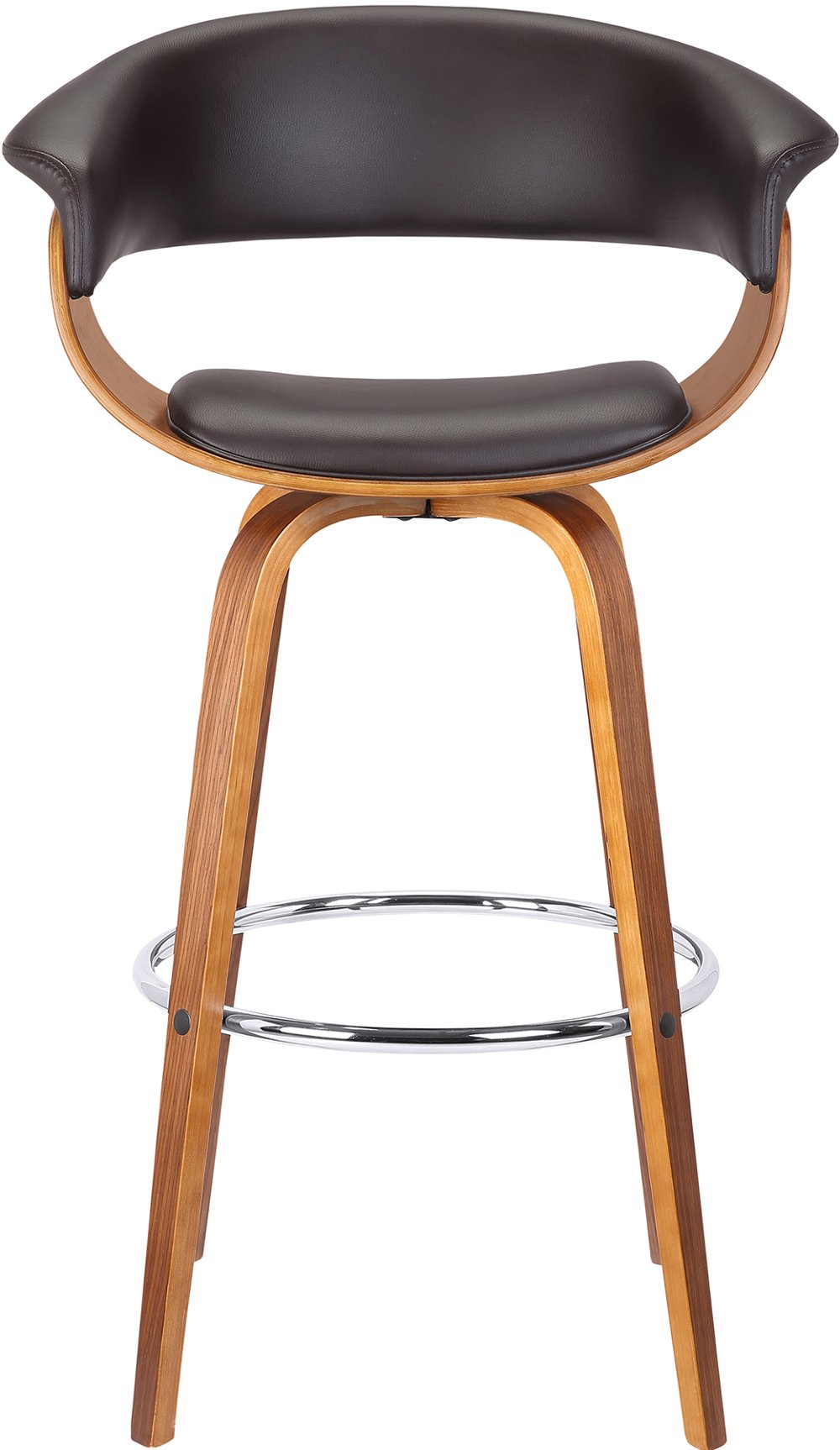
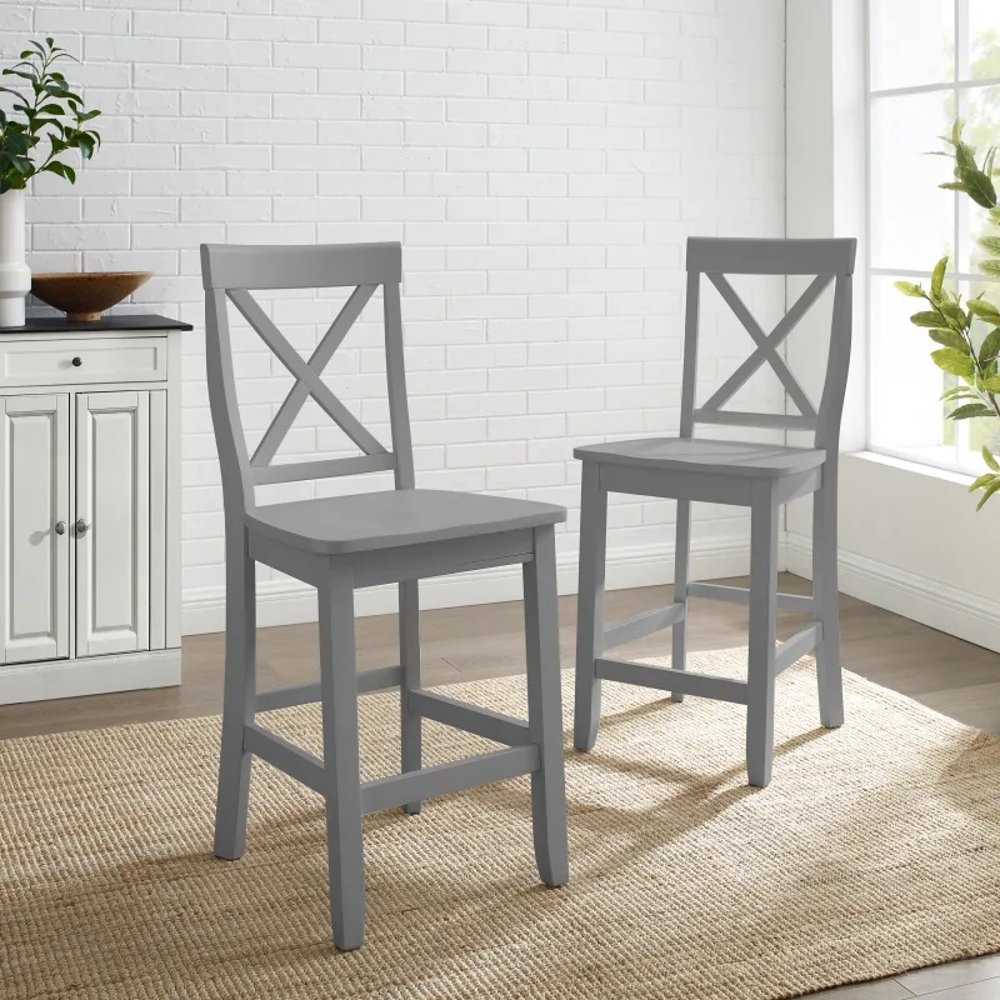
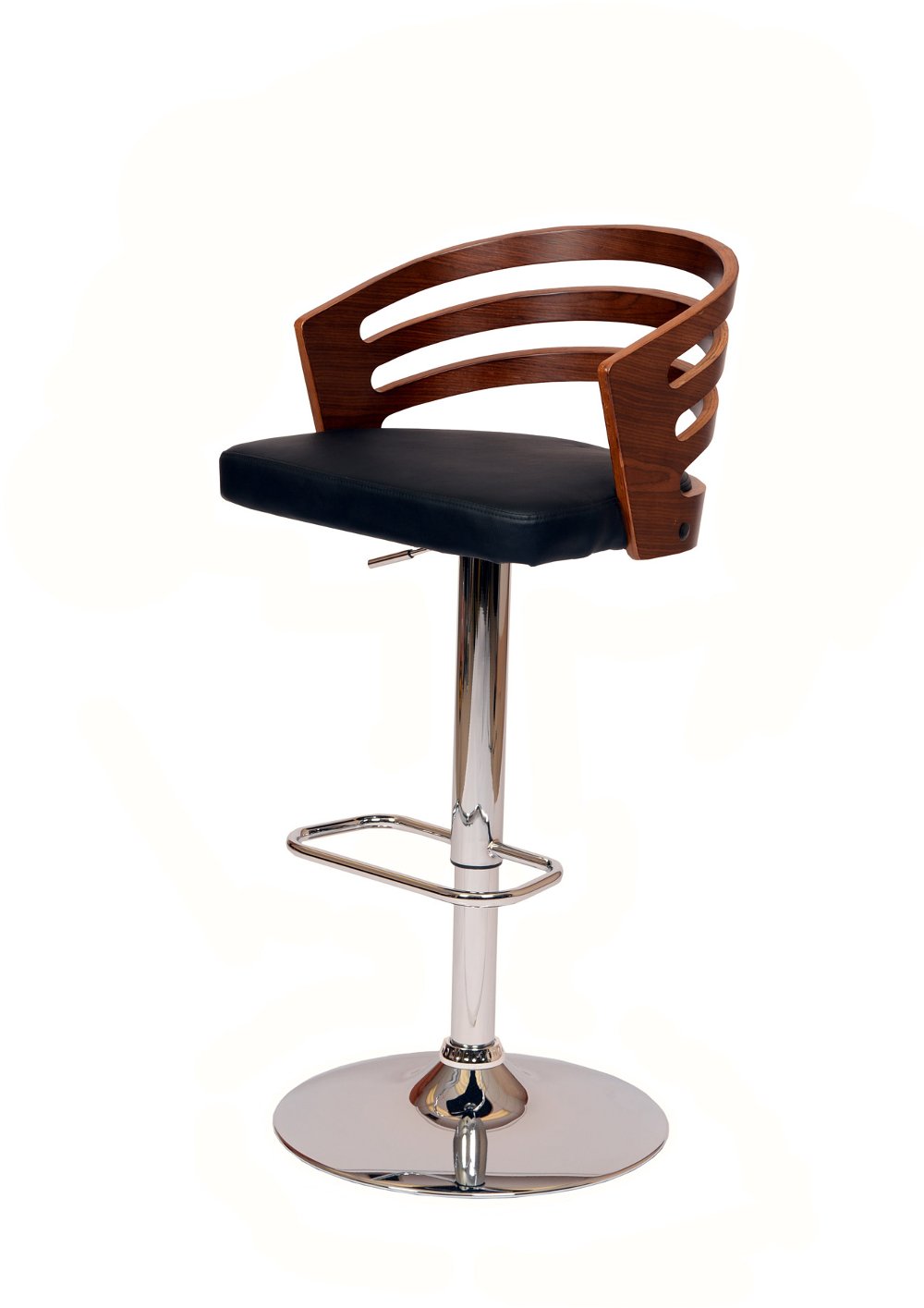
High back counter stools bring the familiar feel of a dining chair to a kitchen island, breakfast counter, or counter-height table. Their taller backrests give you more surface to lean against than backless or low-back seating, making them a comfortable option for meals, conversation, and the everyday moments that gather around the kitchen. A quick breakfast can turn into homework time, or a place setting can move aside for an afternoon puzzle. For those longer stretches, comfort depends on the whole design: the seat depth, cushioning, backrest angle, and footrest placement all matter alongside the height of the back. A gently curved back can feel more accommodating than a straight, upright frame, while a padded back adds a softer contact surface. Open slat, ladder, and cross-back designs create a more airy appearance without giving up the presence of a taller silhouette. Fully upholstered backs have a substantial, dining-room look that works especially well when the island faces an open living area. Because the backs remain visible above many countertops, their shape and finish become part of the room rather than disappearing beneath it. Wood frames can echo nearby cabinetry or a dining table, while slim metal frames introduce a cleaner outline. A contrasting finish can also give the seating its own identity without requiring every piece in the room to match. High back counter-height stools suit households that use the kitchen as a casual gathering place, hosts who like guests to sit nearby during meal preparation, and anyone who prefers a backrest while eating at an elevated surface. Taller doesn’t automatically mean more supportive for every person, though. The most comfortable fit lets you sit naturally, rest your feet, and reach the counter without leaning forward or lifting your shoulders. For a counter that doubles as a laptop spot, those details deserve particular attention; a decorative back alone doesn’t make a stool suitable for extended desk work.
Good proportions help high back counter stools feel at home in the space, both when someone’s seated and when the kitchen is empty. Counter-height seats typically measure about 24 to 27 inches from the floor and generally pair with counters around 35 to 37 inches tall. Bar-height seating is taller and isn’t interchangeable, so the seat-height measurement matters more than whether a listing casually calls a piece a barstool. A common starting point is 10 to 12 inches between the top of the seat and the top of the counter. A thick countertop, low apron, or support bracket can reduce usable thigh room, making the clearance underneath just as important. Seat height and overall height are different measurements: the first determines how you sit at the counter, while the second tells you where the top of the backrest will land. Width also affects how comfortably a row of stools works. Allowing roughly 24 to 30 inches of counter length per seat is a useful starting range, with wider seats and arms often needing more. About 6 inches between seat edges can help keep neighboring diners from feeling crowded, though broad frames and swivel movement may call for additional space. The countertop’s usable seating length, leg placement, and overhang help determine the practical arrangement. A deep seat may feel generous but extend farther into a walkway, and a high back can meet the countertop before the seat tucks completely underneath. Arms offer a place to rest your elbows but need clearance beneath the counter if you want the stools to slide in. Swivel counter stools make it easier to turn toward a conversation or step away without dragging the entire frame, provided there’s room for the seat and back to rotate. Fixed stools keep the arrangement straightforward, with fewer moving parts. Where uninterrupted sightlines matter more than a taller backrest, Low Back Counter Height Stools offer another profile to consider alongside the room’s scale and seating needs.
Materials shape the look, feel, and upkeep of high back counter stools, especially in a space where crumbs, spills, and daily movement are part of the routine. Wood seating brings visible grain and a familiar furniture feel, whether the design is simple and straight-lined or shaped with turned legs and a curved back. Solid wood and wood veneers both benefit from prompt spill cleanup and care that protects the finish from excess moisture. Metal frames can create a slender profile, though their durability depends on construction, joints, and finish rather than material alone. On an unupholstered seat, a shaped surface may feel more comfortable than a flat one, particularly during a full meal. Upholstered counter stools add softness and introduce color or texture through woven fabrics, leather, or faux leather. A tightly woven fabric may make everyday crumbs easier to remove than a deeply textured surface, while performance upholstery can offer stain resistance when specified by the manufacturer. Stain-resistant doesn’t mean stain-proof, and cleaning methods still need to match the upholstery’s care instructions. Leather and faux leather may allow straightforward wipe-down care, but they require different treatment; a cleaner made for one isn’t automatically appropriate for the other. Blot spills promptly, vacuum seams with a suitable attachment, and avoid soaking upholstered areas or applying an unfamiliar cleaner without checking the care directions. Footrests deserve attention, too, since shoes can leave marks and put repeated pressure on their connections. Sturdy joinery, secure hardware, and an appropriate stated weight capacity matter more to everyday durability than a heavy appearance. For stools that require assembly, following the instructions and checking fasteners periodically can help maintain a secure feel. Floor-safe glides help protect the surface beneath the legs, and their condition matters when seating moves frequently across wood, tile, or vinyl. In homes with children, stable seating and age-appropriate supervision are especially important; a tall backrest doesn’t prevent tipping or turn an adult stool into a child’s high chair. With the right dimensions, comfortable contact points, and manageable care needs, high back counter stools can make an often-used counter feel like a welcoming place to settle in.
Read More