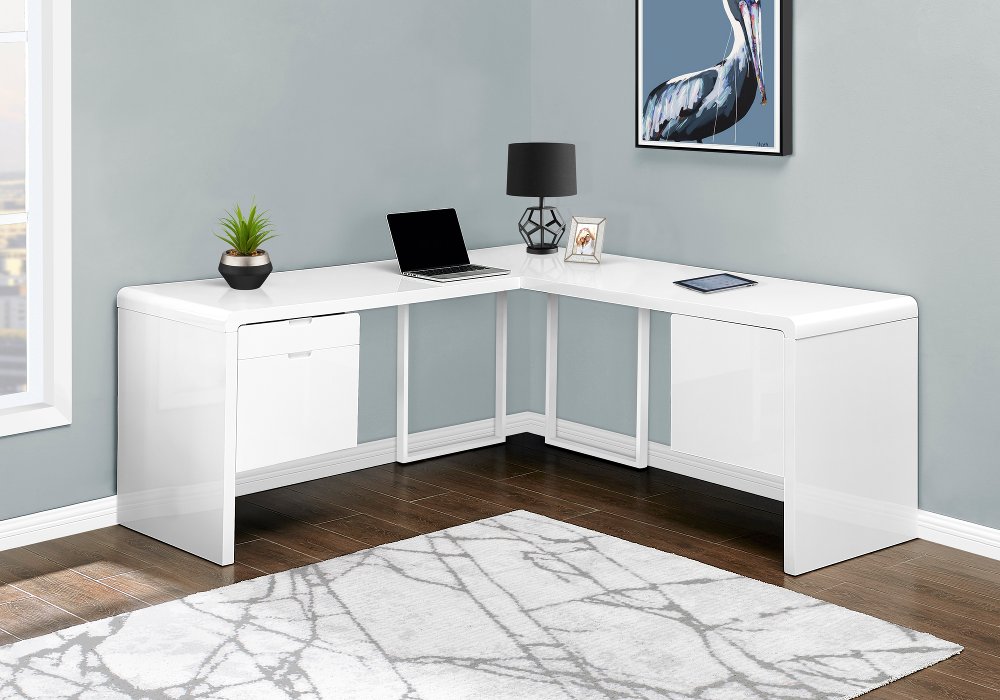
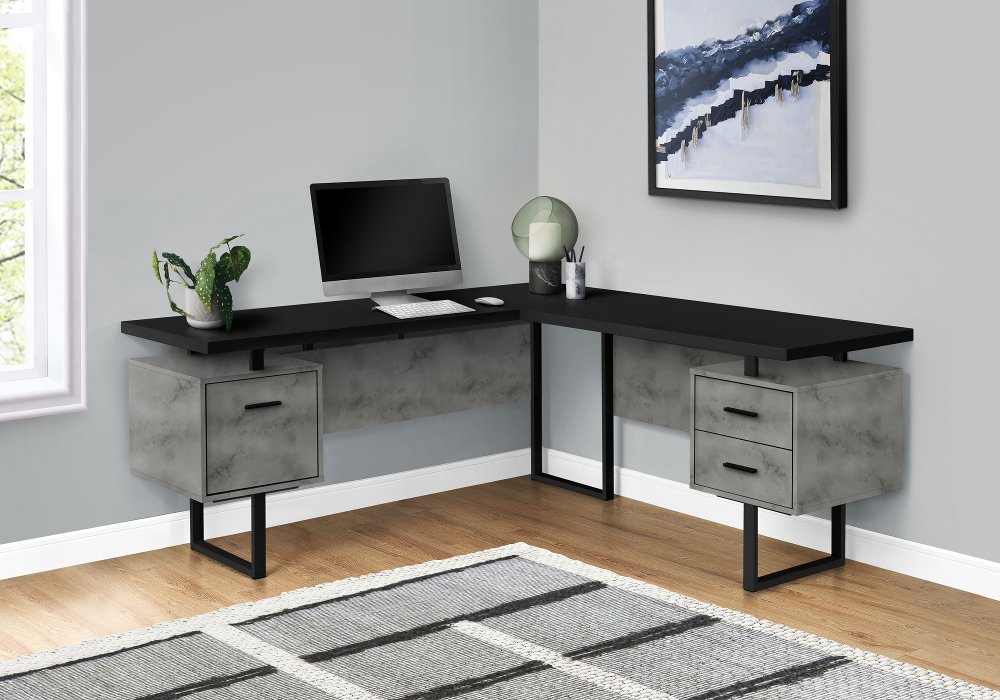
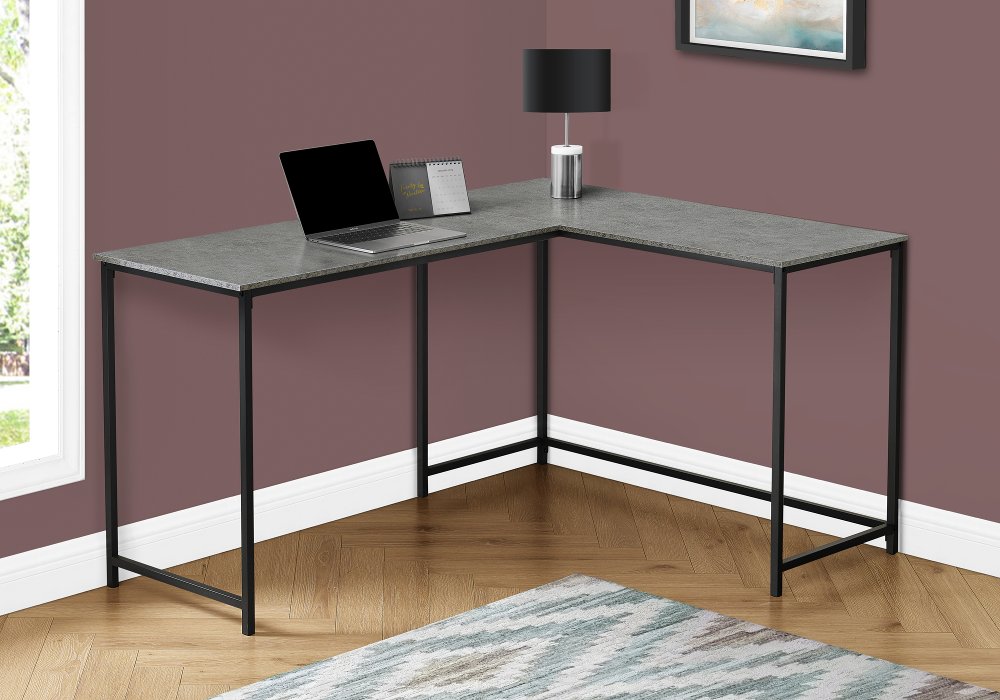
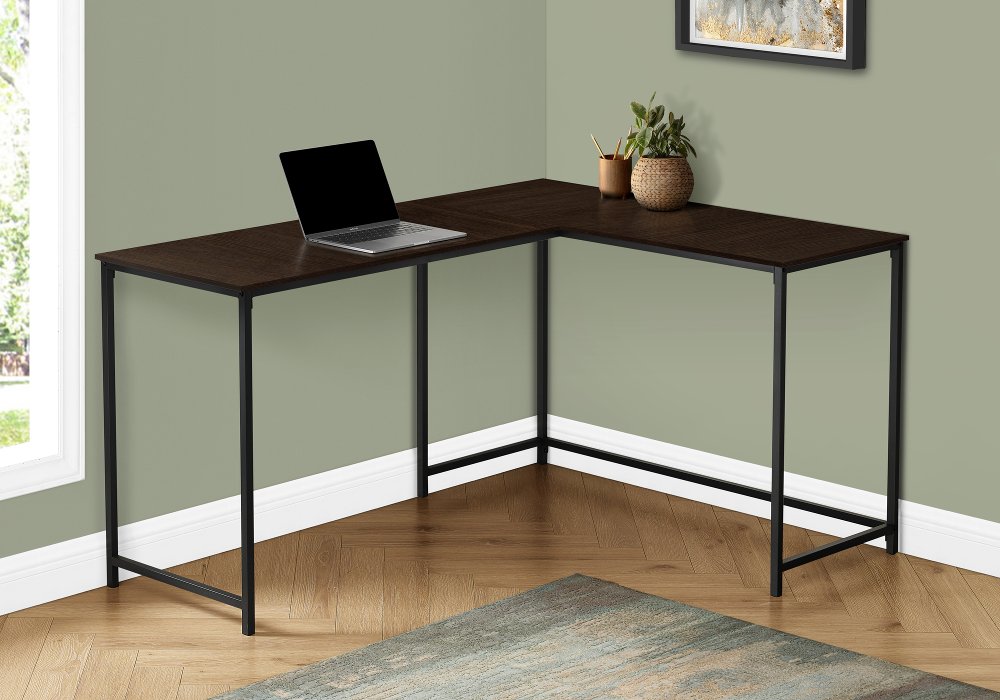
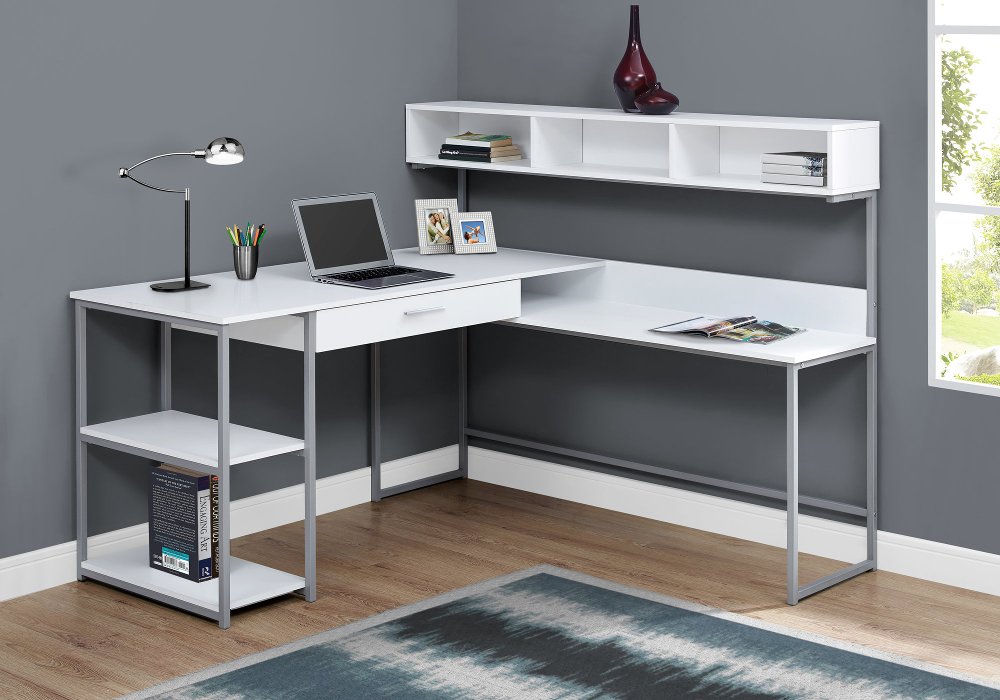
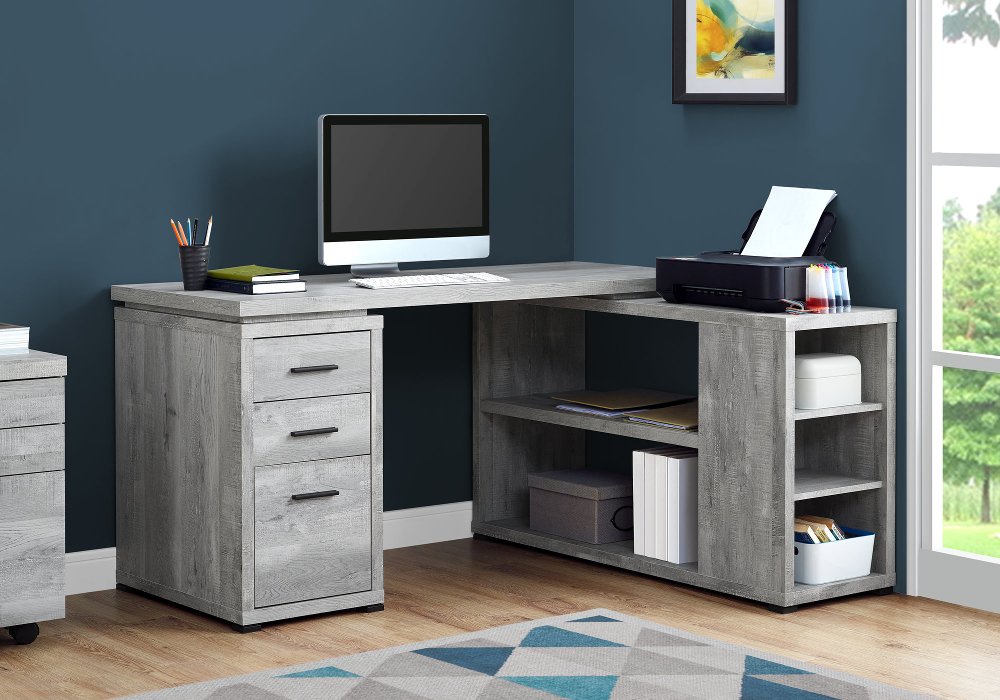
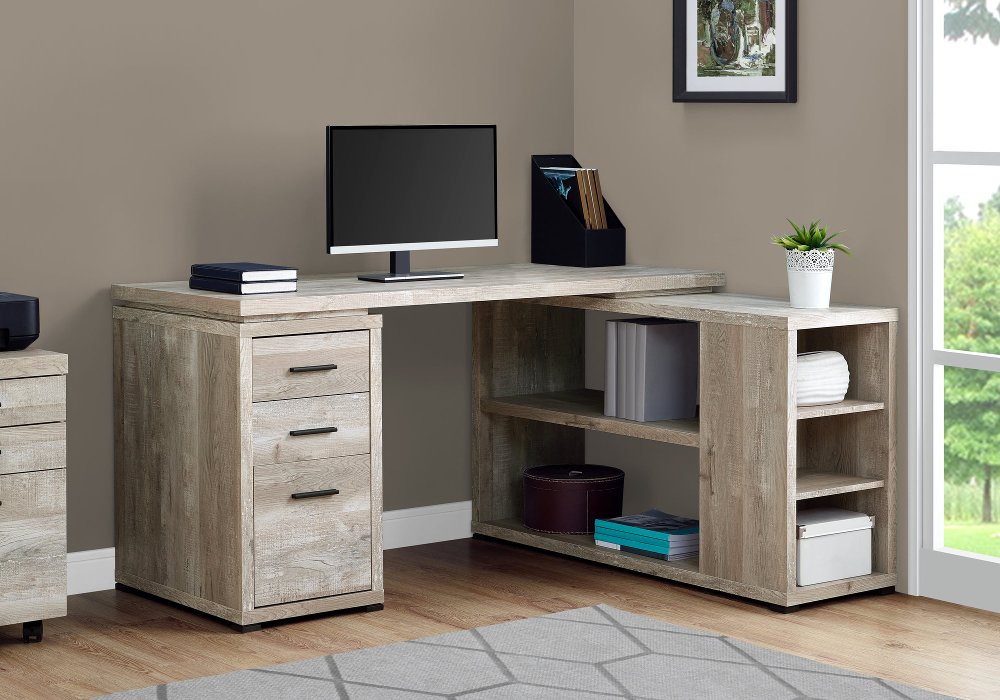
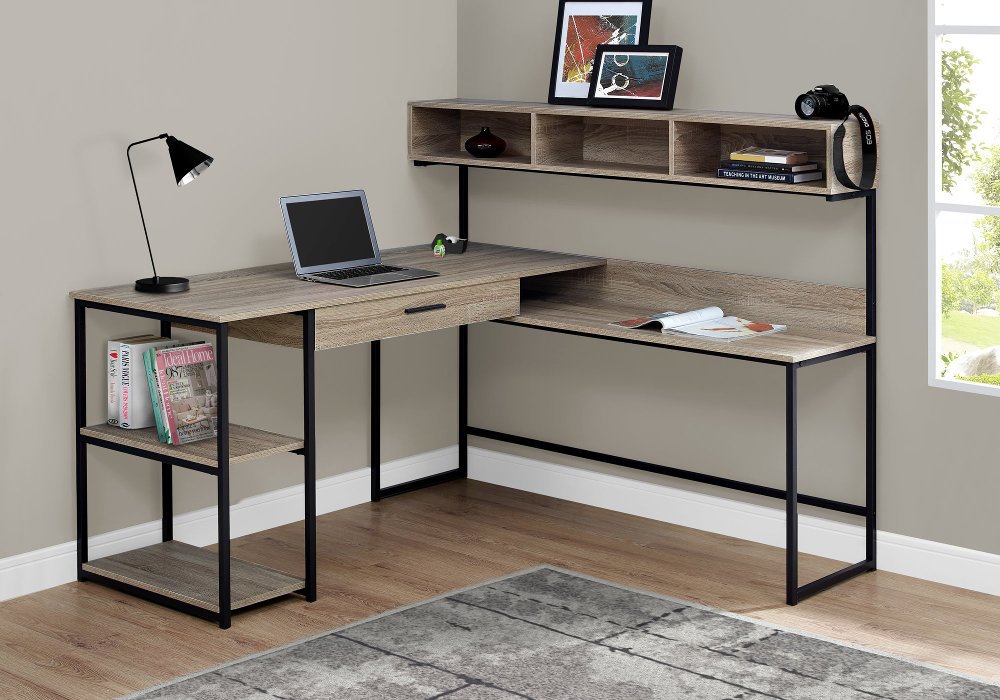
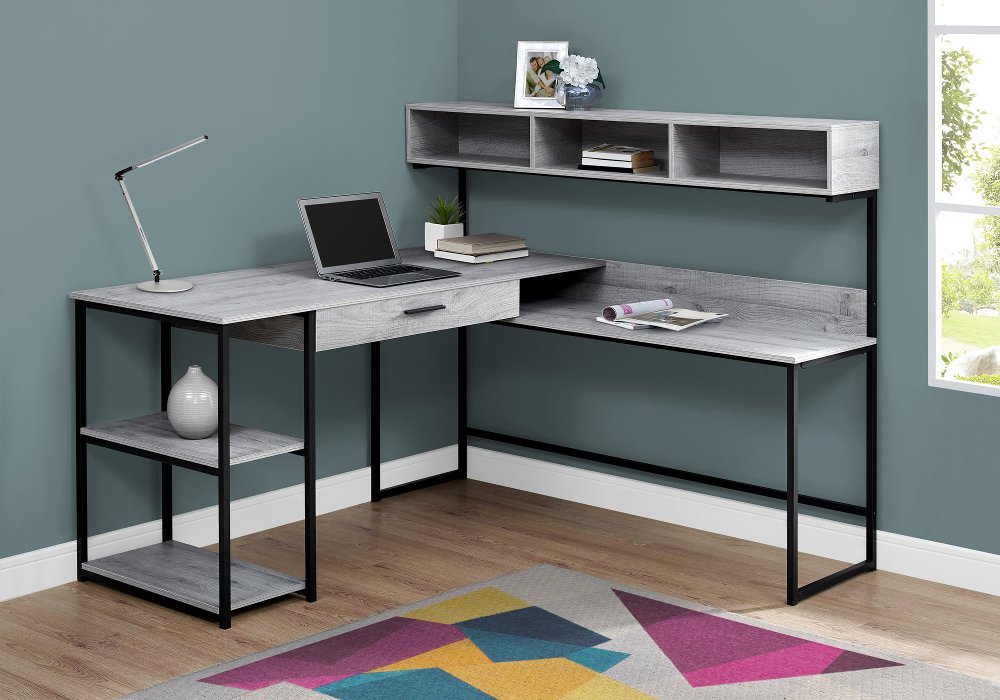
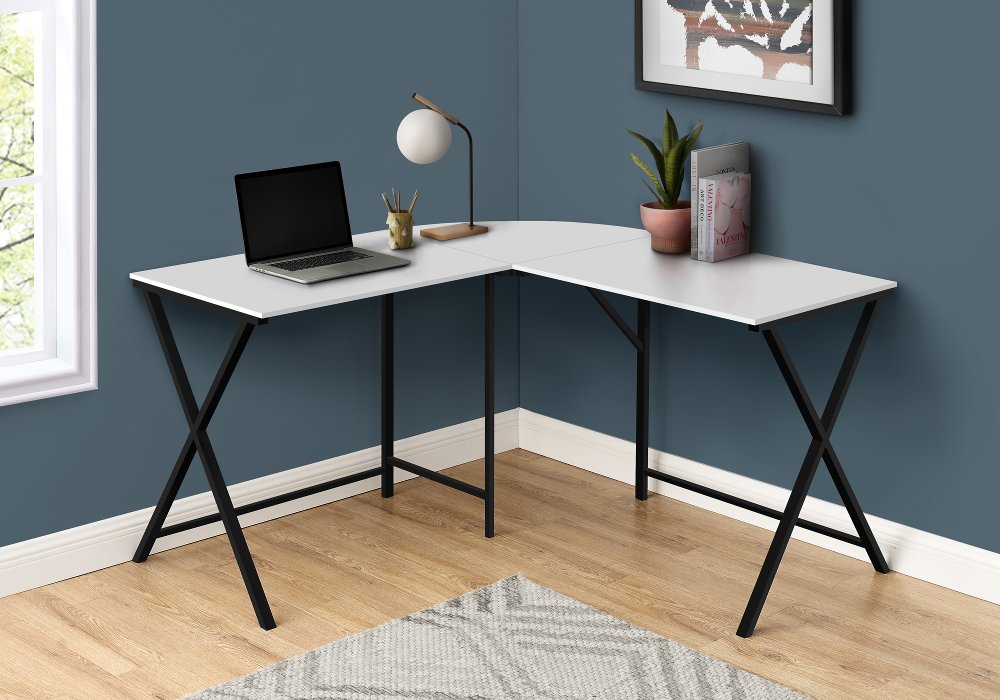
Large corner computer desks turn an overlooked angle into a hardworking part of the room. Their L-shaped footprint gives you room to spread out across two connected work surfaces while keeping your chair, monitor, and everyday supplies within easy reach. That extra space can make a meaningful difference in a home office, study area, gaming setup, craft room, or shared workspace. One side can hold a computer and multiple monitors while the other leaves room for paperwork, a printer, speakers, books, or a notebook that would otherwise disappear beneath a stack of accessories. A corner desk also helps define a work zone without taking over the center of the room, which can be especially helpful in a bedroom, apartment, loft, or open living area. Explore additional ways to use an angled layout with our selection of Desks For Corners. During the cooler months, a well-planned corner workstation can become a comfortable place for remote work, online classes, creative projects, and quiet evenings spent organizing household plans. It can also make a thoughtful gift for a student moving into a new space, a remote worker preparing a dedicated office, or a gaming enthusiast who needs a more capable command center. The best choice depends on how the desk will support real routines, from early-morning emails and video calls to late-night study sessions and weekend projects.
Start with the room, not the desk. Measure both walls that meet at the corner, then measure outward to account for the full length of each side and the depth of the corner section. Leave enough clearance for the chair to move comfortably and for drawers, cabinet doors, or file storage to open without striking a wall or nearby furniture. Many large corner computer desks occupy wall runs in the 60- to 80-inch range, but the exact footprint varies, so a few strips of painter’s tape on the floor can help you visualize the layout before assembly. Check ceiling height and window placement if the desk includes a hutch or raised shelving. A reversible design can be especially useful when a room’s layout may change, allowing the longer or shorter return to sit on the left or right side. Think through the location of outlets, too. Integrated AC outlets and USB charging ports can keep a laptop, phone, lamp, speakers, and other devices powered close to the work surface, reducing the tangle of cords across the floor. If the desk will support several monitors, a desktop computer tower, a printer, or heavy speakers, review the stated weight capacity and consider how that weight will be distributed. A strong frame and stable legs help the work surface stay steady when you type, adjust a monitor, or lean in to read a detailed screen.
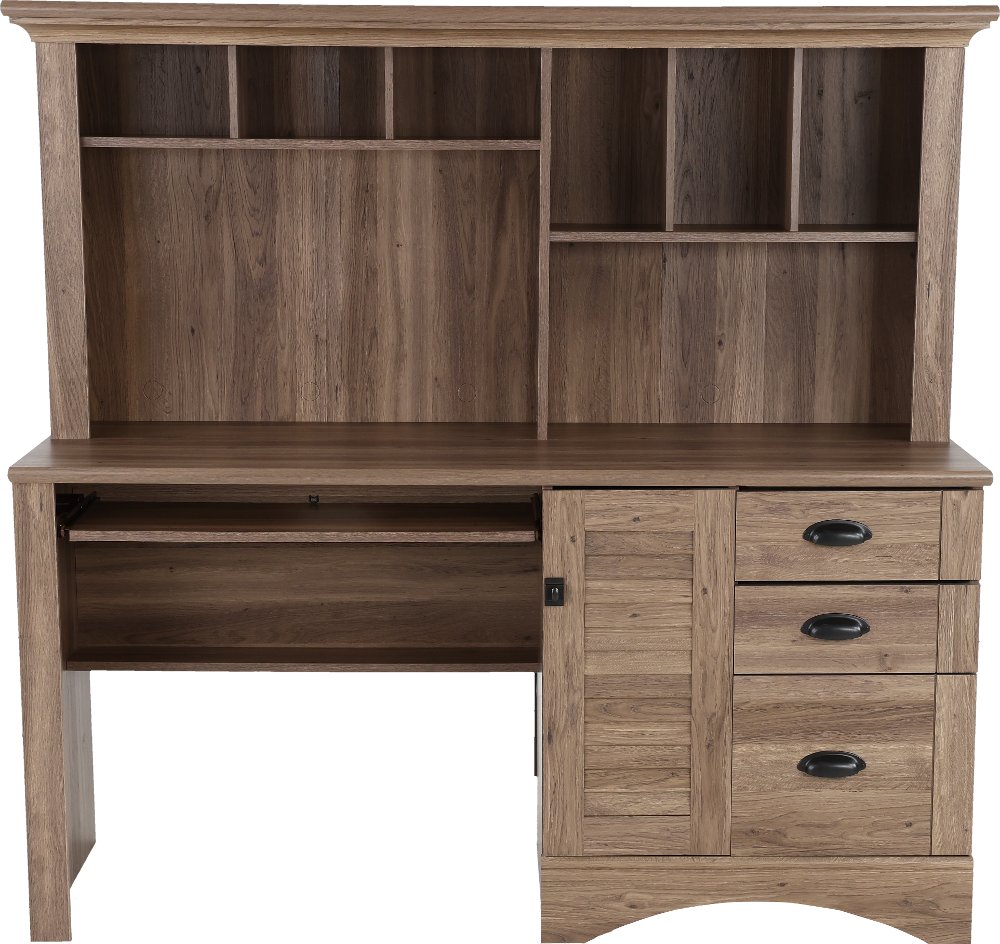
Comfort matters just as much as capacity. Standard 90-degree corners provide generous surface area, but they may place a monitor slightly off-center or leave the user reaching into the deepest part of the desk. A curved corner, corner sleeve, monitor arm, or carefully arranged display can make that space easier to use. Keep the main screen directly in front of your seated position, with the top of the monitor near eye level, and position a keyboard and mouse where your elbows can rest naturally at your sides. A height-adjustable corner desk offers another way to vary posture throughout the day, especially for people who work long hours, attend back-to-back virtual meetings, or alternate between computer work and hands-on tasks. Electric standing models with memory presets make it easier to move between seated and standing heights without repeated guesswork. For a more traditional setup, choose a desk height that works with your chair and allows your feet to rest flat on the floor. Storage can be just as valuable as open surface area: file cabinets keep paperwork close, hutches lift books and accessories off the desktop, and drawers give small items a home. Picture a busy afternoon when a clear corner holds two screens, a cup of coffee, a notebook, and a lamp, while chargers, reference materials, and unopened mail stay organized within reach. That balance of room to work and room to breathe is what makes large corner computer desks a practical choice for focused spaces that need to do more.
Read More