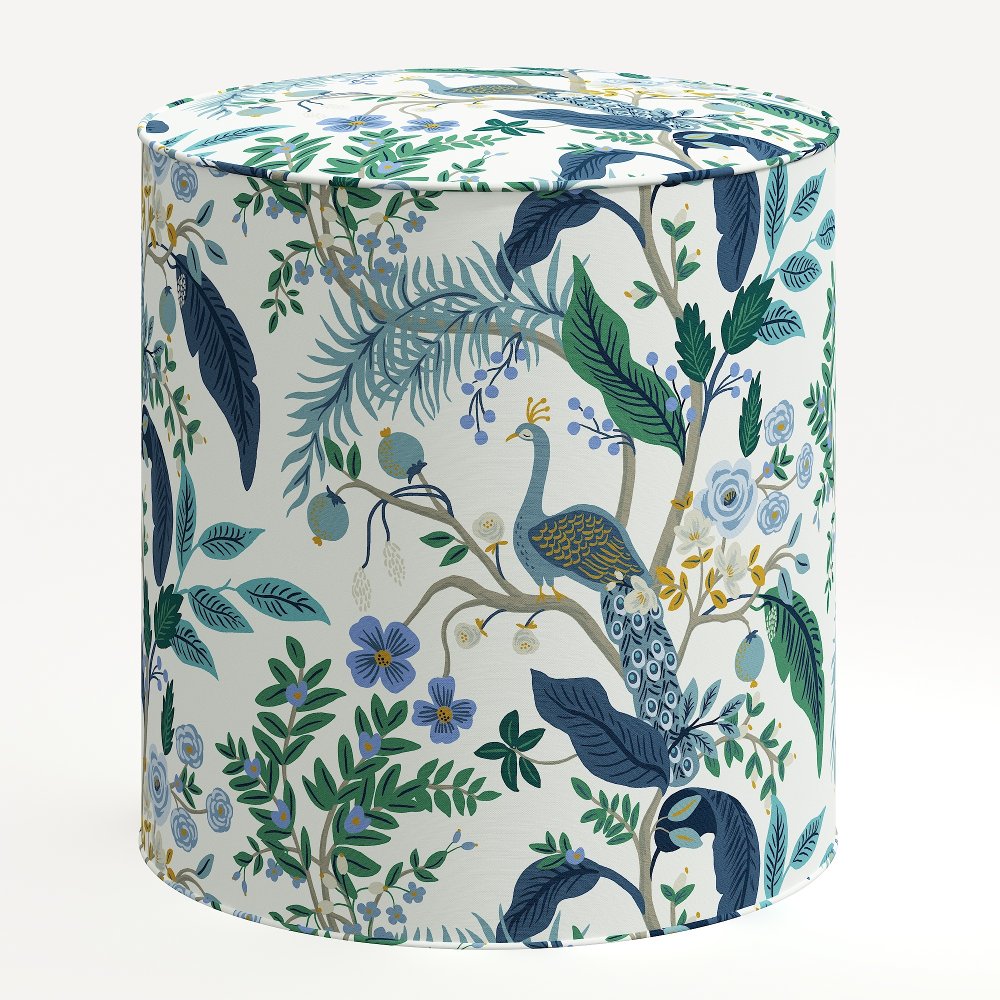
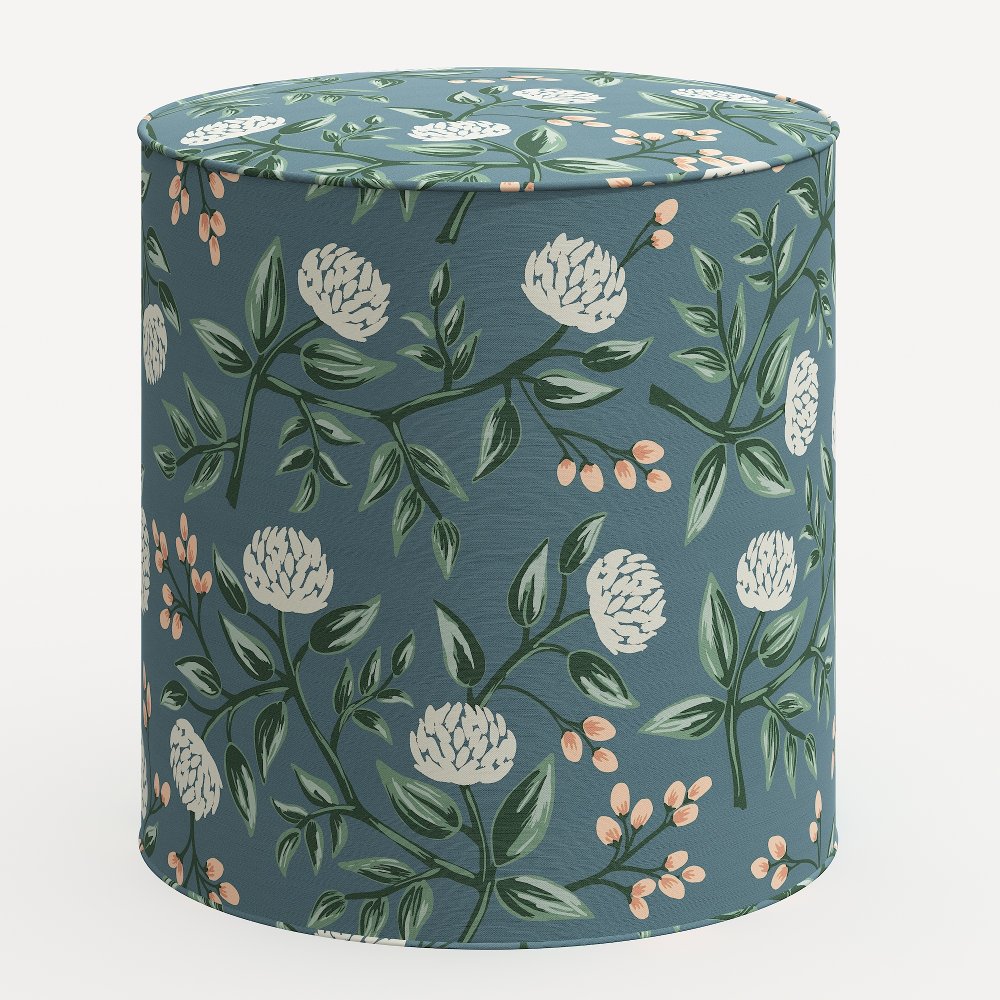
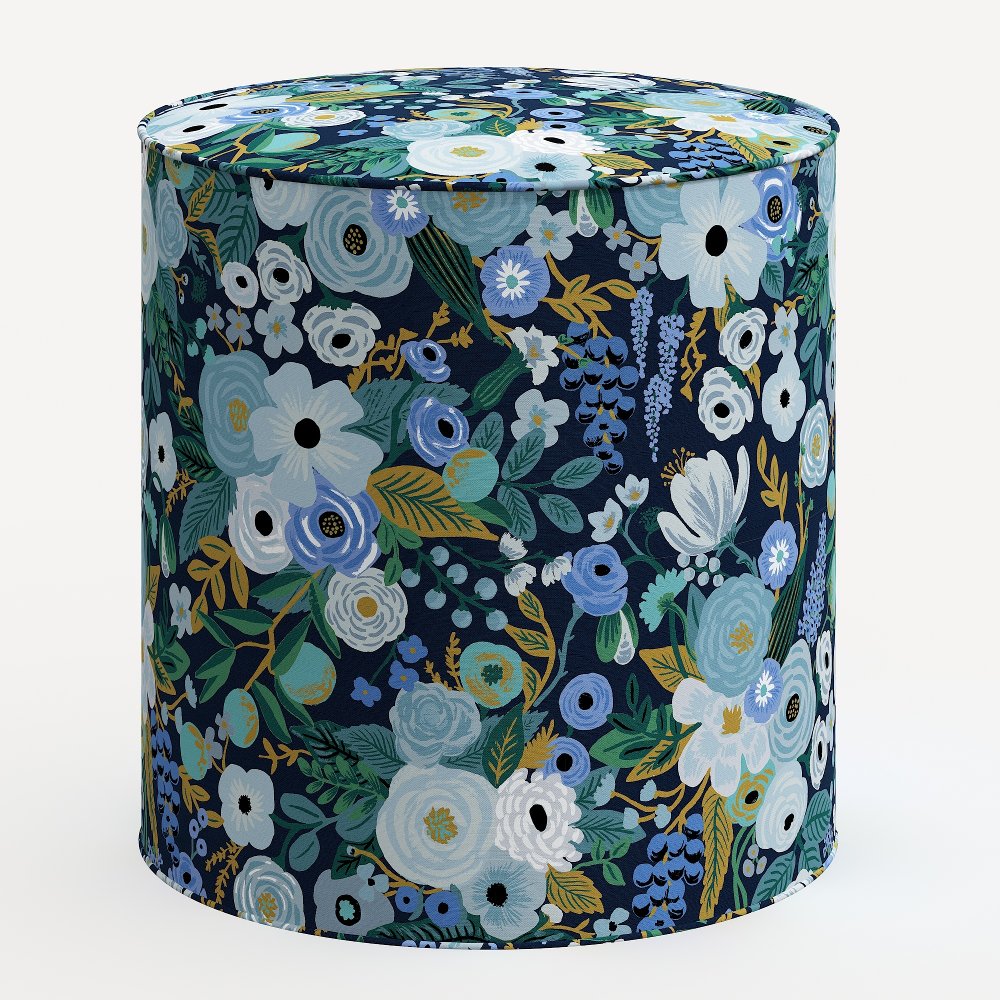
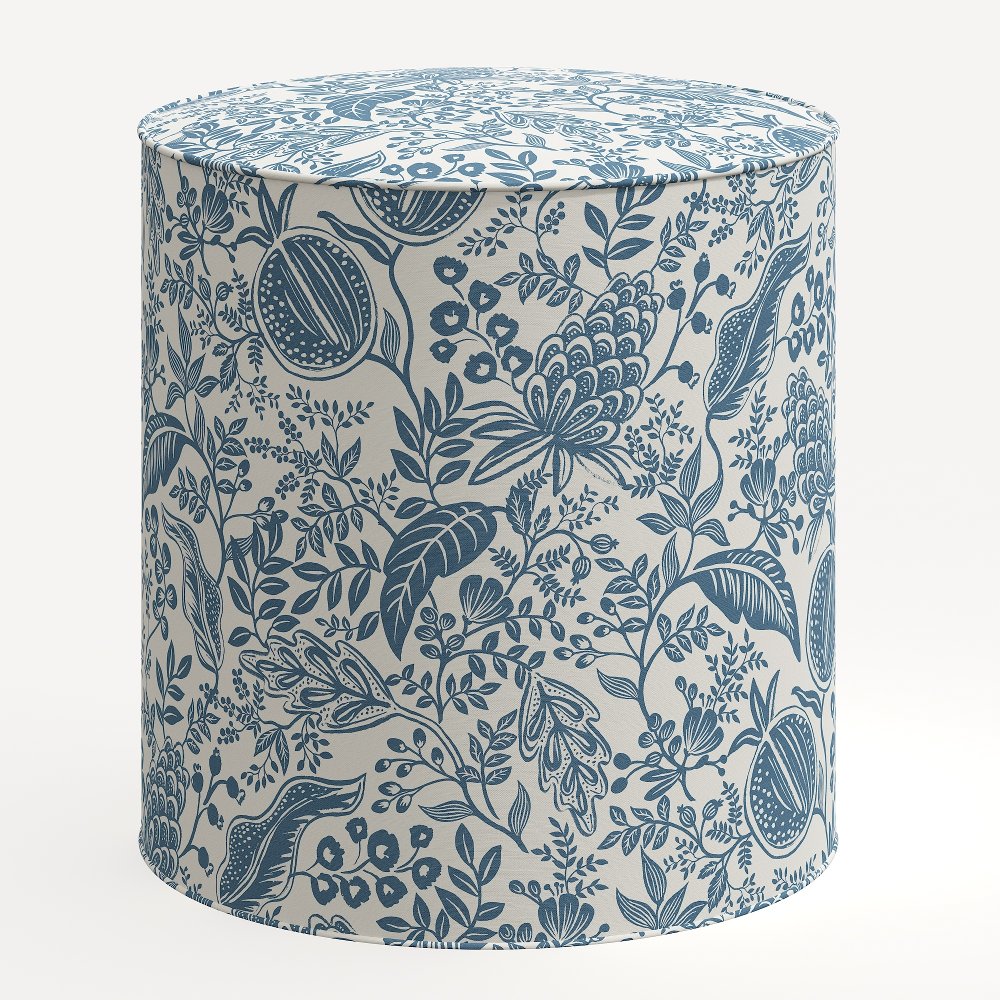
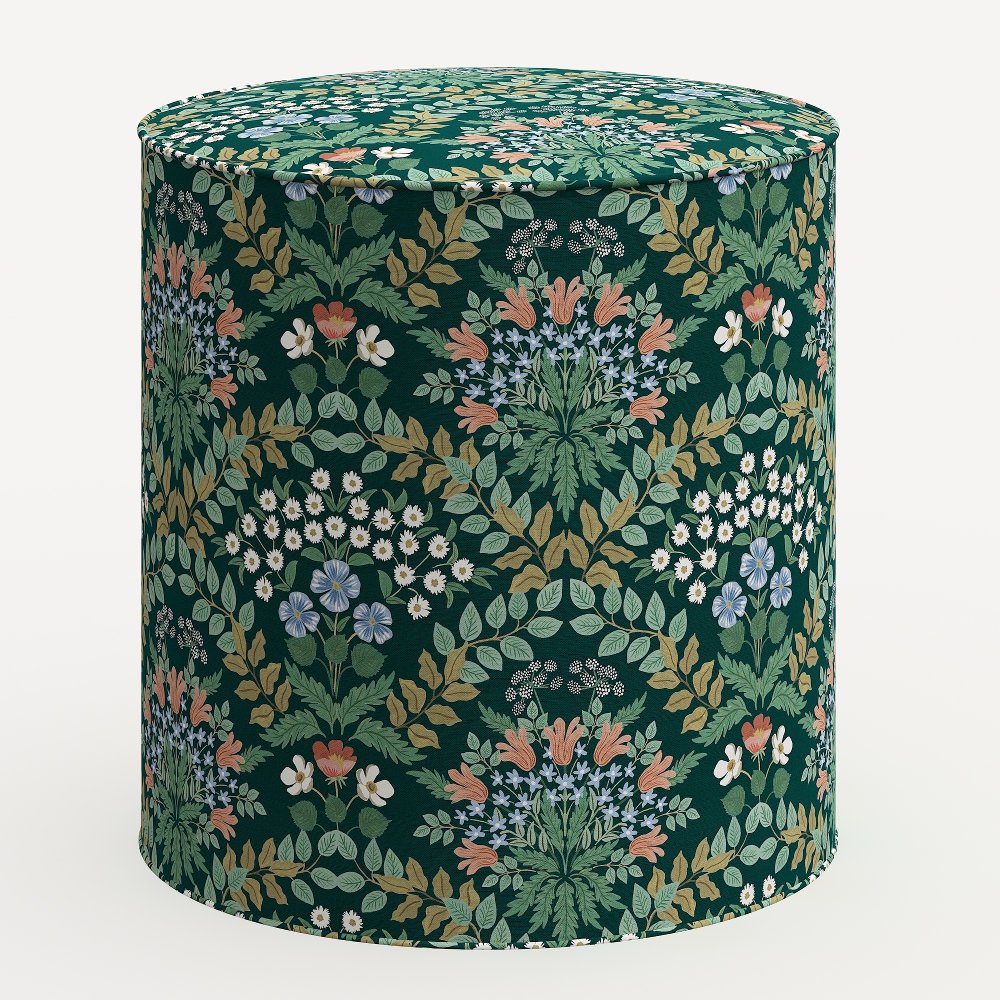
Patterned fabric ottomans are upholstered footrests or accent pieces that bring color, texture, and visual interest to a living room, bedroom, or sitting area. Depending on their construction, they can also provide extra seating, concealed storage, or a soft alternative to a traditional coffee table. Their upholstered surfaces make them a natural companion for sofas and reading chairs, while their patterns give a room personality without requiring a large furniture change. Floral and botanical prints introduce flowing shapes that work beautifully with wood furniture and relaxed upholstery. Geometric and abstract patterns add definition to contemporary spaces, while stripes, gingham, and plaid lend a familiar, tailored feel. Animal-inspired prints can act as a lively accent, especially when the surrounding furniture stays simple. Pattern scale matters as much as the motif itself: a small repeating design often reads as subtle texture from across the room, while a large floral or bold check becomes a focal point. For an easy connection between furniture pieces, look for an ottoman that repeats one color from the sofa, rug, or curtains. A cream-and-blue pattern beside a blue chair feels coordinated without looking like a matched set. If the room already includes a patterned rug, vary the size of the patterns rather than having every surface compete at the same scale. A broad stripe can sit comfortably alongside a smaller botanical print when the colors share a similar warmth or intensity. In a mostly neutral room, a patterned upholstered ottoman can carry more of the decorating weight, bringing a little energy to beige seating or softening the appearance of dark furniture. It’s also a practical way to introduce a favorite print on a manageable surface. The result can feel personal and collected, whether the room leans toward traditional, farmhouse, transitional, or modern style.
The right shape and proportions help a patterned fabric ottoman fit the way you actually spend time at home. A small cube can tuck beside a chair and move into position when it’s time to put your feet up. A round ottoman breaks up the straight lines of a sofa and rectangular rug, and its curved outline can make a compact seating arrangement feel less crowded. A longer rectangular design often suits the space in front of a sofa or at the foot of a bed, provided there’s enough room to walk around it comfortably. Before choosing a size, mark the footprint on the floor with painter’s tape and check the paths to doorways, drawers, and nearby seating. For use as a footrest, an ottoman close to the chair’s seat height, or slightly lower, is often comfortable; consider how far the seat cushion compresses when someone sits down. Leave enough space to stretch your legs without placing the ottoman in a main walkway. Larger upholstered designs can anchor a conversation area, particularly when a sectional needs a generous central surface. For this kind of arrangement, fabric cocktail ottomans offer another category to consider, with proportions intended for the center of a seating group. A firm, level top can support an appropriately sized tray for remotes or reading glasses, although upholstered surfaces aren’t as stable as a hard tabletop. Keep hot drinks on a steady surface away from the edge. If occasional seating is part of the plan, confirm that the ottoman is designed to support a seated person and follow its stated weight limit. Storage designs can help keep throws or games close at hand, but the lid needs clearance to open. In shared family rooms, a lightweight ottoman may be easier to reposition for activities, while a heavier design may feel more settled in a permanent furniture arrangement. Consider who’ll move it and how often before deciding which approach fits your space.
Fabric choice and construction influence how a patterned ottoman feels, wears, and fits into everyday routines. Cotton upholstery often has a soft, familiar hand, while linen and linen blends can bring a relaxed texture with natural variation. Polyester and blended fabrics may offer useful wear resistance and easier maintenance, but performance depends on the specific textile, finish, and care instructions rather than the fiber name alone. Tightly woven upholstery generally provides fewer openings for snags than a loose, open weave, an important consideration when pets share the room. Raised threads and richly textured fabrics add depth to a pattern, though they can catch claws or collect debris more readily. Printed designs place the motif on the fabric’s surface, while woven designs form it through the arrangement of yarns; either can work well, so assess the fabric’s intended upholstery use and documented care requirements. A busy pattern may make small marks or lint less noticeable, but it doesn’t make the material stainproof. For an ottoman that will see daily use, look for a stable frame, secure legs, neatly finished seams, and padding that feels supportive rather than bottoming out under pressure. Smooth tops provide a simpler resting surface, while tufting and decorative seams add character and create crevices that need extra attention during cleaning. Vacuum gently with an upholstery attachment as recommended, blot spills promptly instead of rubbing, and follow the manufacturer’s cleaning code before applying water or any cleaner. Test an approved cleaner in an inconspicuous spot, and avoid assuming that a removable cover is machine washable. Keeping upholstery away from prolonged direct sunlight can help reduce fading, especially where a vivid pattern faces a bright window. For a reader settling into a favorite chair, someone furnishing a first apartment, or a household making room for relaxed evenings together, a patterned ottoman can serve a useful purpose while making the space feel more inviting. It can also be a thoughtful housewarming gift when the recipient’s preferred colors, room dimensions, and care needs are already known. Choose around those everyday details, and the pattern becomes more than decoration: it becomes part of a comfortable room that’s easy to enjoy.
Read More