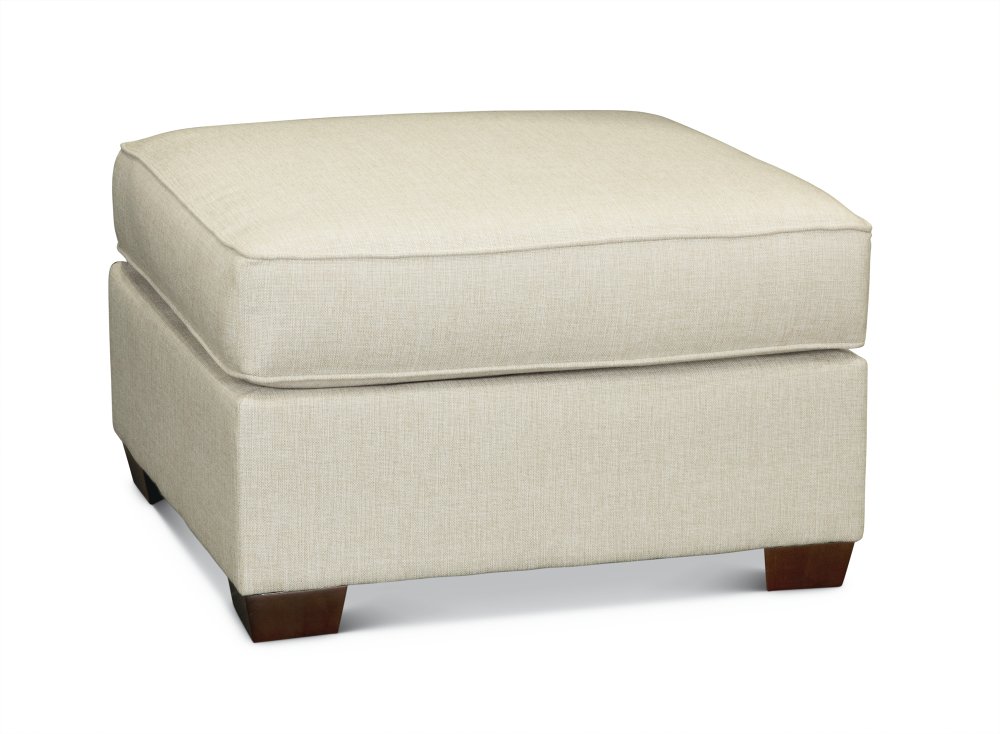
Striped ottomans bring pattern, comfort, and a useful finishing touch to a seating area without asking you to redesign the whole room. A stripe can feel crisp and tailored, soft and relaxed, or bold enough to become the room’s focal point. Narrow, closely spaced lines tend to read as texture from a distance, while wider bands make a stronger statement and give the upholstery a more graphic look. Color matters just as much as scale. Cream and taupe stripes can sit comfortably beside a linen-look sofa, while navy and ivory create a sharper contrast against warm wood furniture. Multicolor stripes offer another possibility: several shades that can connect a rug, curtains, and accent pillows that already belong in the space. A striped ottoman works especially well when the surrounding furniture gives the pattern room to breathe. Beside a solid-colored armchair, it adds interest without competing for attention; across from a patterned sofa, a simpler stripe can create contrast when the colors share a common thread. For a coordinated seating area, Striped Fabric Armchairs offer a related direction, whether the goal is a close color match or a mix of different stripe widths. Coordinated doesn’t have to mean identical. Repeating one color and varying the scale of the pattern often feels more personal than matching every surface. The ottoman’s shape also influences the effect. A round profile softens the straight lines of a sofa and rectangular rug, while a square or rectangular silhouette reinforces a more structured arrangement. Exposed legs lend an airy appearance and let more of the floor show; an upholstered base gives the piece a more substantial presence. Stripes draw attention to these details, tracing the curve of a rounded edge or emphasizing the clean outline of a tailored cushion. Even in a room with mostly neutral furniture, that combination of shape and pattern can make the seating area feel complete.
An ottoman’s everyday role is just as important as its appearance. In a reading corner, a compact striped footrest gives tired feet a comfortable landing without taking over the floor. In front of a sofa, a larger upholstered ottoman can provide a shared place to stretch out, keeping the arrangement relaxed rather than formal. Some designs include interior storage, making them useful for stowing throws, board games, or the extra pillow that otherwise ends up on the floor. Storage construction varies, so details such as the opening style, interior dimensions, and lid mechanism deserve attention when that function matters. An ottoman can also serve as occasional seating when its construction and stated weight capacity support that use; a piece intended only as a footrest shouldn’t automatically become an extra chair. For homes where the living room handles conversation, reading, and movie nights, that distinction helps match the furniture to daily routines. Fit starts with the surrounding seating. A footrest generally feels most comfortable when its top sits close to the seat height of the chair or sofa, or slightly lower, though personal comfort and cushion compression make a difference. Length and depth matter, too. A generous rectangular ottoman may suit a long sofa, while a smaller round shape can leave more room beside an accent chair. Enough open space between furniture keeps the arrangement easy to move through, especially along the path to a doorway or beside a reclining seat. Where an ottoman takes the place of a coffee table, a stable tray can create a defined spot for a book or remote, provided the top is firm and level enough to support it. A cushioned surface is still different from a tabletop, so hot drinks and fragile objects need extra care. For someone furnishing a first apartment or settling into a new home, a striped ottoman can be a thoughtful gift when the room’s measurements, color preferences, and intended use are already known.
Upholstery and construction determine how a striped ottoman feels and how well it handles the life around it. Cotton-rich fabrics often have a soft, familiar hand, while linen and linen-look weaves bring visible texture and a more relaxed appearance. Polyester and blended upholstery can offer practical durability, although stain resistance, abrasion performance, and cleaning requirements depend on the particular fabric rather than the fiber name alone. A woven stripe incorporates the pattern into the fabric’s structure; a printed stripe applies the design to the surface. Either can look appealing, and neither description by itself guarantees better wear. Tight, smooth weaves may be a sensible consideration in a busy family room, while loose textures or prominent loops deserve a closer look in homes with pets that scratch or snag fabric. The cushioning underneath matters, too. A softer top may feel inviting under your feet, while firmer support can better suit a piece designed for occasional seating. A sturdy frame, secure legs, and neatly finished seams help an ottoman hold its shape through regular use. With striped upholstery, pattern alignment across the top, sides, and seams also contributes to a carefully finished appearance. Care should follow the upholstery label and manufacturer’s instructions, including any cleaning code. Regular vacuuming with an appropriate upholstery attachment helps remove crumbs and grit before they settle into the weave. Blot spills promptly with a clean cloth rather than rubbing, and test any permitted cleaner in an inconspicuous spot before treating a visible area. Removable covers aren’t necessarily machine washable, and soaking upholstery can affect the fabric, cushioning, or trim. Keeping an ottoman away from prolonged direct sunlight can help limit uneven fading, particularly where contrasting stripes would make color changes more noticeable. Thoughtful material choices and straightforward upkeep let the pattern remain part of the room’s appeal, while the ottoman continues doing its simplest job: making your favorite seat a little more comfortable.
Read More