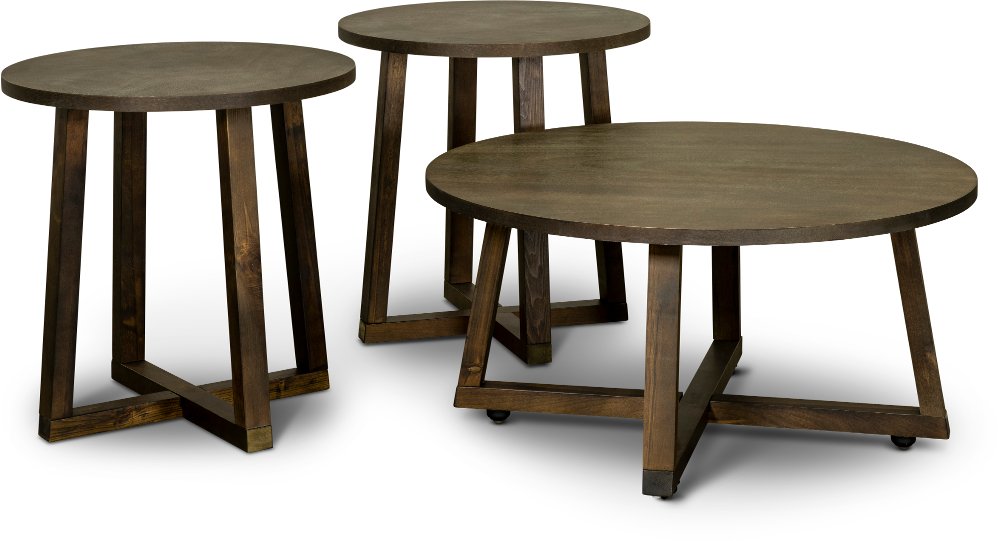
Round coffee table sets bring a central table and coordinating companion tables together, giving your living room a connected look and more places to set everyday essentials. A set may include a round coffee table with matching end tables, two nesting tables, or several tables designed to sit together or apart. The difference matters in daily use: end tables keep a lamp or drink beside a seat, while nesting tables let you pull out an extra surface for company and tuck it back when you need open floor space. Some nesting designs fit completely beneath the larger table; others overlap only partially, so check their dimensions in both positions. Circular tops soften the lines of a rectangular sofa, and their curved edges can make it easier to move around a seating area without navigating projecting corners. Start with the space between your seats rather than the size of the room alone. A large living room can still have a compact conversation area, while a smaller room may need a generous central surface for shared use. Leaving about 16 to 18 inches between the coffee table and sofa is a useful starting point for comfortable reach and legroom. Allow more space along walking routes, often around 30 to 36 inches, depending on the layout and household needs. A tabletop close to the height of the sofa seat, or an inch or two lower, generally feels comfortable. Check each companion table separately, especially if it will sit beside a chair with high arms. Marking the table footprints with painter’s tape helps you picture the arrangement before committing to its scale. With a sectional, position the main table where people on both sides can reach it without blocking the opening. Round tables work especially well in compact conversation areas; an elongated seating arrangement may benefit from Oval Coffee Table Sets, which offer a longer surface while keeping a curved outline.
Materials influence how round coffee table sets look, feel, and hold up to everyday routines. Solid wood offers natural grain and variation, with a substantial feel that suits both relaxed and tailored rooms. Wood responds to changes in indoor humidity, so consistent conditions and protection from standing moisture help preserve its appearance. A wood veneer provides a real wood surface over another material, often creating a consistent look across coordinating tables; its durability depends on the construction and finish, and it generally allows less aggressive refinishing than solid wood. Engineered wood with a laminate surface can be practical for everyday use, though exposed edges and seams still need protection from spills. Metal frames can give a set an open, airy profile or a more substantial industrial character. Look at the base as closely as the top: a pedestal, crossed supports, and widely spaced legs each affect foot placement, cleaning access, and how companion tables nest. Glass tops let a rug’s pattern remain visible and can keep a compact seating area from feeling visually crowded. They also show fingerprints readily, and their edges deserve careful handling. If glass is part of the design, check whether it’s tempered and follow the stated care and weight limits. Natural marble and other stone surfaces bring distinctive markings, but resistance to stains, scratches, and acidic spills varies by stone and finish. Marble, in particular, can etch from acidic liquids even when sealed. A stone-look surface may have different care needs, so the material description matters more than appearance alone. For a balanced room, connect the tables to one or two existing details rather than matching every finish. A warm wood tone can echo a bookcase, a dark frame can pick up cabinet hardware, and a light top can contrast with deeper upholstery. The set should feel related to your furniture without making the room look overly coordinated. Consider the whole silhouette, too: a thick top and enclosed base have a different presence than a slim top on slender legs.
The best arrangement supports what actually happens around your sofa. If the coffee table holds snacks during movie nights, leave enough clear surface for a tray rather than filling it with decorations. If it becomes a landing spot for remotes, books, and game controllers, a set with drawers or a lower shelf can keep those essentials nearby without covering the top. Open shelving makes baskets easy to reach, although it also adds another surface to dust. Nesting tables are useful when guests need separate places for drinks or when one person wants a surface beside an accent chair. Check that each table sits securely on your flooring and that moving the smaller piece won’t scrape against the larger one. Thick rugs can affect stability, particularly with narrow legs or smaller companion tables. In a busy household, rounded edges remove sharp projecting corners, but they don’t replace attention to sturdy construction, secure attachments, glass edges, and appropriate use. Coffee tables aren’t seats or step stools unless specifically designed for that purpose. For everyday care, wipe up spills promptly, use coasters under drinks, and place a protective pad beneath hot dishes. Clean wood, metal, glass, and stone with products appropriate to their finishes, following the manufacturer’s directions rather than applying one cleaner to the entire set. A soft cloth helps remove dust without unnecessary abrasion, and felt pads suited to your floor can reduce scratches when tables shift. Lift tables when moving them instead of dragging them, and check assembly connections as directed. For someone furnishing a first apartment, setting up a family room, or downsizing into a smaller home, a coordinated set can simplify a space that needs several useful surfaces. It can also make a thoughtful housewarming gift when the recipient’s room measurements and style preferences are known. Choose proportions, materials, and features that suit those everyday needs, and the tables can feel at home through rearrangements and changing routines.
Read More