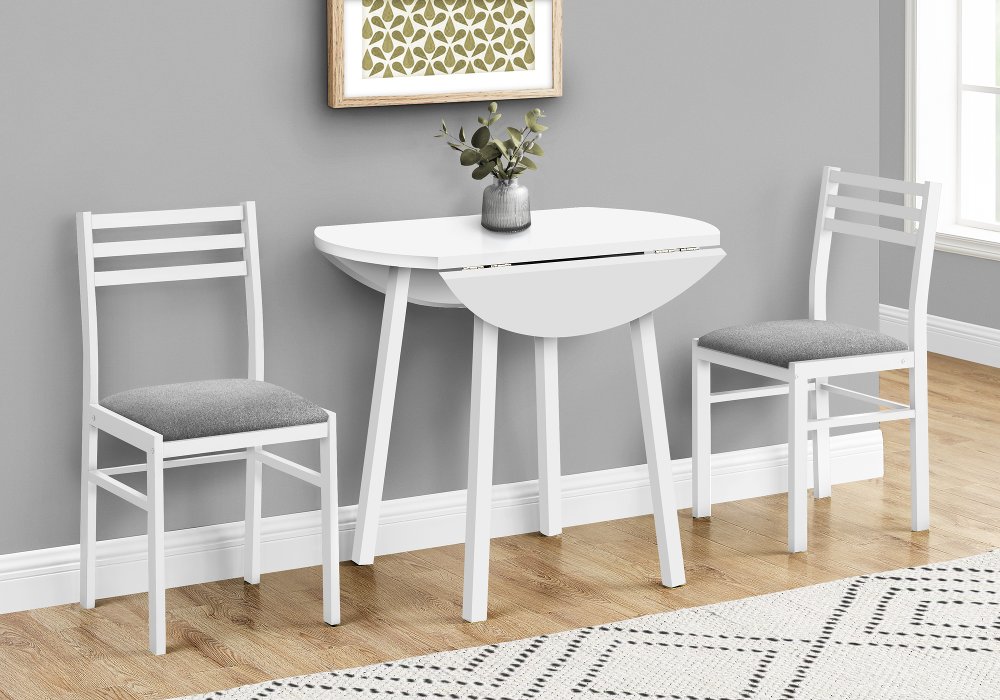
Round white dining table sets give everyday meals a comfortable home, whether that means breakfast before school, dinner for two, or a leisurely meal with friends. The curved tabletop keeps everyone facing toward the center, making conversation feel easy and leaving a natural spot for a serving bowl or a small vase. Without corners projecting into the room, a round table can also soften the look of a square breakfast nook or an open dining area beside the kitchen. A white finish adds visual lightness, but the effect depends on its undertone and the materials around it. Warm ivory looks at home beside oak floors and woven textures, while a brighter white can create a crisp contrast with darker cabinetry or charcoal upholstery. Painted surfaces with visible wood grain have a different character from smooth, glossy finishes, so the best match comes down to the atmosphere you want your dining space to have. Simple chairs and a streamlined pedestal suit a clean, contemporary room; turned legs, spindle backs, and gently shaped seats lean toward a more traditional or cottage-inspired setting. A coordinated set brings the table and seating together visually, while details such as natural wood legs or upholstered chair seats keep the room from feeling too uniform. Nearby finishes matter, too: a white table can connect with painted cabinets without needing to match every surface exactly. If you’re drawn to uncluttered silhouettes and a bright, cohesive dining area, Modern White Dining Sets offer another direction to explore alongside round shapes. The appeal of a round white set goes beyond its appearance. It creates a defined place to sit down together, even in a multipurpose room where the table shares space with a living area, a home office, or the busiest path through the house.
The right fit gives a round dining set room to function, not just room to stand. The tabletop diameter is only part of the footprint; chairs need space to slide back, and people need space to walk past them. About 36 inches between the table edge and a wall or nearby furniture is a useful starting point, with more clearance along busy routes or where someone needs to pass behind an occupied chair. A round table measuring roughly 36 to 48 inches across often suits four seats, while a diameter around 54 to 60 inches may accommodate six, depending on chair width, the base design, and how generously you like to set the table. Broad upholstered chairs take up more room than slim wood chairs, and arms can keep seating from tucking fully beneath the tabletop. A pedestal base may offer more flexibility around the edge, though the size and shape of its foot still affect legroom. Tables with multiple legs benefit from chair placement that keeps knees clear of the supports. Standard dining-height sets work well for everyday meals, but matching seat height to tabletop height is essential for comfortable posture. Check the apron beneath the tabletop as well, especially if chairs have arms or someone in the household prefers extra thigh clearance. In a smaller apartment, a compact round set can make a dining corner feel intentional without overwhelming the surrounding space. In a family kitchen, a larger surface leaves room for plates, shared dishes, and the occasional homework notebook. An extendable design can support both routines if its closed size fits daily life and its expanded footprint leaves enough walking space for guests. Rugs need breathing room, too. Extending a rug about 24 inches beyond the tabletop on each side helps chairs stay on it when pulled out. These practical details make the difference between a set that looks good in a room and one that feels comfortable throughout a meal.
Materials and construction shape how round white dining table sets handle daily use. Solid wood offers natural character and can develop small changes as indoor humidity varies; a painted finish may still reveal grain or subtle movement at joints. Wood veneer brings a real wood surface to a supporting core, while engineered wood can provide a smooth foundation for painted or laminated finishes. Neither appearance nor material name tells the whole durability story. A sturdy base, well-fitted connections, an even finish, and chairs that sit firmly on the floor all matter when the set becomes a regular gathering place. Laminate surfaces can be practical for frequent meals and quick cleanup, though their edges still need protection from standing moisture and their tops need protection from hot cookware. A stone tabletop brings its own pattern and weight; porous stone may require sealing, and acidic foods can affect certain surfaces. Glass tops keep the base visible and can make a small dining area feel less crowded, but fingerprints and crumbs tend to show clearly. Whatever the material, follow its care instructions rather than treating every white surface the same way. A soft cloth and prompt spill cleanup help preserve the finish, while abrasive pads and harsh cleaners can leave marks or dull the surface. Coasters, placemats, and trivets add useful protection without hiding the table’s shape. Chair upholstery deserves equal attention, especially in a home with young children or pets. Tightly woven fabrics and wipeable materials can simplify everyday care, but stain resistance and cleaning methods vary. Wood seats are straightforward to wipe down, while cushioned seats may feel more comfortable during longer dinners or an evening board game. Felt pads beneath chair legs help protect flooring, and checking hardware periodically can keep the seating steady. For a first apartment, a busy family home, or a dining nook used by one or two people, the most satisfying set balances its bright appearance with the realities of daily life: comfortable seating, enough elbow room, and surfaces you can care for with confidence.
Read More