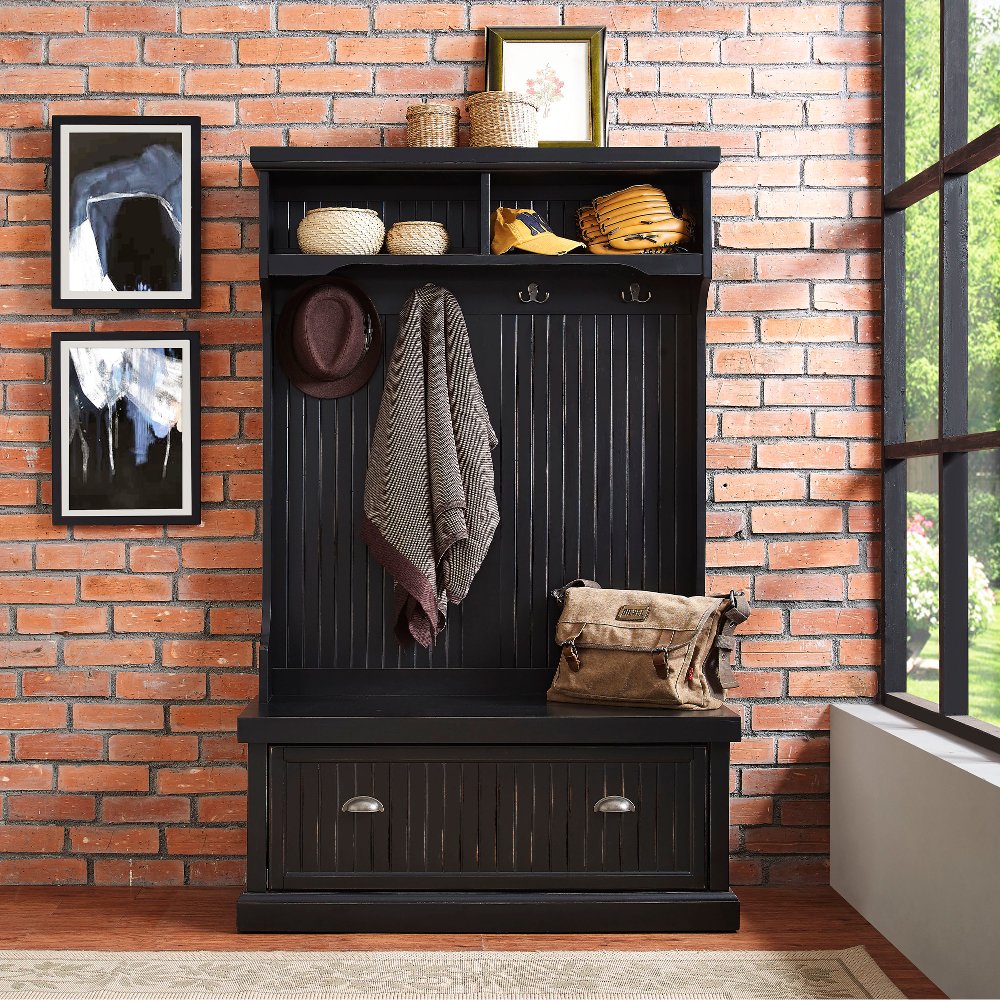
Rustic entryway decor brings together natural textures, warm wood tones, weathered finishes, and practical storage to create a welcoming place to arrive home. Its appeal comes from the balance between character and everyday usefulness: a wood surface with visible grain, a woven basket that catches loose belongings, or a comfortable bench where someone can sit to tie their shoes. The look can feel relaxed and collected without making the entrance seem crowded. Oak, pine, and other woods contribute different grain patterns and undertones, while distressed finishes add the appearance of age. Solid wood may develop small marks and subtle color changes with use; wood veneers offer a real wood surface over a supporting core, and engineered wood construction varies in its suitability for busy spaces. The finish, joinery, hardware, and overall construction matter as much as the material name. Metal frames and hooks add contrast, especially in dark or softly aged finishes, while woven fibers and fabric cushions soften the harder edges. Rustic doesn’t have to mean dark or heavy. Pale wood, cream upholstery, and simple shapes can give a small entry a lighter feel, while deeper brown finishes and substantial silhouettes suit a room with more visual space. A mix of smooth and textured surfaces usually feels more inviting than an entire room of heavily distressed pieces. The same flexibility makes rustic decor comfortable alongside farmhouse, industrial, traditional, or more contemporary furnishings. Repeating one or two elements, such as warm wood and dark metal, helps the entrance connect with the rooms beyond it. For a family home, that might mean sturdy storage and forgiving finishes; for an apartment, it might mean a slim landing surface, a mirror, and one basket for essentials. The result is an entryway with a clear purpose and enough personality to feel like part of the home rather than a pass-through.
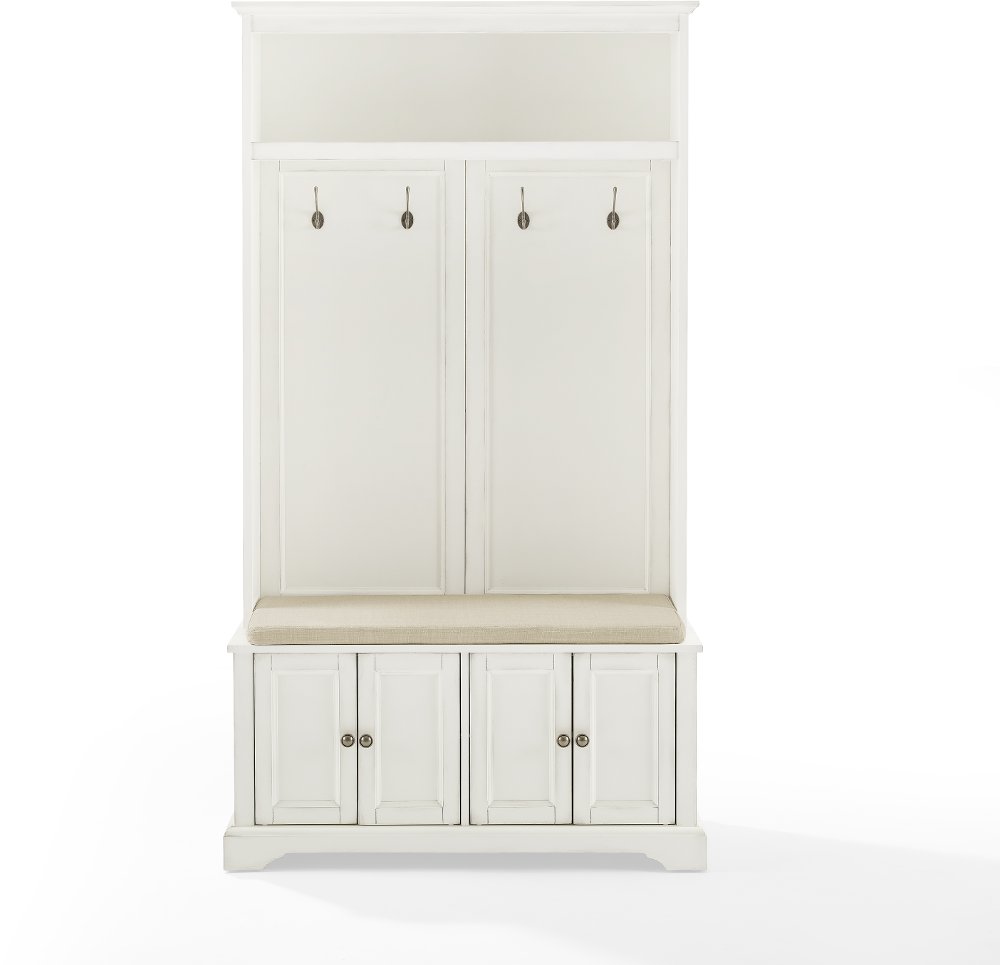
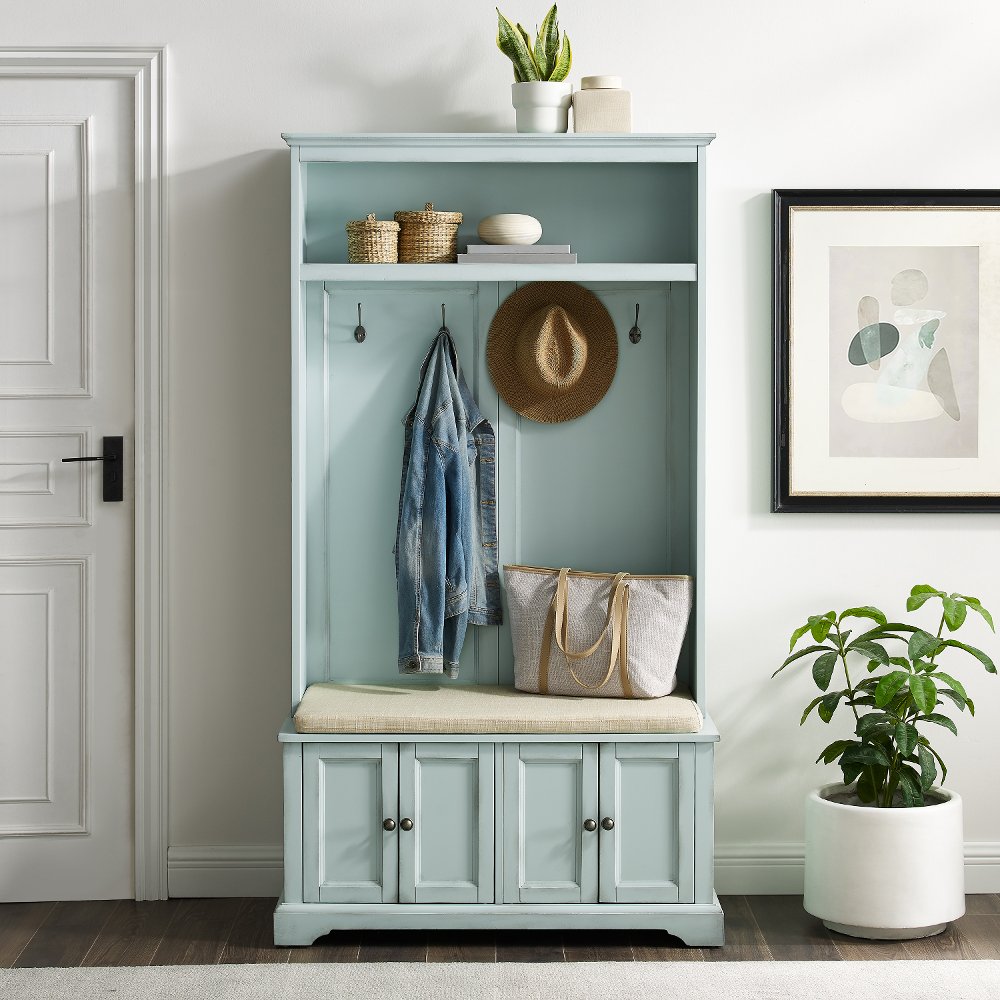
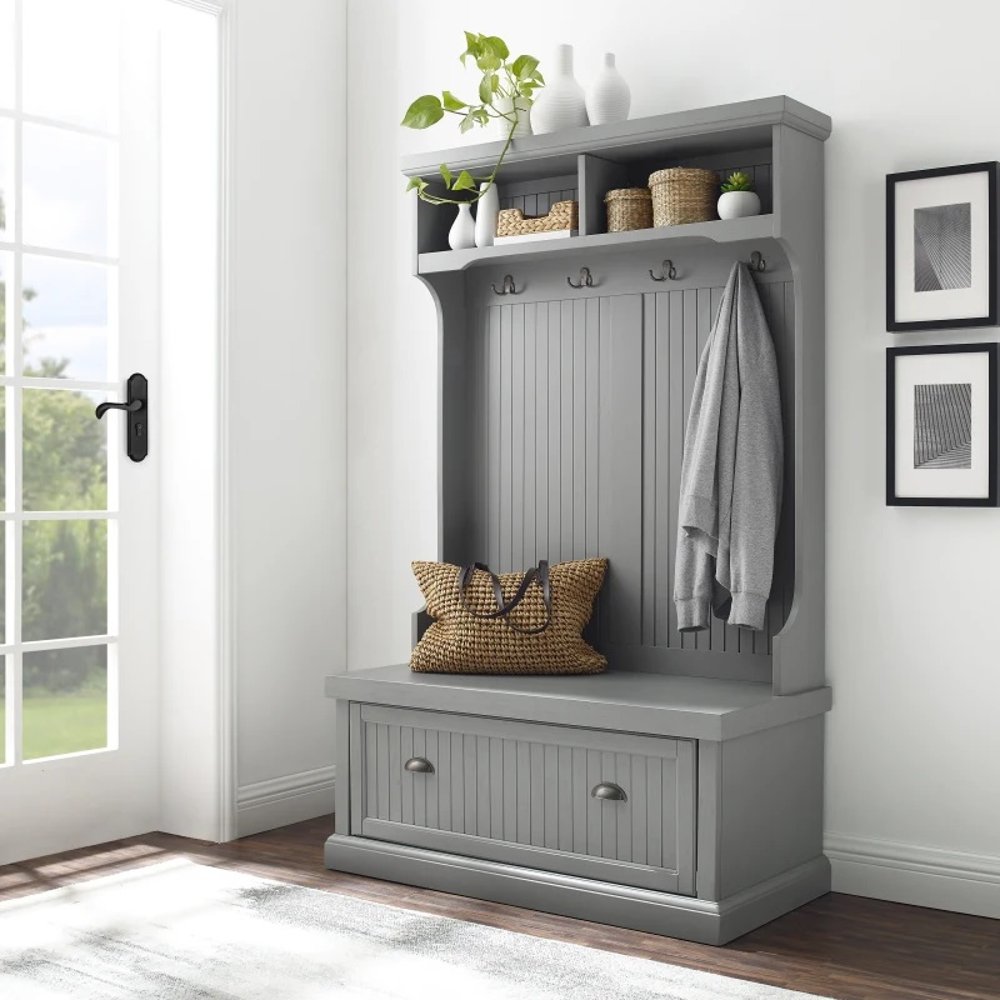
Furniture size and placement shape how well a rustic entryway works, particularly when the front door opens directly into a living area. A console provides a place for keys, mail, and a lamp without requiring the depth of a larger cabinet. The proportions of rustic entryway console tables can help define that landing spot, whether the space calls for an open lower shelf, a few drawers, or a simple surface with room underneath. Depth deserves as much attention as width: a piece that fits along the wall still needs to leave comfortable passage when someone walks in carrying bags. Door swings, nearby closet access, outlets, and baseboards can all affect the fit. In a narrow foyer, furniture with an open base can feel less visually bulky, while enclosed storage keeps a busier household’s smaller belongings out of sight. A bench adds a useful pause between coming and going, but seating should be designed for that purpose and used within its stated weight limit. Storage beneath a bench can give shoes or reusable bags a regular home, and baskets make open shelves easier to keep orderly. Hooks offer another option for frequently used bags and jackets, provided the hardware and wall attachment suit the intended load. A household with children may benefit from reachable storage, while someone who entertains often may prefer a clear surface where visitors can set a handbag. Mirrors and wall art bring interest above furniture without taking up walking space. A mirror can reflect light and create a sense of openness, especially when its placement captures a pleasant view into the home. Lighting adds another layer of usefulness, illuminating the spot where keys land or where a delivery needs a signature. A compact lamp works best where its base feels stable and its cord stays clear of the walkway. These details give rustic entryway furniture a practical role beyond its appearance, making daily arrivals and departures a little more comfortable.
Texture and finishing touches give the space warmth, but the most useful accents earn their place. A shallow tray keeps small essentials together, a woven container gathers everyday clutter, and a ceramic vase adds a quiet contrast to wood and metal. Leaving some of the surface open makes room for the things that arrive unexpectedly, from a stack of envelopes to a guest’s tote. For homes with an open floor plan, repeating a color from the adjacent living room can make the entry feel connected without requiring matching furniture. Rugs help define the area, though pile height, door clearance, and care requirements deserve attention. A low-profile rug may work well near a door, and an appropriate nonslip pad can help keep it in place while protecting compatible flooring. Natural-fiber rugs contribute appealing texture, but their feel underfoot and cleaning needs differ from those of washable or synthetic options. Material labels and manufacturer instructions offer a better basis for choosing than appearance alone. That same approach helps preserve furniture finishes. A distressed surface can make everyday wear less conspicuous, but it isn’t automatically scratchproof or resistant to spills. Coasters and trays help protect wood from drinks, damp containers, and frequently handled objects; felt pads beneath decorative accents can reduce scuffing. Gentle dusting and prompt attention to spills support regular upkeep, while cleaners should match the specific finish rather than simply the broad material category. Upholstered seating benefits from a fabric suited to its expected use, especially where pets or children share the space. Furniture and wall decor should also be secured according to manufacturer instructions, including anti-tip hardware where recommended. For someone setting up a first apartment or settling into a new home, smaller rustic accents can make thoughtful housewarming gifts when the recipient’s colors and available space are known. Larger furnishings are more personal choices because dimensions and storage needs vary so much. Whether the entry is a separate foyer or a short stretch of wall beside the front door, rustic decor feels most at home when its natural character supports the way people actually live.
Read More