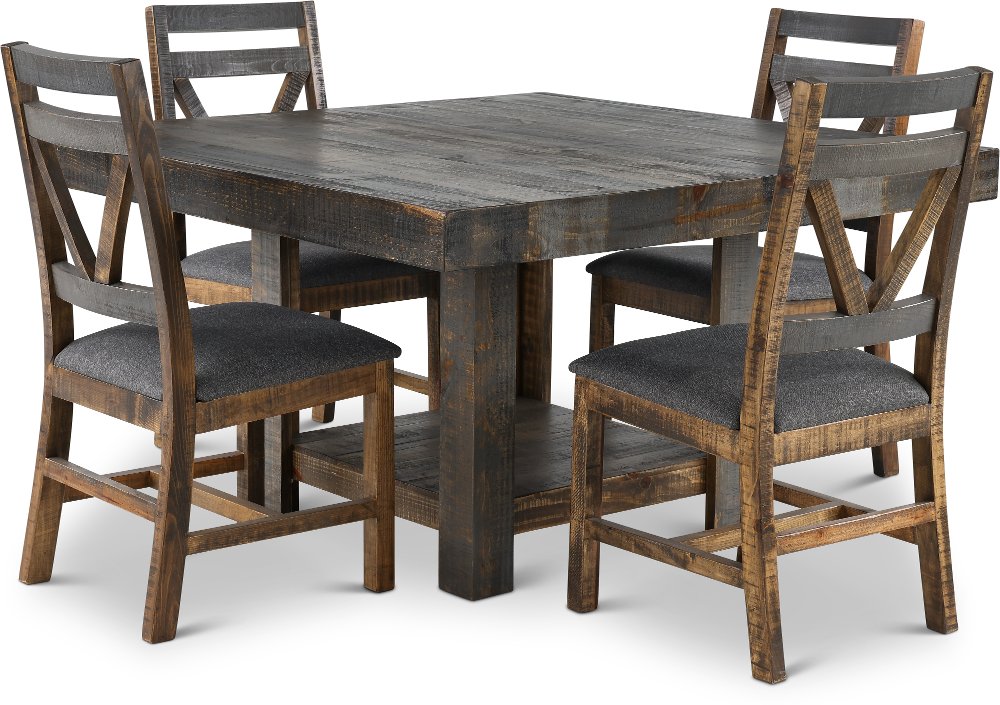
Rustic Tables

Find rustic tables that bring a warm, lived-in feel to your home. Compare sizes, shapes, and designs to find a table that complements your furniture and fits your everyday needs. Before choosing, check the dimensions against your layout, leaving enough space to move comfortably around it.

Read More
Sort by:

Rustic Tables

Rustic tables bring texture and a lived-in feeling to the places where everyday life happens. A wood grain that catches the light, a gently worn edge, or a substantial trestle base can give a room character without making it feel overly decorated. The style reaches beyond the familiar farmhouse dining table. Rustic coffee tables create a relaxed gathering spot in front of a sofa, console tables give an entryway a welcoming landing place, and smaller accent tables keep a favorite chair comfortable and useful. Finishes range from pale, washed wood tones to rich browns and deep charcoal, so rustic furniture can feel airy, grounded, traditional, or more contemporary. A simple tabletop paired with dark metal legs leans industrial, while turned legs and softly distressed paint bring a more traditional country influence. Clean lines and subtle grain work especially well in rooms that mix rustic texture with modern upholstery. Materials play a large part in both the appearance and the everyday experience of these tables. Solid wood offers natural variation and may allow for refinishing, depending on the construction and finish. Wood veneers bring the beauty of real wood to the surface of a table, often over an engineered wood core that helps provide stability. Neither construction tells the whole story on its own; sturdy joints, supportive bases, and a well-applied finish matter, too. Reclaimed wood may feature knots, old nail holes, or color changes that reflect its previous use, while newly made wood can achieve a similar look through brushing, staining, or distressing. Those details should still leave the surface comfortable for its intended purpose. A deeply textured top might look beautiful beneath a serving tray, but a smoother surface is often more practical for writing, working on a puzzle, or setting out glasses. The most useful rustic table balances the character that draws attention with the details that make daily routines easier.

The right proportions help rustic tables feel at home rather than crowded into a room. In a dining area, the table needs to accommodate both the people seated around it and the movement happening behind their chairs. About 36 inches between the table edge and nearby walls or furniture is a useful starting point, with more room helpful along a busy walkway. Allowing roughly 24 inches of table edge per person can make everyday meals more comfortable, although wide chairs and substantial table legs may call for extra space. A rectangular table suits a longer room and offers a natural arrangement for shared dishes, homework, or conversation. A round table can make a compact dining nook feel more open, especially when a pedestal base leaves room for feet and chair legs. Extension designs add flexibility for households that need a smaller footprint most days and extra seating for occasional gatherings; the expanded dimensions and storage needs for any removable leaves deserve attention. In the living room, a rustic coffee table should work with the sofa rather than compete with it. A height close to the sofa seat keeps snacks and books within easy reach, while approximately 14 to 18 inches between the seating and table usually provides comfortable access. Rounded corners can soften a tight arrangement, and an open lower shelf can hold baskets without hiding the table’s shape. For a lamp, reading glasses, or a drink beside a chair, rustic end tables offer a smaller footprint while carrying the same warm, textured look through the room. Their height works best when it stays close to the chair or sofa arm. A slim console can serve a hallway or sit behind a floating sofa, provided it leaves a clear route through the space. Before settling on dimensions, painter’s tape on the floor can help show how a table will affect doors, walking paths, and nearby seating. Checking the base dimensions matters as much as checking the top, particularly when chairs, baskets, or feet need to fit underneath.

Everyday durability comes from matching the table’s construction and finish to the way it will be used. A dining table that hosts meals, craft projects, and laptop work needs a surface that can handle regular cleaning, along with a base that stays steady through repeated use. A decorative accent table holding a lamp and a framed photo has different demands. Distressing can make small signs of wear less noticeable, but a rustic appearance doesn’t make wood resistant to standing water, heat, or scratches. Coasters, trivets, and placemats help protect the finish while leaving room for the grain and texture to show. Spills are best wiped up promptly with a soft cloth, and routine dusting helps prevent grit from rubbing against the surface. Follow the manufacturer’s care directions for cleaning products; a finish that accepts one treatment may react poorly to another. Avoid soaking seams or leaving a damp cloth on the top, and use felt pads beneath decorative objects that get moved often. For tables with pronounced grooves, a soft brush can help lift crumbs without scraping the finish. Stable indoor humidity and placement away from heating vents can help reduce unnecessary stress on wood, while limiting prolonged direct sunlight can help preserve its color. Practical details also make a difference in busy households. Smooth edges, secure hardware, and a solid stance deserve close attention in spaces shared with children or pets. Storage drawers can keep remotes and charging cables nearby, while lower shelves give frequently used items a place to land. A consistent wood tone can connect several tables, but an exact match isn’t necessary: similar undertones, repeated metal accents, or comparable leg shapes can tie a room together. Paired with a comfortable sofa, straightforward dining chairs, or a favorite reading seat, a well-chosen rustic table adds warmth and useful surface space without making the room feel precious. It’s furniture meant to support the ordinary moments that make a house feel like home.
Read More

Frequently Asked Questions

Filter By