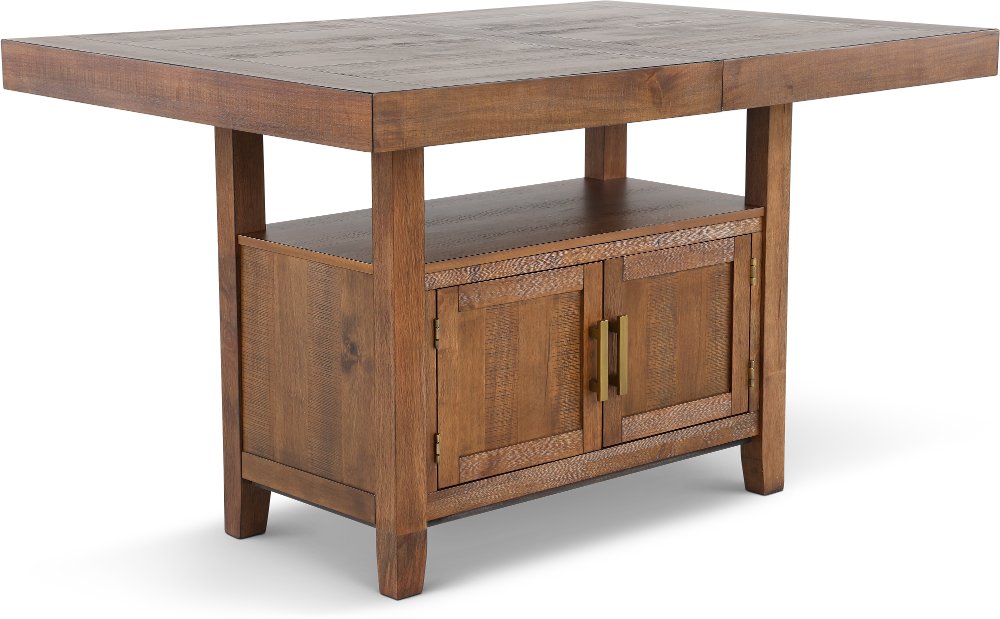
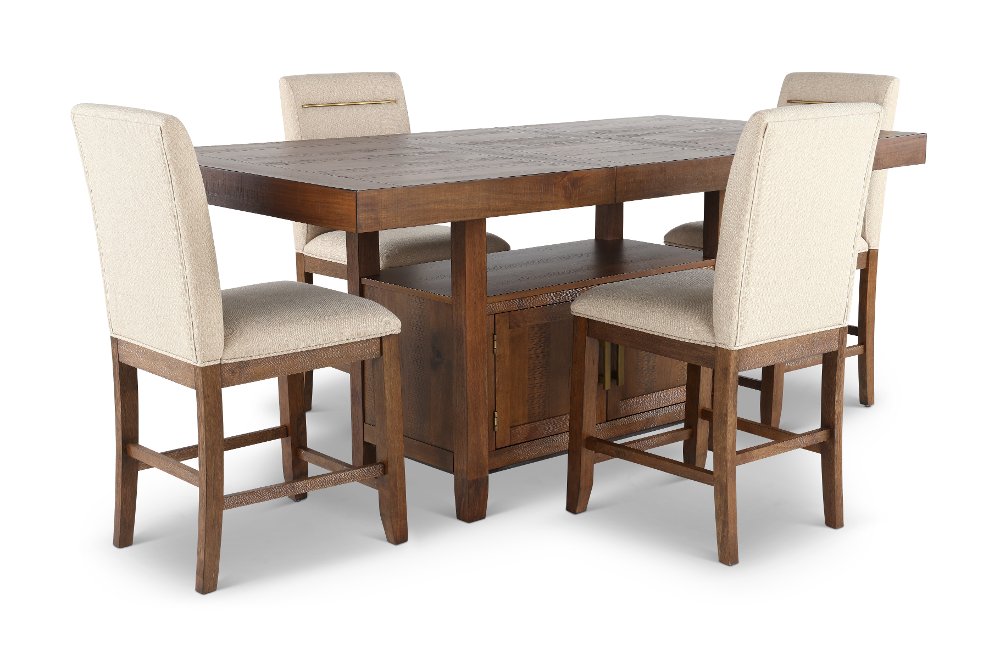
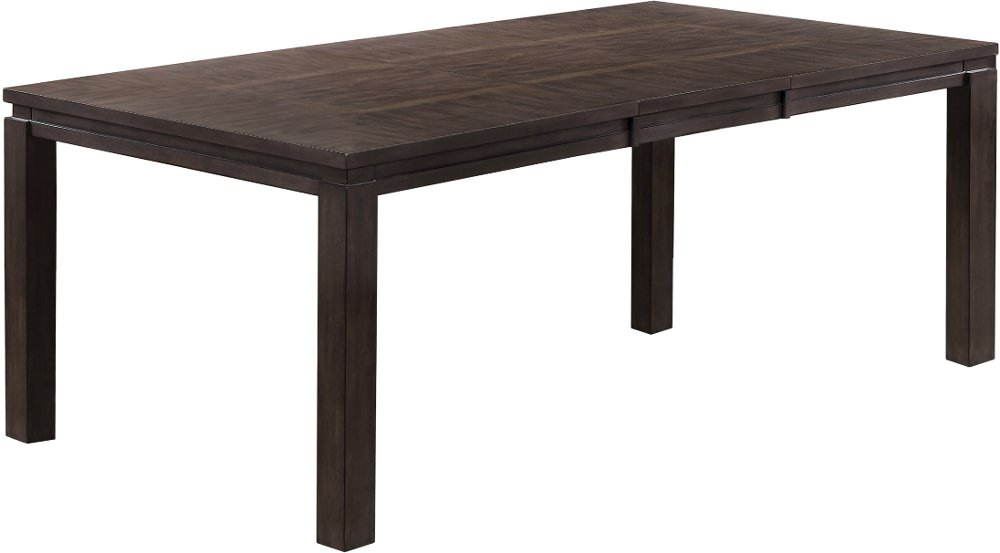
Rustic contemporary dining tables bring the warmth of natural-looking materials into a room without making it feel heavy or overly traditional. The appeal is in the balance: expressive wood grain beside a clean-lined base, a textured tabletop above slim legs, or a warm brown finish paired with understated metal accents. Rustic details give the table character, while contemporary proportions keep the overall look relaxed and uncluttered. That combination works especially well in homes where the dining area connects to the kitchen or living room. A table with a simple silhouette can sit comfortably alongside upholstered seating, streamlined cabinetry, and the pieces you’ve collected over time. You don’t need every finish to match for the room to feel pulled together. A shared undertone, a repeated dark accent, or similar lines in the table and chairs can create enough connection. Lighter wood tones tend to feel airy and casual, while deeper finishes add richness and make pale dishes or woven placemats stand out. Visible knots, grain variation, and gently distressed surfaces can bring a sense of history to a newer space, though the amount of variation depends on the material and finish. For a quieter look, subtle texture offers warmth without becoming the room’s main focal point. These tables suit everything from a first apartment’s eat-in kitchen to a dedicated dining room that fills up when family comes over. They’re equally at home under a bowl of everyday fruit or a spread of serving dishes during the cooler months. Picture a weeknight dinner with a homework notebook pushed to one end, then the same table cleared for friends on the weekend. A rustic contemporary dining table feels right in both settings because its character comes from useful, welcoming design rather than elaborate decoration. It gives you a place to settle in, share a meal, and enjoy your home without feeling as though the room needs to be dressed up first.
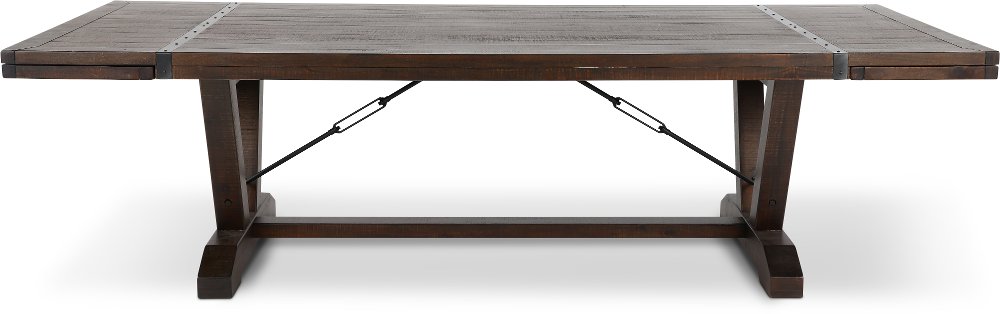
The best fit starts with how your dining space actually works, not just how many seats you hope to squeeze around the top. Consider the route from the kitchen, the swing of a nearby door, and the room someone needs to pull out a chair while another person passes behind it. About 36 inches between the table edge and a wall or other furniture is a useful starting point, with more clearance helpful along busy walkways. Measure with the chairs in mind, too; broad seats and arms need more space than compact side chairs. As a general planning allowance, roughly 24 inches of table edge per person provides comfortable elbow room, although generous chairs and some base designs call for more. Rectangular rustic contemporary dining tables often make good use of longer rooms and offer a familiar arrangement for everyday meals and larger gatherings. Round tables can soften a compact dining area and make conversation feel easy, while oval shapes combine an elongated surface with curved edges. Neither shape automatically saves space, so the full dimensions still matter. A pedestal may give you more flexibility around the perimeter, but its footprint can affect where feet rest. Trestle supports and angled legs deserve the same attention, especially if you plan to add seating at the ends. For households that regularly host extended family or friends, Large Rustic Dining Tables offer a way to explore roomier proportions with the warmth that defines this style. An extension table can be a practical middle ground when your guest list changes more often than your floor plan. Check its closed and extended measurements, how the leaf operates, and whether a removable leaf needs separate storage. Table height matters just as much as width and length. Standard dining-height tables are generally around 28 to 30 inches tall, while counter-height designs sit higher and need compatible seating. If you’re keeping your chairs, measure their seat height and arm height, then compare those measurements with the clearance beneath the tabletop and apron. That small check can prevent the everyday frustration of chairs that won’t tuck in neatly.
Materials and construction help determine how a rustic contemporary dining table will feel after the first dinner and through years of ordinary use. Solid wood offers natural variation and may allow future refinishing, depending on the construction and finish, but it also responds to changes in humidity. Wood veneer over a suitable core can provide the appearance of real wood grain with a different construction approach; it isn’t the same as a printed wood-look surface, and care requirements vary. A wood-look top may be appealing when you want a consistent pattern or a particular maintenance routine, but it’s worth checking the stated resistance to moisture, heat, and scratches rather than assuming the rustic appearance means a surface can take anything. Distressing adds visual texture; it doesn’t make a table damage-proof. For a household with young children, frequent craft projects, or several meals at home each day, an easy-to-wipe finish and a stable base may matter more than a deeply textured surface. Grooves and pronounced grain can look beautiful, though crumbs may take a little more effort to remove. If the dining table doubles as a workspace, think about whether you’ll want a smooth writing mat and enough room for a laptop without taking over everyone’s place setting. Follow the manufacturer’s cleaning directions, wipe up spills promptly, and use coasters, placemats, and appropriate trivets to protect the finish. Choosing chairs is another opportunity to make the table work for you. Upholstered seats add softness for lingering conversations, while wipeable seating can simplify cleanup after busy meals. A bench creates a casual look, provided its width and height work with the table’s supports. You can keep the setting simple with everyday stoneware and a low centerpiece that leaves sightlines open across the table. The most satisfying choice isn’t necessarily the largest or most dramatic one. It’s the table that fits your room, feels comfortable with your seating, and leaves enough space for both the people and the routines that make your home yours.
Read More