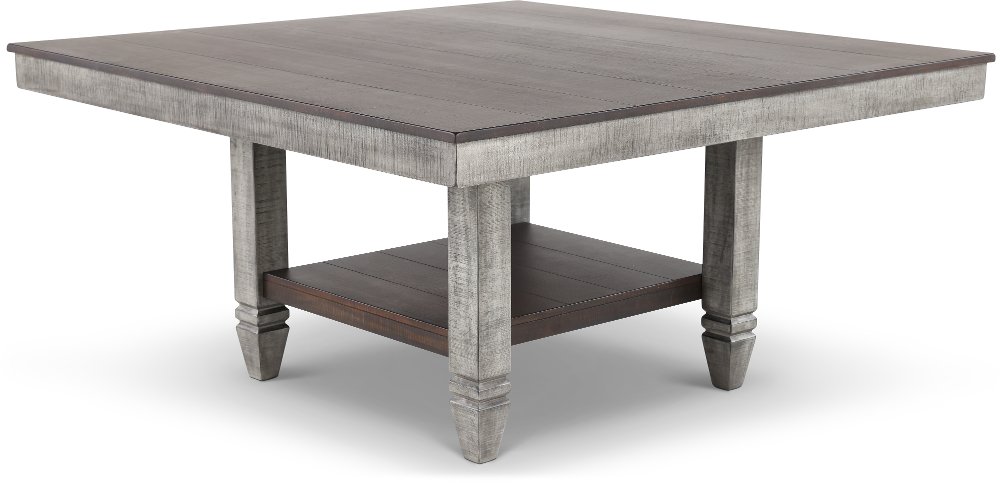
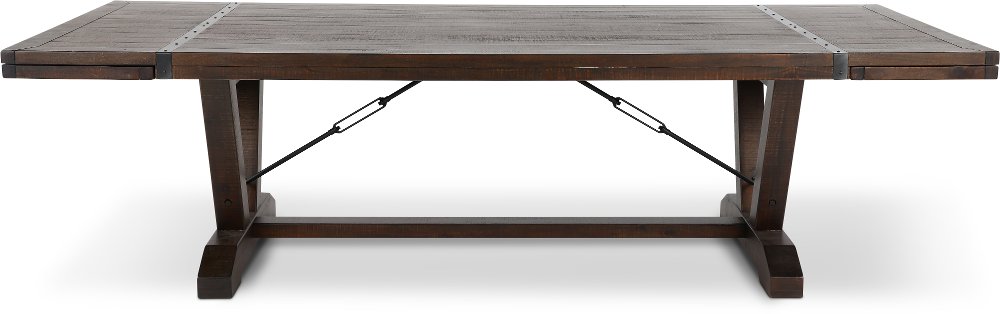
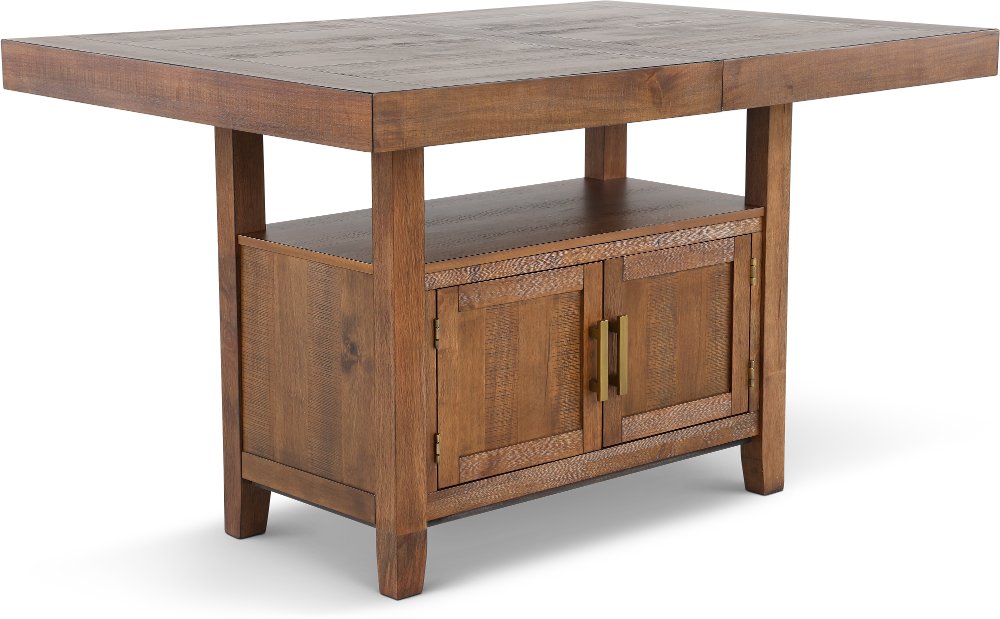
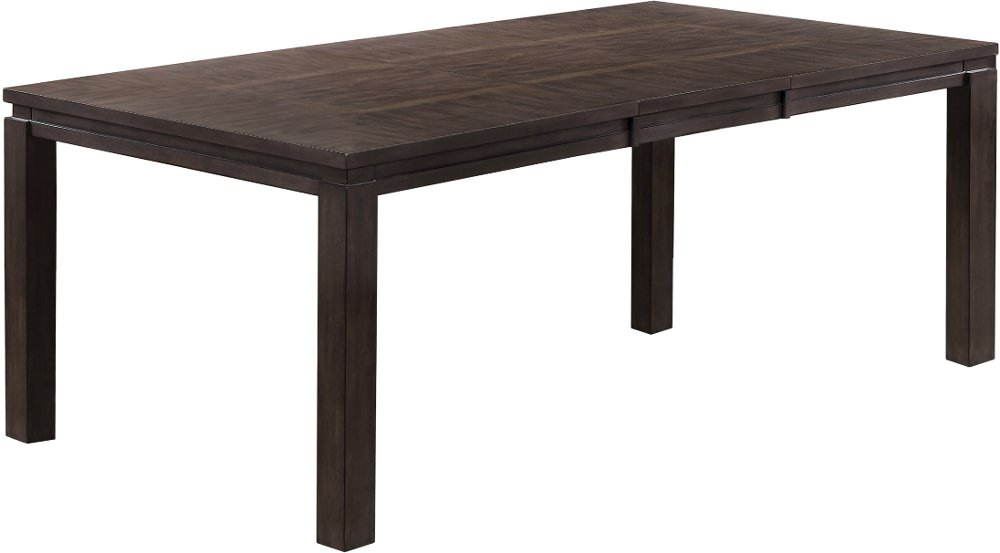
Large rustic dining tables give everyday meals and bigger gatherings a place that feels comfortable, welcoming, and ready for real life. Their appeal comes from the details: visible wood grain, substantial legs, softly worn finishes, and surfaces that look at home alongside ceramic dishes, linen napkins, or a simple pitcher of flowers. A rustic table doesn’t have to belong in a farmhouse. Warm wood tones can soften a room with clean-lined cabinets, while a darker finish can ground an open dining area with light walls and upholstered chairs. Chunky square legs create a substantial presence; turned legs feel more traditional; trestle bases lend a familiar country character. Metal accents can bring an industrial touch without taking away the warmth of the wood. The materials beneath those finishes matter as much as the appearance. Solid wood has natural variation from board to board and may allow refinishing, depending on its construction and finish. Wood veneer offers a real-wood surface over a supporting core, often with a consistent grain pattern across a broad tabletop. Engineered wood components can also be part of a table’s construction, so material descriptions help clarify what forms the top, frame, and base. Reclaimed wood, when specified, may feature old nail holes, knots, and color differences that give each surface a distinct history. A distressed finish can create a similarly relaxed look, but it doesn’t necessarily mean the table is made from reclaimed lumber. Smooth finishes generally make wiping up crumbs easier, while deeply textured surfaces may need a little extra attention around grooves and seams. For a lighter take on the same welcoming style, rustic white dining tables can brighten a dining space while keeping the character of weathered finishes and traditional shapes. Whether the room leans casual, traditional, or modern, a large rustic table works best when its proportions, finish, and construction suit the way you’ll use it.
The right fit gives a large dining table room to do its job without making the surrounding space feel crowded. A rectangular tabletop often works well in a long dining room, creating space for place settings along both sides and seats at the ends. A large round table can encourage conversation, though its full diameter needs to fit comfortably within the room. An oval shape offers the length of a rectangular table with curved ends that may ease movement around nearby corners. Beyond the tabletop dimensions, there’s the space needed to pull out chairs, walk behind seated guests, and open a nearby cabinet. About 36 inches between the table edge and a wall or other furniture is a useful starting point; a busy walkway often benefits from 42 to 48 inches. For seating, roughly 24 inches of table edge per person is a common baseline, with more space helpful for wide chairs, armchairs, or generous place settings. Those measurements work together rather than separately. A table may have enough length for several chairs, yet its legs or trestle supports can limit where those chairs sit comfortably. Apron height also matters when chairs have arms, and crossbars can affect legroom at the ends. An extension table offers flexibility for households that regularly welcome extra guests, provided the room accommodates its expanded length. Leaf storage and the effort required to extend the table are worth considering, too. In an open-plan home, the dining table should leave clear routes between the kitchen, seating area, and doorways. A bench can create a relaxed look along one side, but its length and position should let diners get in and out comfortably. Matching wood tones aren’t essential for a pulled-together room: upholstered chairs can soften a substantial wood table, and mixed finishes can feel intentional when they share a similar undertone or shape. A rug can define the dining area, with enough extra width and length to keep chair legs on it when seats are pulled back.
A large rustic dining table often supports more than dinner. It may be the spot where children finish homework, friends spread out a board game, or someone sets up a laptop before clearing the surface for a meal. That everyday use makes construction, finish, and care especially important. Secure joints and a well-supported base help a table handle regular use, while the finish determines how the surface responds to spills, heat, and repeated cleaning. A rustic appearance can make natural variation and minor signs of use feel less conspicuous, but it doesn’t make a tabletop scratchproof, waterproof, or heatproof. Coasters protect against moisture rings, trivets keep hot serving dishes off the finish, and placemats reduce contact with dishes and utensils. For school projects or crafts, a protective mat gives pencils, glue, and other supplies a separate work surface. Spills are best wiped up promptly with a soft cloth, followed by drying as directed by the manufacturer. Routine cleaning should follow the table’s care instructions; harsh cleaners, abrasive pads, and unnecessary furniture polish can damage or dull some finishes. A soft brush may help lift crumbs from textured areas without scraping the surface. Because wood responds to changes in indoor humidity, a stable environment helps reduce excessive movement, and positioning the table away from heating vents and prolonged direct sunlight helps protect its finish. Extension mechanisms, hardware, and removable leaves may have separate care requirements, so keeping the instructions handy makes maintenance easier. For a busy family, an easy-to-clean top and comfortable seating may matter most. For frequent hosts, expanded seating and clear serving space may be the priorities. For a home where the dining area doubles as a workspace, usable surface area and good legroom can make the table more comfortable throughout the day. The lasting value of a large rustic dining table lies in that balance: enough character to make the room feel personal, enough space to bring people together, and a design that fits the routines happening around it.
Read More