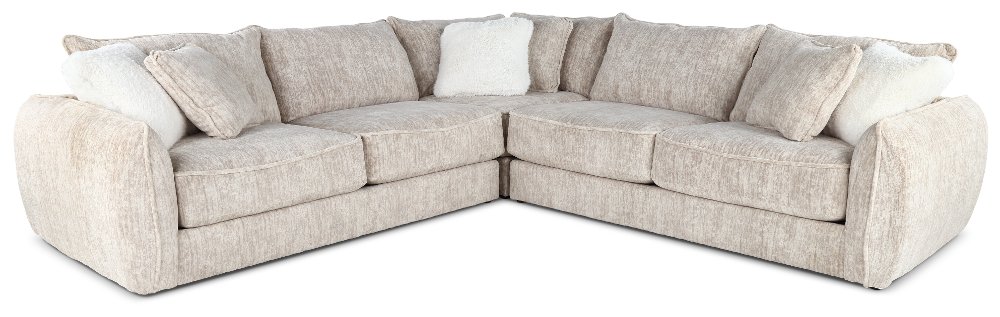
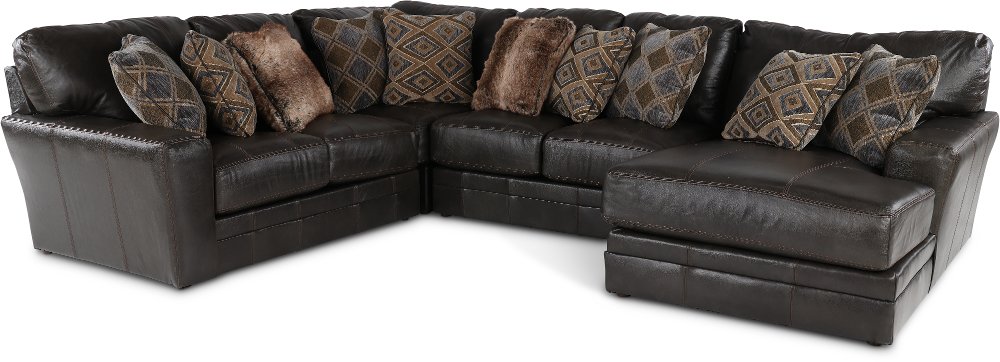
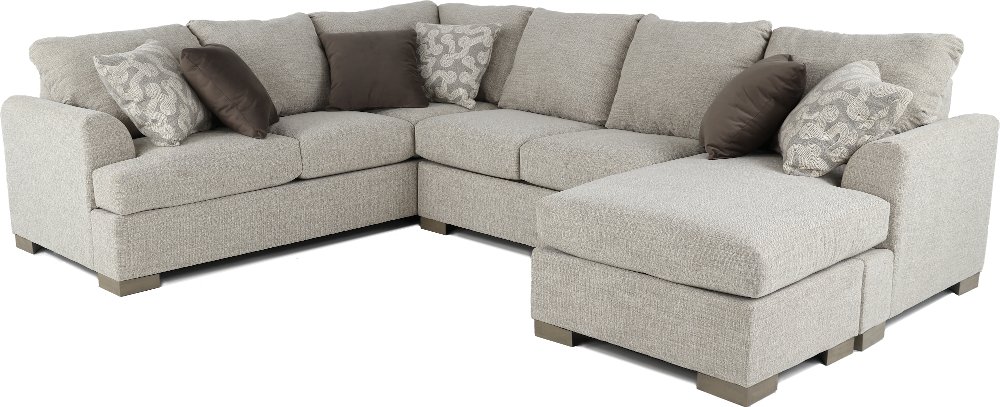
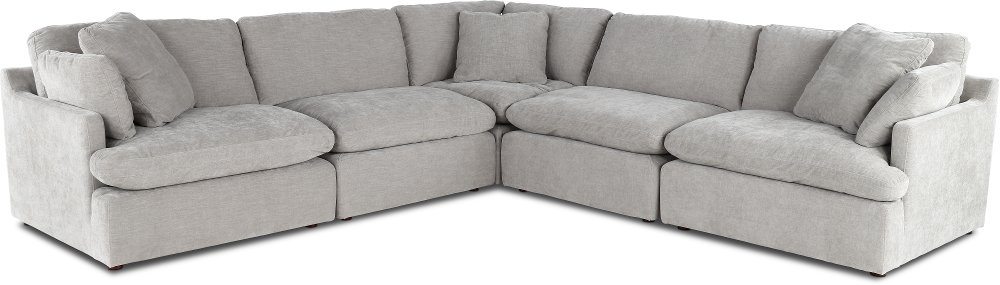
Sofas with chaise bring everyday seating and a place to stretch out together in one comfortable piece. The extended seat gives you room to settle in with a book, put your feet up after a long day, or share the sofa with someone who prefers to sit upright. Unlike a separate ottoman, a chaise creates a defined lounging area within the sofa’s footprint, so there’s one less piece to position around the coffee table. This shape works well in living rooms, apartment seating areas, and family rooms where comfort needs to fit alongside conversation, television viewing, and everyday activity. A compact chaise sofa can anchor a smaller room without requiring a large sectional, while a wider design offers more space for households that gather on the couch. The best fit depends on the entire footprint, not just the number of seats. Overall width tells you how much wall space the sofa needs, but chaise depth determines how far it reaches into the room. Picture the path from the doorway to the kitchen, the clearance beside an accent chair, and the space needed to reach a window or open a cabinet. A chaise that points toward an unused corner can make the seating area feel settled; one that extends into a busy walkway may interrupt the room’s flow. Left-facing and right-facing descriptions also deserve attention, since orientation labels can vary. Product diagrams and measurements help confirm which side the chaise occupies when you’re looking at the sofa. For rooms that may need a different arrangement later, sectionals with reversible chaise offer another layout option worth considering. Seat height and depth matter just as much as room dimensions: deeper seats favor curling up, while a more upright profile can feel comfortable for conversation and make standing easier. Delivery access belongs in the fit calculation, too. Hallways, stair turns, elevator openings, and doorways all affect how a sofa reaches its place in your home.
Upholstery and construction shape how a chaise sofa feels from the first sit and how it handles daily use. Fabric upholstery offers a broad range of textures, from smooth, tightly woven surfaces to soft chenille and more pronounced woven patterns. A textured neutral can add interest without dominating the room, while a solid color makes the sofa’s outline and proportions more noticeable. In a household with children or pets, fabric characteristics deserve as much attention as color. Tighter weaves may be less likely to catch claws than loose loops, although no upholstery is entirely snag-proof. Performance fabrics can offer added resistance to certain stains or spills, but their benefits vary, and the care instructions still matter. Leather brings its own look and feel, with natural grain and surface variation that can give a room character. Some leather finishes provide more surface protection than others; softer, less protected finishes may show marks and develop patina more readily. Leather is not automatically scratch-resistant, and direct sunlight can affect both leather and fabric over time. Beneath the upholstery, frame construction, joints, suspension, and cushion materials all contribute to support. Well-built wood frames and securely reinforced joints help a sofa handle repeated sitting and shifting, while cushion fill determines whether the seat feels firm, plush, or somewhere between. Higher-density foam can support durability, but foam density and firmness describe different qualities, so one does not tell the whole story. Fiber wraps can soften the initial feel, and loose-fill cushions generally need more reshaping than structured foam cushions. Because the chaise often becomes the favorite seat, its support deserves particular attention. Someone who spends an evening reading may want a back cushion that stays supportive, while a person who likes to recline sideways may prefer a softer arm. Removable or reversible cushions can make routine maintenance easier when the design allows it, but those features should be confirmed rather than assumed. The combination of upholstery, cushioning, and construction matters more than any single detail.
The style of a sofa with chaise helps set the tone for the rest of the seating area. Slim arms and exposed legs tend to create a lighter visual profile, which can be useful when the room already holds a bookshelf, media console, and occasional chairs. Broader arms, fuller cushions, and a lower silhouette give the sofa a more substantial presence and invite relaxed lounging. Neither approach requires an entirely new room design. A chaise sofa in a quiet neutral can work with patterned curtains or a colorful rug, while a richer upholstery color can become the room’s focal point against simpler surroundings. Scale makes those combinations feel balanced. A small coffee table may look lost beside a generously sized sofa, while an oversized table can crowd the open space in front of the chaise. A round or oval table can soften the arrangement and make it easier to move through tight corners; a side table near the chaise keeps a drink or reading glasses within reach without competing for floor space. Everyday care helps preserve both comfort and appearance. Regular vacuuming with an appropriate upholstery attachment removes crumbs, dust, and pet hair before they settle into seams. Rotate or flip cushions only when the manufacturer permits it, and reshape loose cushions as needed to distribute use. Upholstery cleaning codes identify suitable cleaning methods, so a removable cover should not be treated as machine washable unless its instructions specifically allow it. Promptly blotting a spill rather than rubbing it can help limit spreading, and any cleaning product should be suitable for the material and tested as directed. Leather benefits from manufacturer-recommended care rather than household cleaners that may damage its finish. For first apartments, shared living spaces, and established family rooms alike, sofas with chaise offer a comfortable base for daily life. The right proportions, supportive cushions, and manageable upholstery let the piece feel at home through quiet evenings, lively conversations, and the ordinary moments in between.
Read More