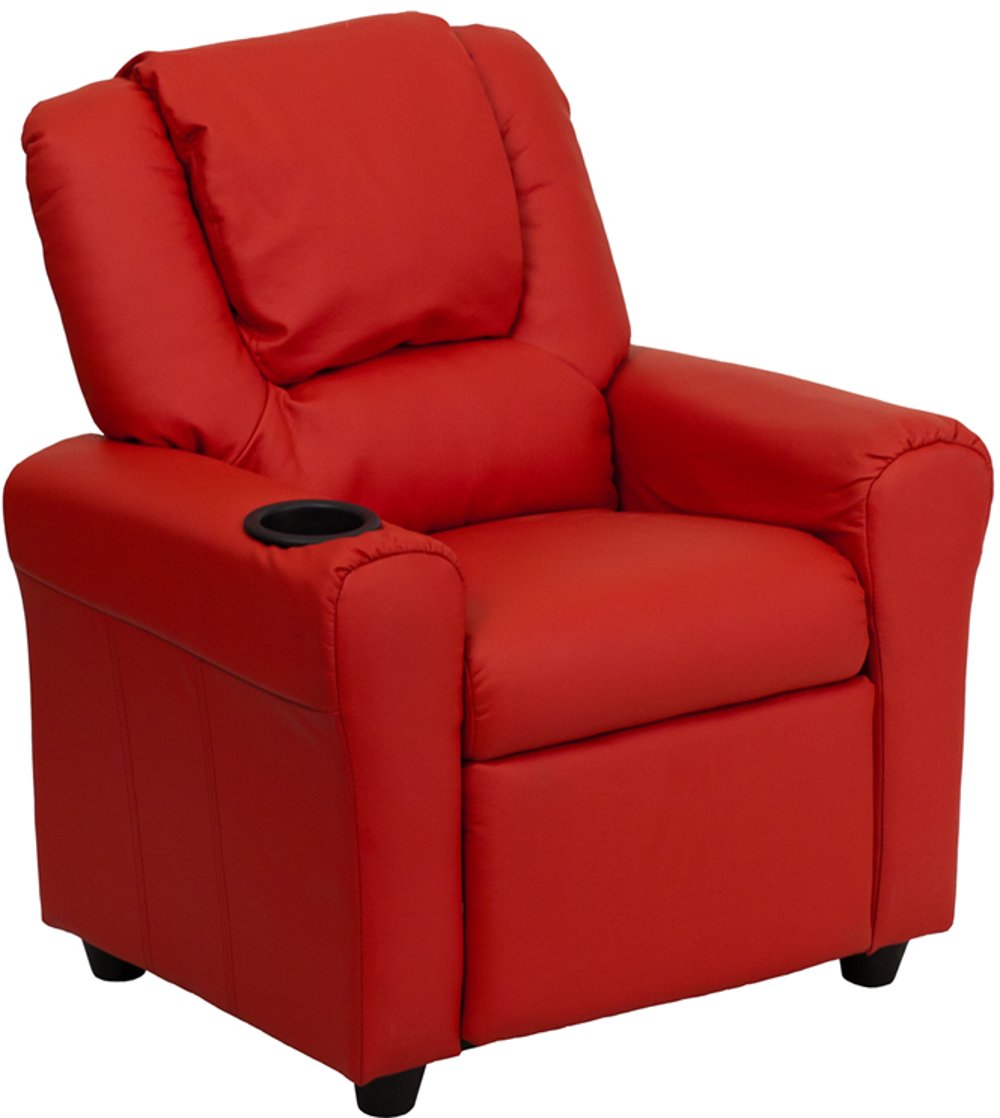
Transitional recliners combine the welcoming comfort of traditional furniture with the cleaner lines of contemporary design. Their balanced proportions, understated details, and versatile upholstery help them feel at home beside both a classic wood coffee table and a streamlined sofa. Unlike recliners with heavily overstuffed silhouettes or ornate trim, transitional designs tend to keep the overall shape simple while allowing room for softer touches, such as gently curved arms, subtle tufting, or a tailored back cushion. Track arms can give a room a more modern feel, while modest rolled arms add warmth without making the chair look overly formal. This middle ground makes a transitional reclining chair especially useful when your living room includes furniture collected over time. A warm gray fabric can bridge a dark leather sofa and pale accent chairs; a rich brown leather can complement wood finishes without requiring every piece to match. Neutral shades such as oatmeal, taupe, charcoal, and cream offer a flexible foundation for patterned pillows, woven throws, and changing accent colors. Texture matters as much as color: a softly woven surface feels relaxed, while smooth upholstery emphasizes the chair’s shape. The result is seating that can serve as an everyday favorite without becoming the room’s only focal point. In a family room, a transitional recliner gives you a comfortable place to settle in for a movie while keeping the space pulled together for guests. In a bedroom or reading corner, a smaller-scale silhouette can create a quiet retreat beside a lamp and a small table. During the cooler months, a throw within reach adds comfort without changing the room’s character. The defining feature isn’t one particular arm shape or upholstery material. It’s the way classic softness and restrained styling work together, giving you a chair that looks intentional in your space and feels inviting at the end of a busy day.
Comfort depends on how a recliner fits both your body and the room around it. Seat height, seat depth, cushion firmness, and back support all affect whether a chair feels comfortable beyond the first few minutes. When you sit upright, your feet should rest comfortably on the floor, with the seat supporting your thighs without pressing behind your knees. A deeper seat may suit someone with longer legs, while a shallower seat can make it easier for a shorter person to sit back against the cushion. Armrests should support your forearms without forcing your shoulders upward, and the back should feel supportive through your lower back and shoulders. Try the reclined position, too, paying attention to where the footrest supports your legs and whether the headrest pushes your chin forward. For shared seating, consider the people who’ll use the chair most often rather than choosing by appearance alone. The reclining mechanism also shapes daily comfort. A manual recliner may operate with a lever, handle, or push-back motion, depending on its design; a push-back chair relies on body pressure to open the footrest and tilt the back. Power reclining uses motorized controls to change position and may feel easier for someone who finds a manual mechanism difficult to operate. Some designs include separate headrest or lumbar adjustments, but those features vary, so check the individual specifications. For a broader look at seating with adjustable positioning, explore Adjustable Recliners. Measure your room with the chair fully extended in mind, not just upright. Leave the manufacturer’s recommended clearance behind the back and enough space in front for the footrest to open without bumping a table. Wall-hugging designs generally require less rear clearance, though they still need room to move. Keep walkways open, confirm that the chair can pass through doorways and tight turns, and plan access to an outlet for powered seating. If a recliner swivels or rocks, account for that movement as well. A chair should let you relax without rearranging the room every time you sit down.
Upholstery and construction deserve the same attention as style, particularly when a transitional recliner will see daily use. Fabric upholstery offers a wide range of textures and can feel cozy in a casual living space. Tightly woven fabrics may be a practical choice for an active household, while pronounced loops or loose weaves can be more vulnerable to snagging. Performance fabrics are designed to address particular demands, such as stain resistance or easier cleaning, but the label doesn’t mean every fabric handles spills, pets, and wear in the same way. Check the stated properties and care directions rather than assuming the surface is stainproof. Leather brings natural variation and a distinctive feel, with aging and maintenance needs that depend on the leather type and finish. More protective finishes may simplify everyday upkeep, while less protected leather can show scratches, oils, and color changes more readily. Faux leather offers a similar visual effect but has different care needs and may wear differently over time. Whatever material you choose, consider the realities of your household: a pet that curls up beside you, afternoon sunlight across the seat, or a chair used for several hours each evening. Durable seating depends on more than the covering. Frame construction, cushion support, mechanism quality, and the manufacturer’s weight limits all contribute to long-term suitability. Look for clear construction details, and pay attention to how steadily the chair sits and how smoothly it moves. For routine care, remove dust and crumbs with a soft brush or an appropriate vacuum attachment, blot spills promptly instead of rubbing, and follow the upholstery’s cleaning code and manufacturer’s instructions. Use only cleaners approved for the material, and keep upholstery away from prolonged direct sunlight and strong heat sources when possible. Keep the moving parts clear of blankets, cords, and small objects, and make sure children and pets stay clear when the chair opens or closes. If you’re choosing a recliner as a gift for a parent, partner, or someone setting up a new home, involve them in the fit and fabric decisions. Their comfort, preferred sitting position, and everyday routines are what turn a handsome chair into a favorite place to unwind.
Read More