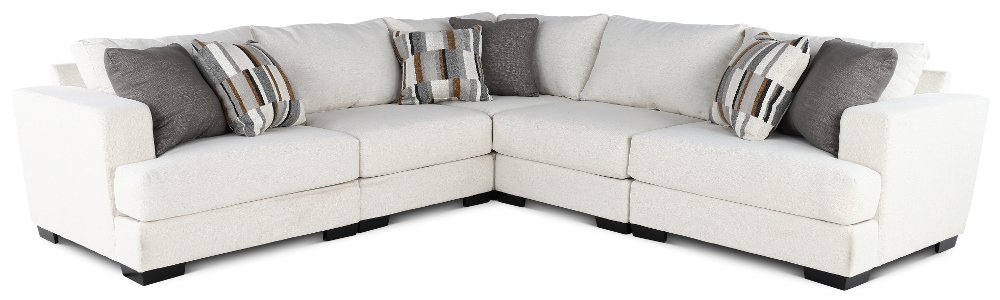
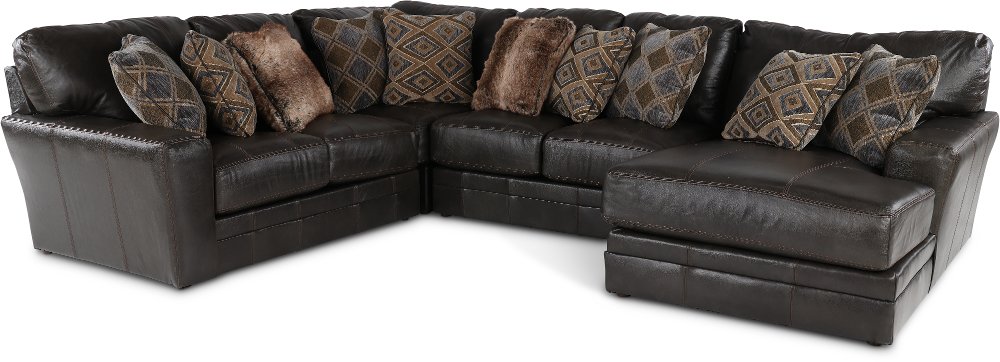
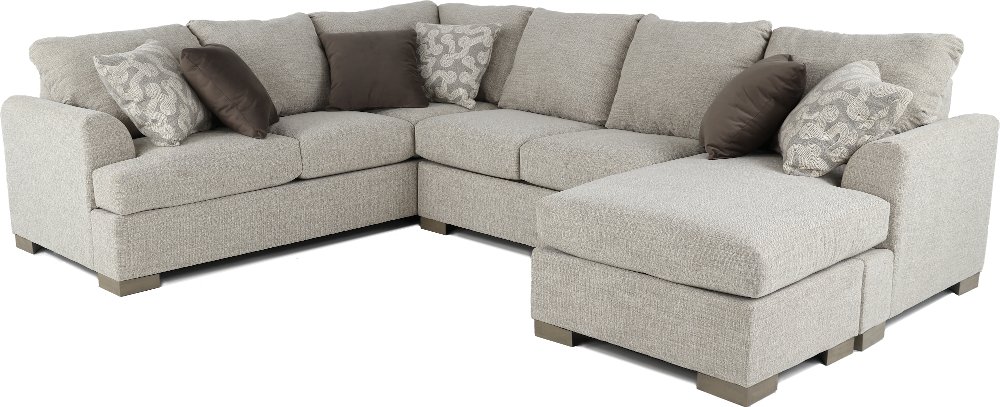
White fabric sectional sofas bring generous seating and a light, inviting look to living rooms, family rooms, and open floor plans. Their connected seats give everyone a place to settle in, whether that means stretching out with a book, sharing a movie, or gathering for conversation. White upholstery also creates a flexible foundation for decorating: warm wood tables, woven baskets, and earthy pillows soften the look, while black accents and clean-lined furniture add contrast. The shade matters as much as the shape. Bright white can feel crisp beside cool gray finishes, while ivory, cream, and off-white often sit comfortably alongside oak, tan leather, and warm neutrals. Fabric texture changes the effect, too. A smooth, tightly woven upholstery fabric offers a tailored appearance; chenille adds a soft, textured surface; and bouclé brings visible loops and dimension. Velvet has a distinctive nap that can look lighter or darker depending on the direction of the pile and the room’s lighting. When fabric samples are offered, viewing one beside the rug and flooring helps reveal undertones that may be less obvious in a photograph. Fiber content deserves attention alongside appearance. Polyester and other synthetic blends can offer useful resistance to everyday wear, though actual performance depends on the weave, construction, and finish. Cotton and linen blends provide their own texture and feel, with wrinkling and cleaning requirements that vary by fabric. Performance upholstery may offer stain resistance, easier cleanup, or both, but the label doesn’t mean a sectional is stain-proof. For a household with children, pets, or frequent visitors, specific cleaning instructions and fabric test information are more useful than a broad durability claim. A white sectional can fit an active home when its upholstery and upkeep match daily life. Tightly woven surfaces may be preferable to loose loops around pets whose nails could catch the fabric, while a subtly textured ivory can give the room a softer visual effect than a flat, bright white.
The right layout makes a white fabric sectional feel like part of the room rather than an obstacle in it. An L-shaped sectional works well when seating needs to define a living area or follow two adjacent walls, while a chaise sectional provides a place to put feet up without adding a separate ottoman. A U-shaped arrangement creates a more enclosed gathering space and suits rooms with enough width to preserve comfortable walkways around it. Modular sectionals offer another approach, using separate seating pieces that may connect in different arrangements. Not every modular design supports every configuration, so the connection system, finished sides, and permitted layouts matter if rearranging is part of the plan. Overall width and depth are only the starting measurements. Doorways, stair turns, elevators, and hallways also need enough clearance for each delivered section. Inside the room, mapping the footprint with painter’s tape can make the scale easier to understand, especially when a chaise extends toward a fireplace or a frequently used doorway. Leave room to open nearby cabinets, reach side tables, and move between seating areas without squeezing past an arm. Check the layout diagram rather than relying only on right-facing or left-facing descriptions, since naming conventions can vary. Comfort is equally personal. Deep seats invite lounging and curling up, but someone who prefers sitting upright may feel better supported by a shallower seat and a supportive back. Seat height affects how easily a person can sit down and stand up, and broad arms take up space that could otherwise contribute to seating width. Foam cushions often provide a more structured feel, while fiber or feather-blend wraps can add softness and may need regular reshaping. Cushion construction determines the experience more reliably than a plush-looking photograph. For adjustable lounging, explore Fabric Reclining Sectional Sofas and account for the operating clearance specified for the mechanism. Power reclining designs also need access to an appropriate outlet, with cords positioned safely away from walking paths and moving parts.
Everyday care helps white upholstery keep its welcoming appearance, especially on the arms, front seat edges, and favorite corner where people naturally settle. Regular vacuuming with an appropriate upholstery attachment removes crumbs, dust, and pet hair before they work deeper into the fabric. Follow the sectional’s care label for spot cleaning: a W code generally permits water-based upholstery cleaners, S calls for solvent-based cleaning, WS allows either approved method, and X means vacuuming or light brushing rather than applying liquid cleaners. Manufacturer instructions take priority, and testing an approved cleaner in a hidden area helps check for discoloration or texture changes. Blot a fresh spill gently instead of rubbing it across the cushion, and avoid saturating the upholstery, which can leave marks or affect the filling underneath. Removable cushion covers aren’t automatically machine washable; some zip off for assembly or servicing rather than home laundering. Slipcovered sectionals can simplify care when their covers are specifically labeled washable, but water temperature, drying instructions, and shrinkage precautions still matter. A washable throw over a favorite lounging spot can help manage everyday contact, and checking dark denim or new textiles for color transfer is especially worthwhile with pale upholstery. Durability extends beyond the surface. Frame construction, secure joints, supportive suspension, and well-made cushion interiors all contribute to how a sectional handles repeated use. Look for clear construction details rather than assuming a particular fiber or a heavier-looking silhouette guarantees longevity. Rotate or reverse cushions only when their design allows it, and fluff loose back pillows as recommended to help maintain their shape. Keep upholstery away from prolonged direct sunlight when possible, since light exposure can change fabric color over time. With a layout that supports the room, cushions that suit the people using them, and a manageable care routine, a white fabric sectional can be a comfortable centerpiece for everything from quiet evenings to a full house of guests.
Read More