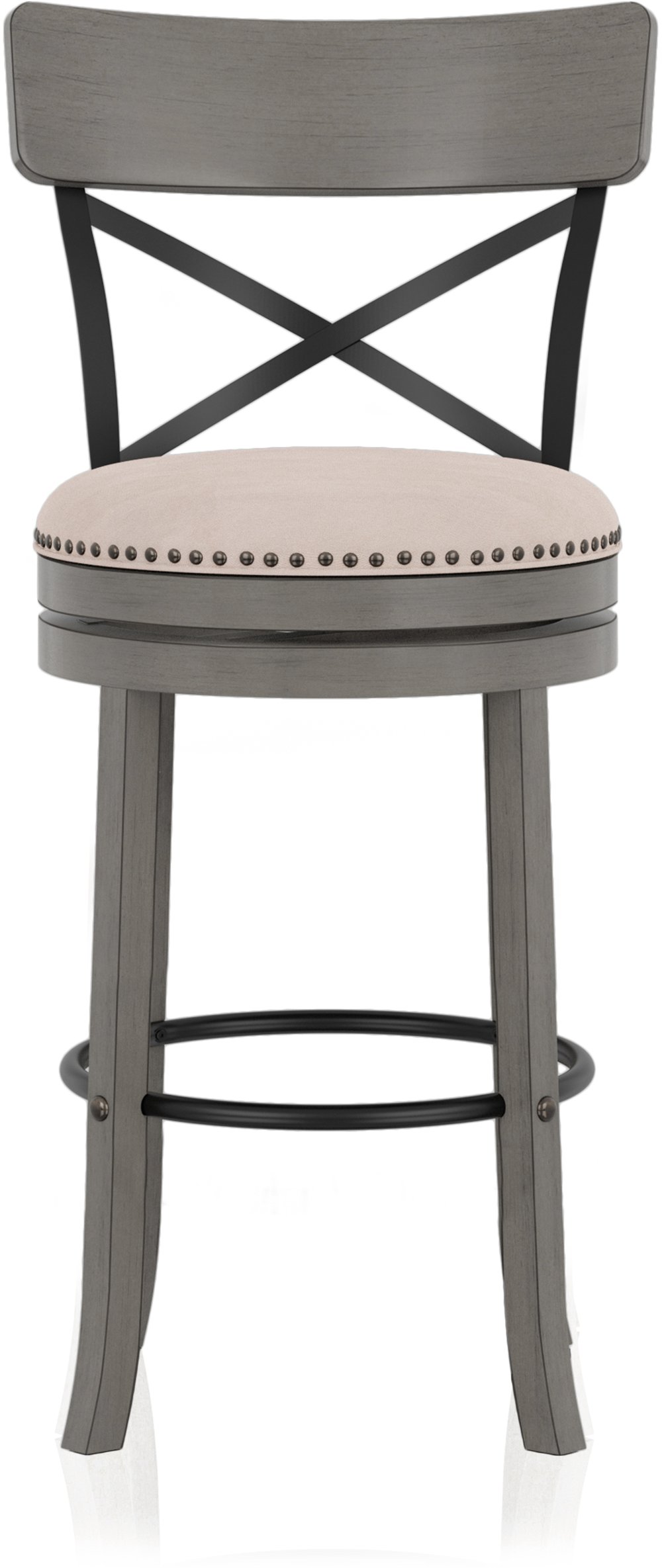
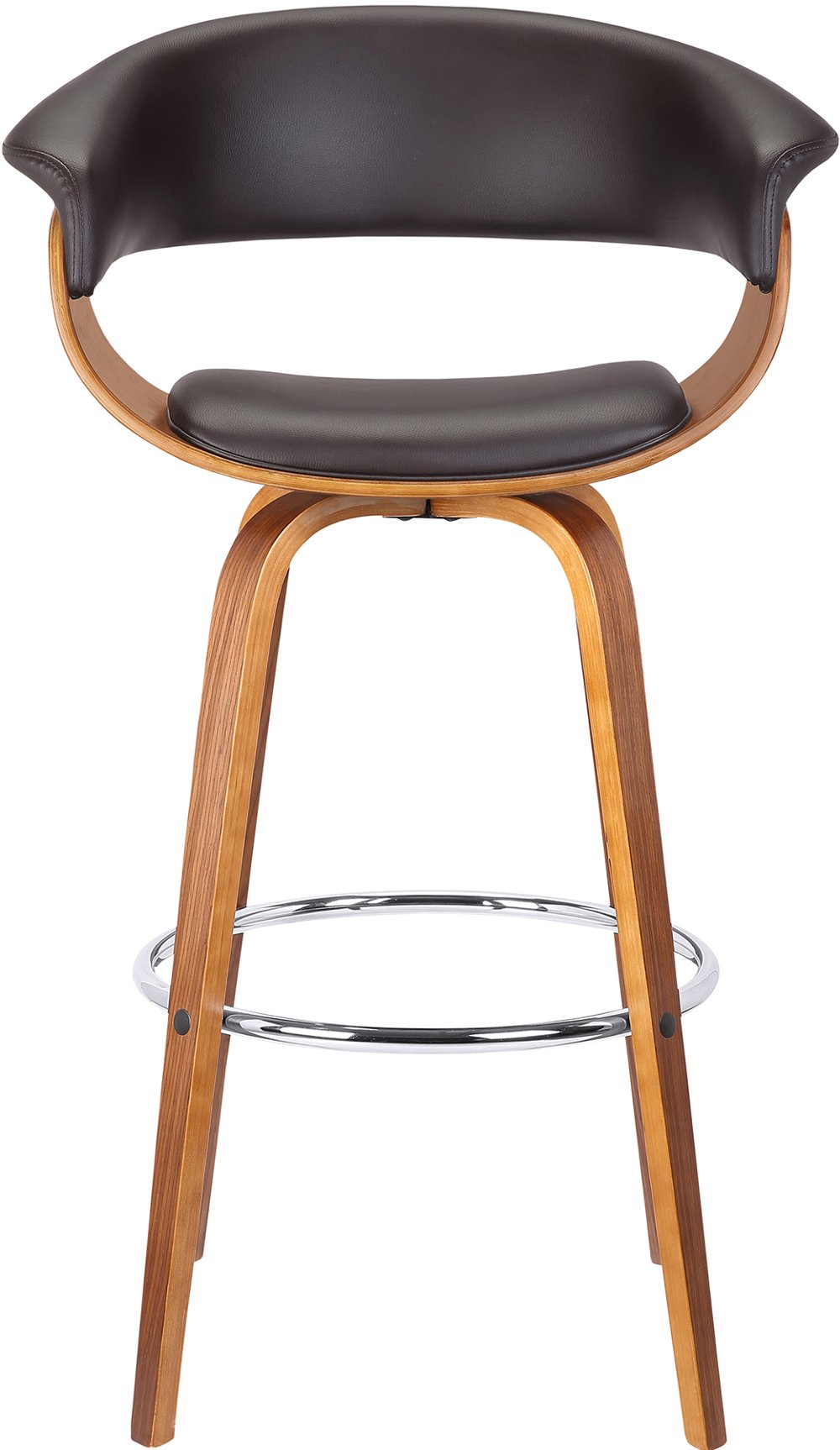
Rounded back bar stools bring a softer outline to spaces filled with straight edges, from a kitchen island framed by square cabinets to a basement bar topped with a long slab of stone. The curved back gives each seat a defined shape without necessarily adding the visual weight of a full dining chair. That balance makes these stools a natural fit for open kitchens, compact breakfast areas, and gathering spaces where seating stays in view even when nobody’s sitting down. Some rounded backs form a low crescent behind the seat, while others rise higher or curve around the sides for a more enclosed feel. An open wood frame can keep the room looking airy; a padded, upholstered back adds texture and a more substantial presence. The shape works across a range of decorating styles, too. Gently curved wood pairs easily with a relaxed, traditional kitchen, while a slim metal frame and a tailored seat can complement a cleaner, contemporary space. For everyday use, the appeal goes beyond appearance. A backrest gives you somewhere to lean during a leisurely breakfast, a conversation with the cook, or a few minutes spent sorting mail at the counter. The amount of support depends on the back’s height, angle, and padding, not simply its rounded outline. A low curved rail may suit brief visits, while a taller back and a generously sized seat may feel better for lingering over dinner. Rounded backs also don’t dictate the shape of the seat beneath them: they can accompany circular, square, or softly contoured seats. If a circular sitting surface is part of the look you have in mind, Round Seat Bar Stools offers a related seating category to consider. Keeping those two features separate helps you focus on the silhouette you like and the sitting space you need, whether the goal is a pair of quiet breakfast spots or a welcoming row of seats for family and friends.
The right fit starts with the relationship between the stool and the surface where you’ll use it. Although “bar stool” often describes several kinds of elevated seating, counter-height and bar-height stools serve different surfaces. A standard kitchen counter is typically about 36 inches high and commonly pairs with a seat around 24 to 26 inches high. A bar surface around 40 to 42 inches high generally calls for a seat around 28 to 30 inches high. Measurements vary, so compare the actual seat height with your counter and aim for roughly 10 to 12 inches between the seat and the underside of the surface. A thick countertop, apron, or support bracket can reduce that space, leaving less room for your legs than the overall counter height suggests. Width matters just as much. A rounded back that wraps around the seat can extend beyond the legs, and integrated arms may keep the stool from sliding fully underneath the counter. Check the widest point, the arm height, and the full depth rather than relying on seat dimensions alone. As a starting point, allow roughly 26 to 30 inches from the center of one stool to the center of the next, with additional room for wider frames or arms. Picture two people eating side by side, with elbows moving and a serving bowl between them, rather than fitting the greatest possible number of stools along the edge. Leave enough space behind the seating for someone to walk past comfortably when the stools are occupied. Swivel seats can make it easier to turn toward a conversation or get into place without dragging the legs, but the curved back needs clearance to rotate without hitting the counter or a neighboring chair. A stationary stool offers a simpler setup where space is tighter. For either style, a well-placed footrest helps keep feet supported, especially when the seat is high enough that they can’t reach the floor.
Materials and construction shape how rounded back bar stools look, feel, and hold up to daily routines. Wood brings visible grain and a familiar warmth that can tie seating to a dining table, shelving, or nearby cabinetry without requiring an exact finish match. Metal frames offer a different effect, ranging from slender and understated to more substantial, depending on the tubing, finish, and proportions. Neither material alone guarantees durability; secure joints, a stable base, appropriate weight capacity, and sound assembly all matter. Upholstered seats and backs add cushioning, while woven details introduce texture and a lighter visual feel. In a busy kitchen, consider what happens between meals: a splash of coffee, crumbs from toast, or a child climbing into a seat after an afternoon snack. Smooth, accessible surfaces generally make quick cleanup easier, while seams, woven sections, and decorative channels may need more attention. Fabric care depends on the upholstery, so follow the manufacturer’s cleaning instructions rather than assuming every upholstered stool tolerates water or the same stain remover. Blot spills promptly, vacuum crumbs with a suitable attachment, and test an approved cleaner in an inconspicuous spot. Leather and synthetic upholstery have different care needs, and neither should automatically be treated as spillproof or maintenance-free. For wood and metal, use the recommended cleaning method and dry surfaces promptly when appropriate; harsh products and excess moisture can damage some finishes. Floor protection deserves attention as well. Glides suited to your flooring can help limit scratches and noise, and checking them periodically keeps trapped grit from scraping the surface. Tighten hardware as directed, respect the stated weight limit, and keep all legs on the floor rather than tipping the stool back. In households with children, a stable footprint and supervised use are especially important because elevated seating takes more coordination to climb into. For adults who find higher seats difficult to access, seat height, footrest placement, and ease of entry deserve extra consideration. With proportions that suit the room and materials that match your routine, rounded back bar stools can make a simple stretch of counter feel like a comfortable place to settle in.
Read More