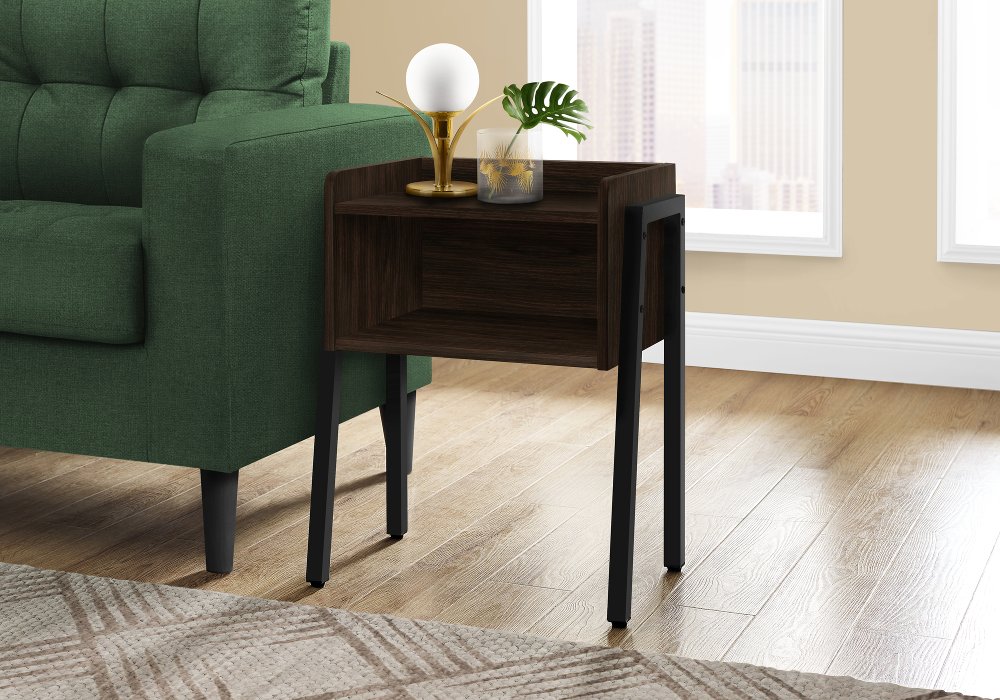
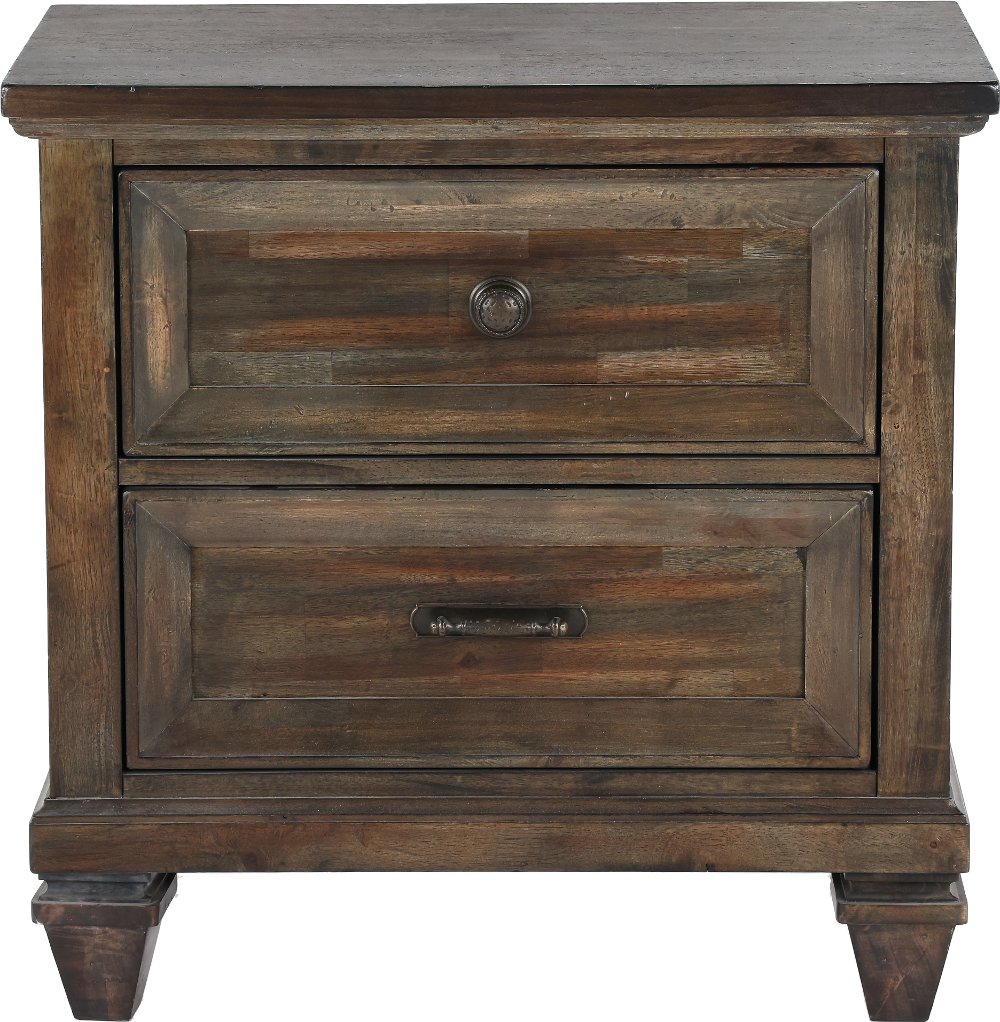
Small black bedside tables are compact pieces of bedroom furniture that keep everyday essentials within reach without taking up much floor space. Often called nightstands, they give a lamp, phone, glass of water, and bedtime book a place to land beside the mattress. Their dark finish adds definition to a room, whether it’s paired with crisp white bedding, warm wood furniture, or a colorful upholstered headboard. In a smaller bedroom, that combination of useful surface space and a compact footprint can make the bed area feel more organized without crowding the walkway. “Small” describes the table’s overall scale, but width, depth, and height each affect how comfortably it fits. A narrow table may slip between a bed and a wall, while a shallow table leaves more clearance along the side of the mattress. Measure the space at floor level and account for baseboards, the bed frame, and nearby doors before choosing dimensions. Painter’s tape on the floor can help you picture the footprint, including whether there’s enough room to walk past it comfortably. A tabletop close to the height of the mattress generally makes it easier to reach a drink or silence an alarm without stretching. Measure to the top of the mattress rather than the bed frame, especially if your bed includes a thick mattress topper. Surface layout matters just as much as the outside measurements. A wide lamp base can occupy most of a compact top, leaving little room for anything else; a slim lamp or wall-mounted reading light helps preserve that space. For a shared bedroom, two small black nightstands can create a coordinated look even when each person needs a different storage arrangement. Matching heights and similar finishes help the pair feel connected, while a drawer on one side and an open shelf on the other support different bedtime routines.
The materials and construction of a small black bedside table influence its appearance, weight, upkeep, and ability to handle daily use. Solid wood can show subtle grain beneath a black stain, giving a dark piece warmth and texture. Painted wood often has a more uniform appearance, though the amount of visible grain depends on the wood and finish. Wood veneer brings a real wood surface to a supporting core, while laminate offers a manufactured surface that can be practical for everyday use when cared for as directed. Neither a black finish nor a heavier weight tells the whole story about durability. Look at how the legs attach, whether the table sits evenly, and how smoothly drawers open and close. A drawer that’s comfortable to operate from bed is more useful than one that requires a firm tug every time you reach for your glasses. Metal frames can create a slender outline, and glass surfaces can give the table a lighter visual presence, though fingerprints and smudges may need frequent attention. Smooth, rounded corners can be more comfortable beside a tight walking path than sharply projecting edges. Style also changes how much space a table seems to occupy. Raised legs expose more of the floor and can make a compact bedroom feel less crowded; a closed, box-shaped base gives the table a more substantial presence and may provide additional enclosed storage. Matte black tends to look understated, while a glossy finish reflects nearby light and feels more polished. Black hardware creates a quiet, coordinated effect, while brass-toned or silver-toned pulls add contrast. The surrounding furniture doesn’t have to match exactly. A black bedside table can sit comfortably beside an oak bed, soften the sweetness of pale pink bedding, or repeat the dark outline of a mirror frame. Repeating one or two details, such as straight legs or rounded drawer pulls, helps different pieces belong together without making the room feel overly matched.
Storage is where a compact bedside table can make the biggest difference to your routine. A single drawer keeps charging cords, lip balm, and reading glasses out of sight, while an open shelf gives a book or small basket an easy-to-reach spot. Check interior drawer dimensions rather than assuming the outside width reflects usable storage; drawer sides and hardware take up some of that space. Deep compartments are helpful for bulkier belongings, but shallow drawers can make small essentials easier to find. An open design works well for someone who prefers just a lamp and a book, while enclosed storage suits a bedside area that collects more personal belongings. In a guest room, leaving a clear section of the tabletop gives visitors room for their phone and glasses without asking them to rearrange decorations. Small black bedside tables also suit apartment bedrooms, teen rooms, and multipurpose spaces where each piece needs to earn its footprint. For a simple surface without dedicated bedroom storage, small black end tables can offer a similar function, provided the height, stability, and dimensions work beside your bed. Think through cord placement, too. An outlet behind the table should remain accessible, and charging cables should reach the top without stretching across a walkway or getting pinched in a drawer. Leave any ventilation clearance required for devices placed nearby. Everyday care helps preserve both the finish and the furniture’s function. Dust with a soft cloth, wipe up spills promptly, and use a coaster under drinks to reduce the chance of moisture marks. Follow the manufacturer’s cleaning directions, since products suitable for one painted, laminated, wood, or metal surface may damage another. Black surfaces can make pale dust and scratches more noticeable, so gentle cleaning matters more than aggressive polishing. Avoid dragging lamps or ceramic trays across the top, and check hardware occasionally if a drawer pull or leg begins to loosen. The most useful bedside table leaves enough room for what you reach for every night while keeping the path around your bed clear.
Read More